
Race-Swapping
The Re-engineering of Western Mythos and The Asymmetry of Adaptation

The modern entertainment industry, alongside the broader cultural apparatus of the West, operates upon a visible paradox. On one hand, modern media institutions champion the doctrine of “colour-blind” neutrality, asserting that the ethnic, racial, and historical background of a character is entirely incidental to the narrative structure of a story. Under this framework, historical context and civilisational aesthetics are positioned as superficial layers that can be seamlessly swapped or stripped away without altering the core resonance of a cultural artifact. Yet, simultaneously, the very act of “race-swapping”, specifically, the deliberate recasting of traditionally European or white characters with non-white actors, is heavily marketed and celebrated as a moral victory, a necessary corrective to historical imbalances, and a triumph of societal representation.
This dual posture, claiming that race is simultaneously irrelevant to the story yet of paramount, transformative importance to the audience, serves to re-engineer cultural meaning. It does so in ways that diminish European particularity, treating Western cultural artifacts not as the distinct heritage of a specific civilisation, but as a globalised public commons. The creative class insists that the demographic realities of European history or the aesthetic specificities of Western folklore are universally malleable, offering a blank slate upon which the ideological imperatives of the present can be endlessly projected.
The “It Doesn’t Matter” Fallacy:
When audiences object to the race-swapping of established characters, the most common rebuttal deployed by media critics, studio executives, and cultural commentators is the assertion that “it doesn’t matter.” The argument posits that because a story is fictional, because it features mermaids, wizards, dragons, or advanced technology, any adherence to ethnic, historical, or cultural continuity is inherently absurd.1 If an audience can suspend disbelief to accept the existence of magic wands or underwater kingdoms, the logic dictates that they should have no difficulty accepting a radically diverse cast in an adaptation of nineteenth-century European literature or medieval folklore.
However, this argument represents a misunderstanding of how myth, folklore, and literature operate within a civilisation. Fictional worlds are never culturally neutral. They are the sublimated expressions of the societies that create them, encoding their values, their historical anxieties, their geographic landscapes, their religious underpinnings, and their demographic realities. To argue that the aesthetic and ethnic continuity of a story “does not matter” simply because the story is fictional is a telling symptom of cultural unseriousness.
Myths and stories are the DNA of a civilisation. They serve as a primary mechanism for intergenerational transmission, allowing a culture to communicate its distinct identity, moral framework, and historical memory to its descendants. When audiences form attachments to characters and narratives, they engage in parasocial relationships that are heavily reliant on the internal consistency and cultural authenticity of the text.2 Disruption of this authenticity through anachronistic diversity casting severs the link between the narrative and its civilisational origins, creating cognitive dissonance for the audience.3
The assertion that demographic and aesthetic continuity is irrelevant in fiction deliberately ignores the concept of the “mental template” in cultural production.4 A mental template is not only a collection of physical traits, it is a holistic conceptualisation of an archetype rooted in a specific cultural matrix. When an audience reads a European fairy tale, the mental template is informed by centuries of continuous, geographically bounded cultural development.
If a civilisation no longer believes that its own aesthetic particularity is worth preserving in its art, if it views its own historical reflection as an embarrassment or an obstacle to modern marketing strategies, it has lost its foundational self-confidence. The willingness to dismantle the visual and cultural continuity of one’s own heritage, while simultaneously demanding strict adherence to the cultural continuity of others, suggests a society that has internalised a deep ambivalence about its own legacy.
The Deep England of Harry Potter: Context, Class, and Protestant Restraint
To fully grasp the impact of treating Western fiction as a culturally neutral canvas, one must first recognise the deep, inescapable particularity of these texts. J.K. Rowling’s Harry Potter series is widely celebrated as a global, universal phenomenon, translated into dozens of languages and embraced by disparate cultures. Yet, despite its global reach, it is fundamentally and inextricably an English cultural product. It is shaped by the specific historical, social, and aesthetic traditions of the British Isles, drawing upon centuries of literary and cultural evolution that cannot be cleanly separated from the narrative without fundamentally altering its meaning.5
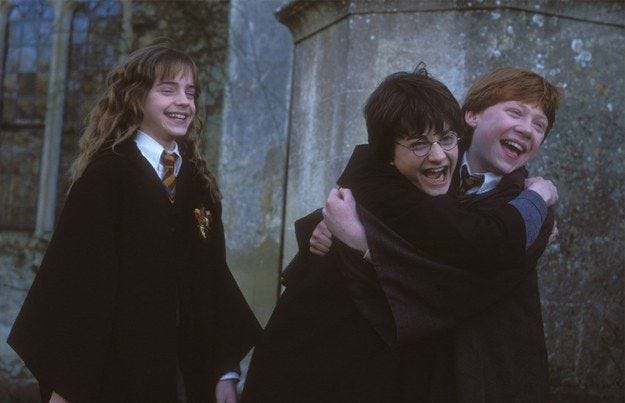
The Landscape and Boarding School Tradition
The architectural and social scaffolding of the Wizarding World is built directly upon the British boarding school genre, a robust literary tradition stretching from Thomas Hughes’s Tom Brown’s School Days to Enid Blyton’s Malory Towers.6 Hogwarts School of Witchcraft and Wizardry operates on the highly idiosyncratic mechanics of the British public school system (which, in the UK context, refers to elite, fee-paying independent schools). The narrative relies on structures alien to much of the world but entirely native to Britain: student prefects, rigid house systems, point-based discipline, competitive inter-house sports, and the wearing of academic robes for formal feasts.7
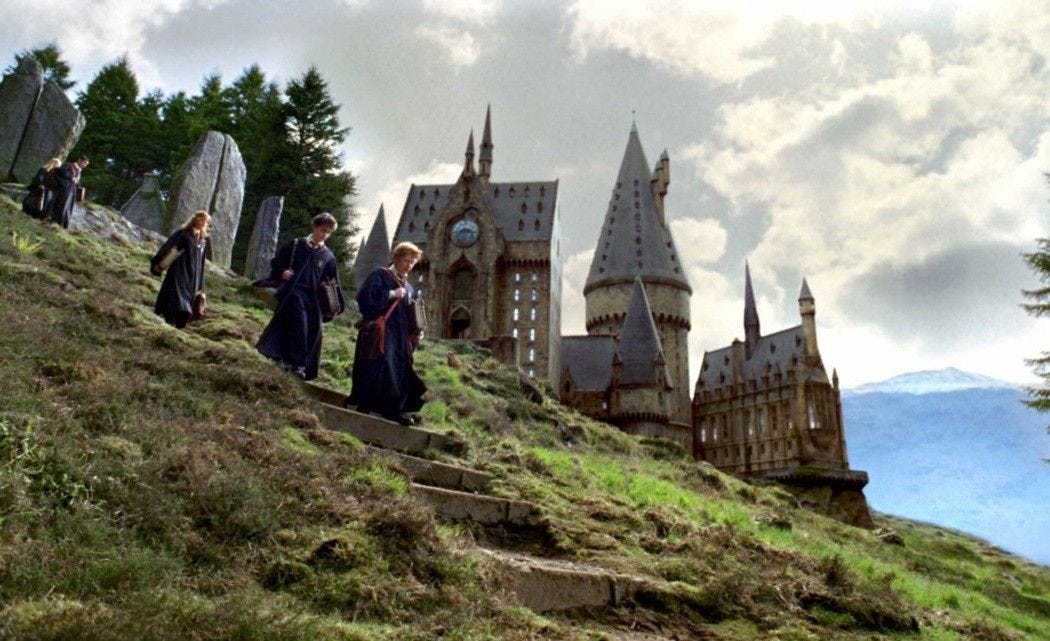
Furthermore, the geography of the series is intimately tied to the British landscape. The school’s founders represent distinct geographic and topographical foundations of the United Kingdom: the Scottish Highlands (Rowena Ravenclaw), the Welsh valleys (Helga Hufflepuff), the eastern fens (Salazar Slytherin), and the West Country moors (Godric Gryffindor).8 The ritualistic journey from London’s King’s Cross Station via the Hogwarts Express anchors the magical world in the tangible, historical reality of British industrial infrastructure and geography.
Class Structures and Social Hierarchy
Harry Potter is deeply preoccupied with British class structures. The wizarding society is heavily stratified along lines that perfectly mirror the historical British aristocracy, the emerging middle classes, and the working poor. The central conflicts of the story, prejudice, blood purity, and social mobility are legible precisely because they are mapped onto the highly specific nuances of the British class system.
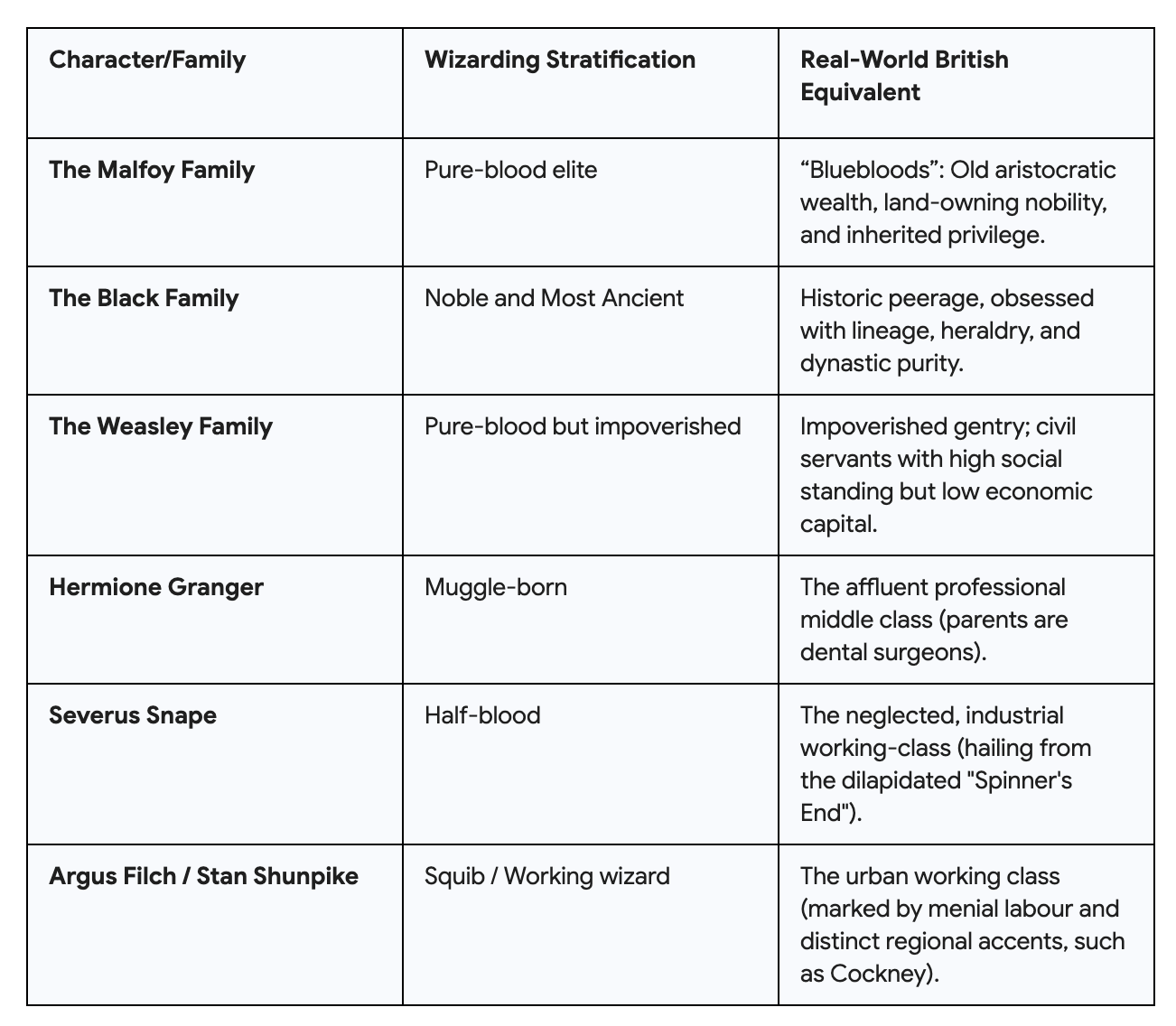
These class dynamics are the engine of the narrative. The tension between the Malfoys and the Weasleys is a reflection of the historic friction between inherited wealth and the working civil service.
Protestant Restraint and the Moral Universe
Perhaps the most defining, yet subtle, English characteristic of the series is its moral universe, which is governed by an understated Protestant restraint. While the series studiously avoids overt religious proselytising, and indeed, has been criticised by some fundamentalist groups for its use of witchcraft, its ethical framework is deeply rooted in a culturally Christian, specifically British, ethos.9
This restraint is evident in the character of Albus Dumbledore, whose pragmatism, quiet burden of duty, and emotionally guarded nature reflect a highly traditional British stoicism.10 It is present in the series’ ultimate moral thesis: the triumph of self-sacrificial love over the pursuit of power and immortality.11 The characters do not engage in bombastic displays of emotional catharsis; their heroism is characterised by grim determination, a “stiff upper lip,” and a deep sense of civic duty.
Furthermore, the magic system itself operates as a set of natural laws requiring disciplined study, Latin-derived incantations, and rigorous academic application. There is no neopagan worship of nature or the Goddess in the Potter universe. It is a deeply rationalist, post-Enlightenment framework dressed in fantasy tropes. The virtues championed by the series, mercy, repentance, and the willingness to sacrifice oneself for the community are inherently aligned with the Christian traditions of the British Isles, drawing direct parallels to the mythopoetic works of C.S. Lewis and J.R.R. Tolkien. Even the architecture described in the books mirrors the transition from medieval Gothic to the clarity and Protestant restraint of later English design.
To treat the Harry Potter universe as a blank canvas for modern demographic re-engineering is to strip it of this rich, highly specific civilisational context. It displaces the host culture, reducing a deeply English mythos to a generic, deracinated background for contemporary socio-political messaging. Fantasy worlds are not culturally neutral; they are deeply rooted in particular civilisational contexts. To treat them as infinitely malleable is itself a form of civilisational displacement.
The Paapa Essiedu Casting: Rethinking Snape and Re-engineering Meaning
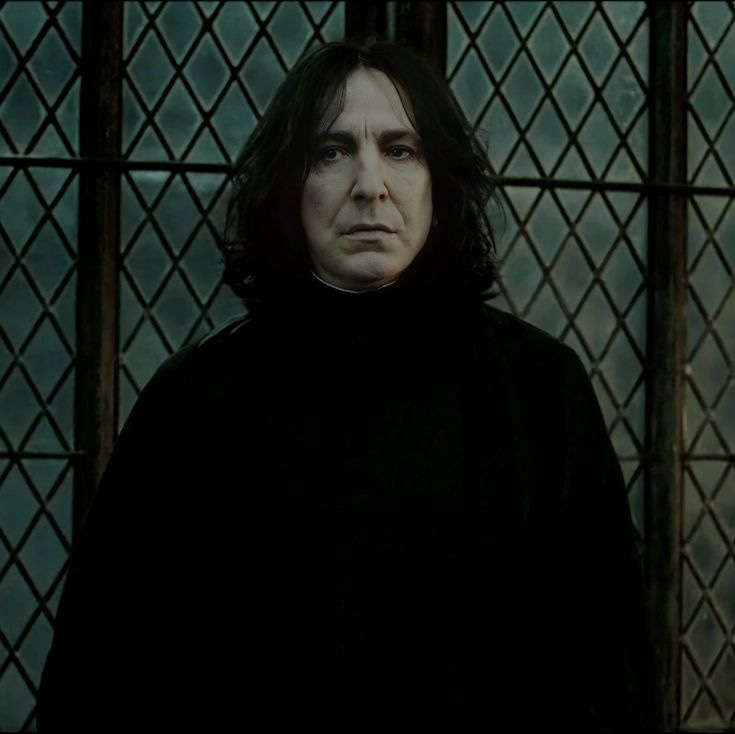
The recent announcement that the acclaimed Black actor Paapa Essiedu has been cast as Severus Snape in the forthcoming HBO television adaptation of Harry Potter serves as a case study in how colour-blind casting actively re-engineers cultural meaning.12
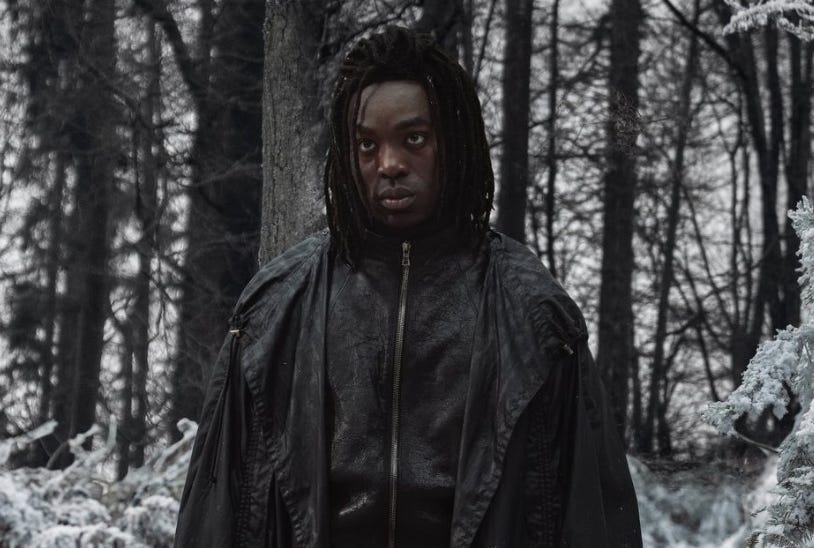
Severus Snape is arguably the most complex, morally ambiguous, and tragic figure in the Harry Potter canon. In the original text, he is described as having “sallow skin,” a hooked nose, and lank, greasy hair, physical markers that, combined with his background in the dilapidated, industrial working-class town of Spinner’s End, code him as an impoverished, neglected outcast within the predominantly middle-class and aristocratic wizarding world. The late Alan Rickman’s definitive film portrayal cemented this specific visual and cultural image in the global public consciousness.
The decision to cast Essiedu, is not just a cosmetic change or an exercise in finding the best actor for the role in a vacuum. It fundamentally alters the sociological resonance of the character and the internal dynamics of the story. While Essiedu possesses the talent to bring tragic depth and integrity to the role, the structural implications of race-swapping this specific character demand cultural critique.
The Transformation of the Bullying Narrative
A central pillar of Snape’s psychological profile is the severe, relentless bullying he endured at the hands of James Potter and Sirius Black during his youth at Hogwarts. In the text, this bullying is rooted in class prejudice, personal rivalry, and Snape’s affinity for the Dark Arts. James Potter, representing “old money,” social ease, and athletic prowess, torments Snape, the impoverished, socially awkward, and physically unkempt outsider.
When this dynamic is transposed onto a Black actor, the cultural optics shift dramatically. The image of a wealthy, privileged white student (James Potter) mercilessly bullying, levitating, and publicly humiliating a Black student (Snape) ceases to be a only schoolboy rivalry or a critique of aristocratic arrogance. Instead, it inevitably absorbs real-world racial tensions.
By race-swapping Snape, the narrative is inadvertently loaded with contemporary racial politics. This dynamic either renders James Potter entirely irredeemable in the eyes of a modern audience, destroying the nuanced tragedy of Harry realising his father was flawed or it forces the narrative to grapple with an allegory for racism that J.K. Rowling never wrote into the text. The casting does not “ignore” race, it aggressively centres it, transforming a narrative about class resentment into a proxy for modern racial discourse.
The Paradox of the Blood Purity Cult
Furthermore, Snape’s character arc involves his seduction by, and subsequent defection from, the Death Eaters, a wizarding supremacy cult obsessed with “blood purity” and the subjugation of those deemed genetically inferior. In the original text, Snape’s involvement is an exploration of how marginalised, resentful individuals (in his case, a “half-blood” from a broken, abusive home) are drawn to extremist movements that advocate for stringent standards they themselves do not fully meet.
Casting a Black actor in this role complicates the allegory beyond recognition. While it is sociologically true that minority individuals occasionally seek acceptance in exclusionary movements, the visual of a Black man enthusiastically joining a blood-supremacist movement obsessed with genetic purity requires a suspension of disbelief that shatters the established lore. The audience is forced to perform constant cognitive dissonance, pretending that the character’s race is invisible while simultaneously processing the undeniable, highly charged racial dynamics introduced by the casting choice.
This is the core fallacy of the “blank canvas” approach to adaptation. It attempts to overlay modern diversity mandates onto texts written in entirely different civilisational contexts, resulting in narrative dissonance and the unintentional rewriting of the source material’s thematic core.
The Arrow of Deconstruction: The Asymmetry of Cultural Malleability
The casting of Paapa Essiedu as Severus Snape is not an isolated incident, it is part of a broader, systemic pattern in modern media adaptation. This pattern is defined by a stark, undeniable asymmetry: the practice of race-swapping overwhelmingly travels in one direction. European, British, or historically white characters are routinely reinterpreted as non-European or non-white, while the reverse almost never occurs.
Western Heritage as Malleable Raw Material
In the modern entertainment landscape, Western heritage, its history, its folklore, its architectural achievements, and its literature is increasingly treated as “malleable raw material”.
We see this explicitly in Disney’s 2023 live-action adaptation of The Little Mermaid. The original story, penned by Hans Christian Andersen, is deeply embedded in Danish folklore and the specific aesthetic traditions of nineteenth-century Northern Europe. The decision to cast an African American actress, Halle Bailey, as Ariel was widely praised by cultural institutions as a triumph of diversity and progressive representation. Similarly, the Netflix series Bridgerton reimagines Regency-era England, a highly specific, historically documented, and racially homogenous period of the British aristocracy, as a multi-racial utopia, anachronistically projecting twenty-first-century American diversity metrics onto nineteenth-century Europe. We see similar anachronisms in historical documentaries, such as the casting of a Black actress to play Cleopatra, which critics argue erases the specific history of the Ptolemaic dynasty in favour of modern American racial categorisations.
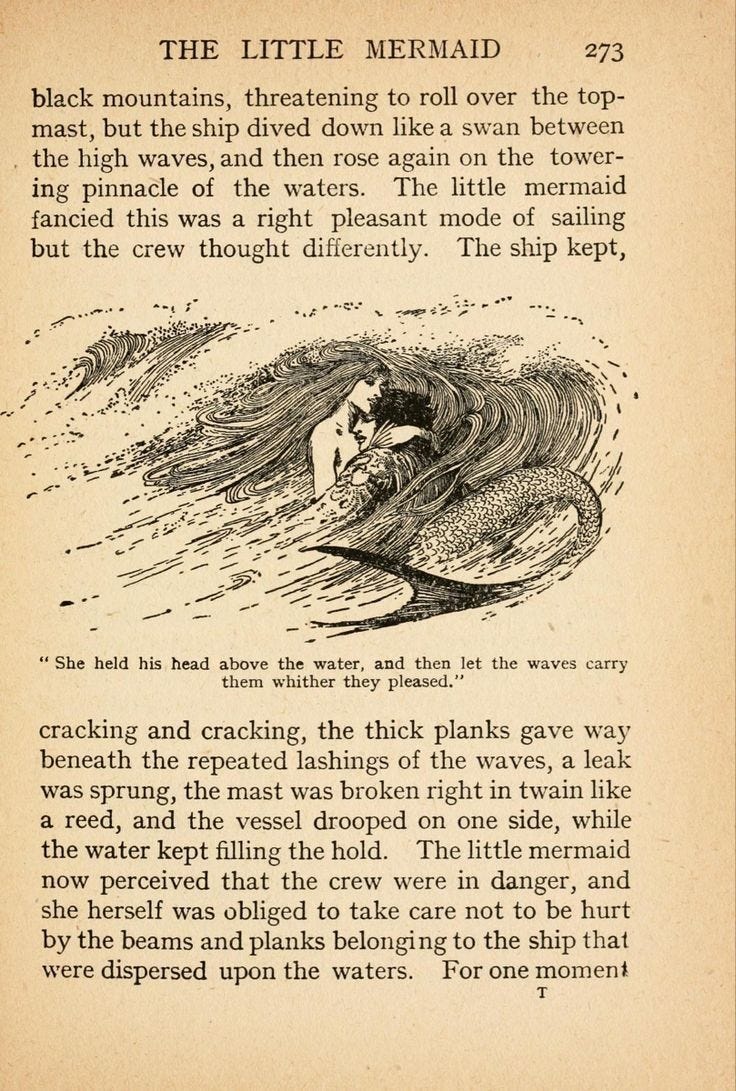
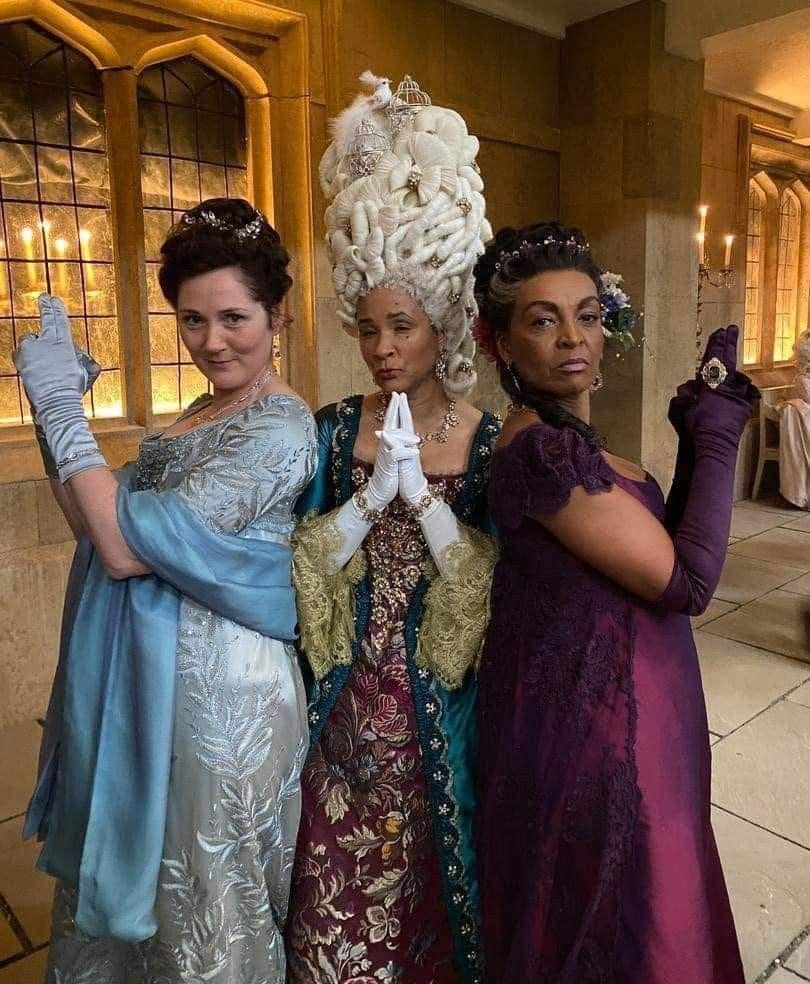
In these instances, critics who point out the historical, folkloric, or civilisational inaccuracies are routinely dismissed as reactionary or lacking imagination. The underlying elite consensus is that Western culture belongs to everyone, and therefore, it has no inherent right to preserve its own specific ethnic, demographic, or aesthetic boundaries. It is treated as a substrate upon which the “added value” of modern diversity must be layered.
Non-Western Identities as Fixed and Authentic
Conversely, non-Western identities are treated with intense, almost sacred reverence. They are increasingly viewed as fixed, authentic, and entirely off-limits to external reinterpretation or appropriation.
When stories originating from African, Asian, or Middle Eastern cultures are adapted for the screen, there is a strict, highly enforced mandate for absolute cultural, ethnic, and even linguistic authenticity. If a Western studio were to adapt a piece of Nigerian folklore, a Japanese historical epic, or a Middle Eastern myth, and cast a white, European actor in the lead role, the backlash would be immediate, severe, and career-ending. It would be condemned as “whitewashing,” cultural appropriation, and the violent erasure of minority voices.
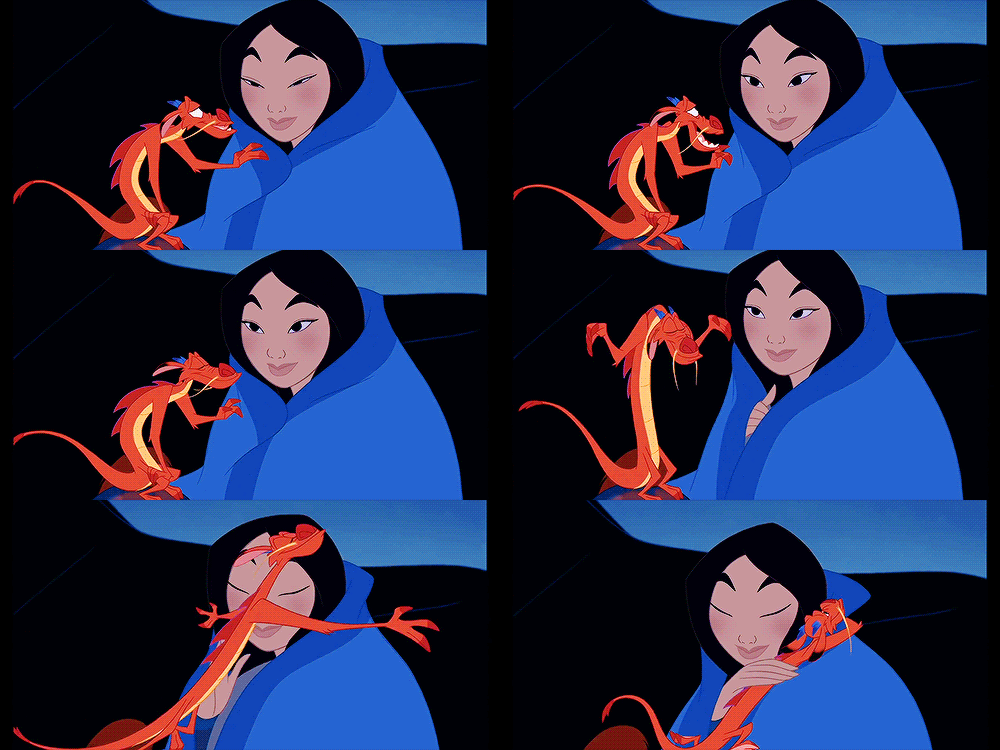
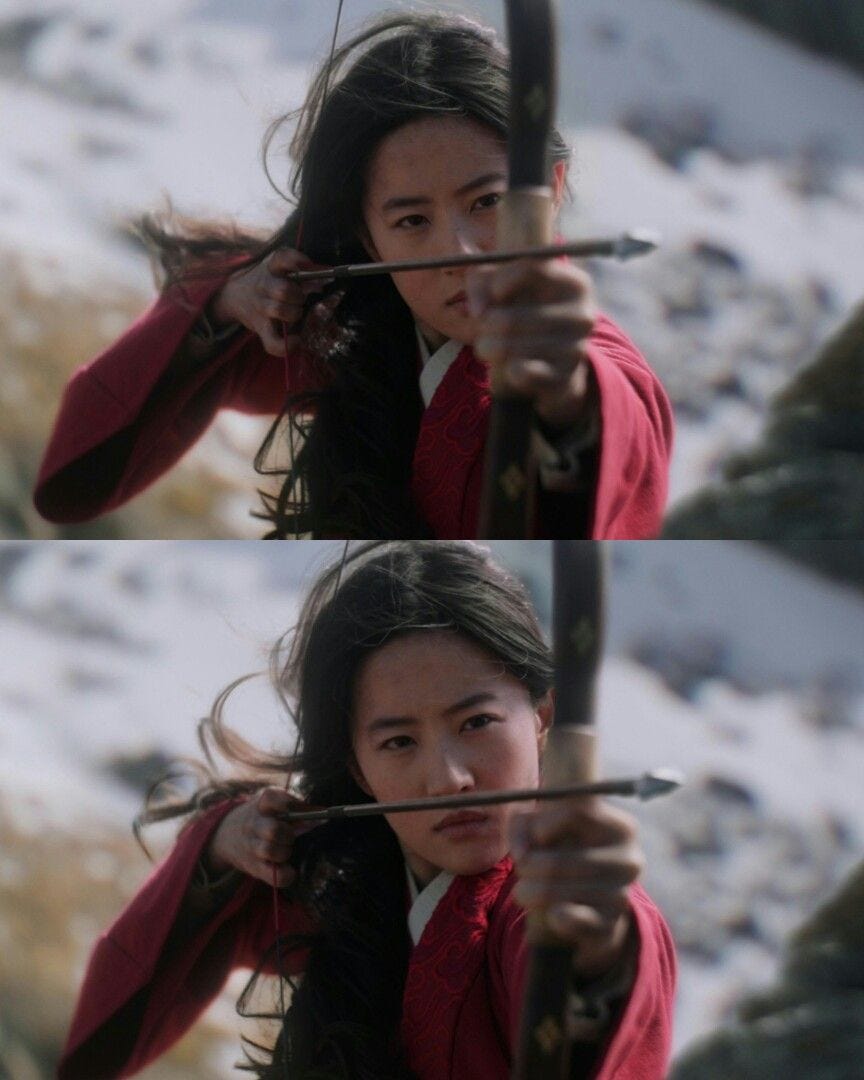
This double standard exposes the ideological underpinning of the “colour-blind” argument. The goal of modern adaptation is not a universal transcendence of race, nor is it a genuine belief that “looks don’t matter.” If that were true, the flexibility would be applied uniformly across all cultures. Instead, the asymmetry reveals a targeted dismantling of the Western default. European identity is the only identity expected to passively accept its own displacement and erasure in its native mythologies.
Erasure and the Real World: The Adolescence Anomaly
The asymmetry of race-swapping becomes most alarming when it transcends the realm of fantasy and historical fiction and begins to distort the portrayal of real-world, contemporary events. While media institutions are eager to race-swap historical or fictional white characters to increase diversity and representation, they are equally eager to execute “reverse race-swapping” when the real-world demographics of a crime or social pathology reflect poorly on minority populations.
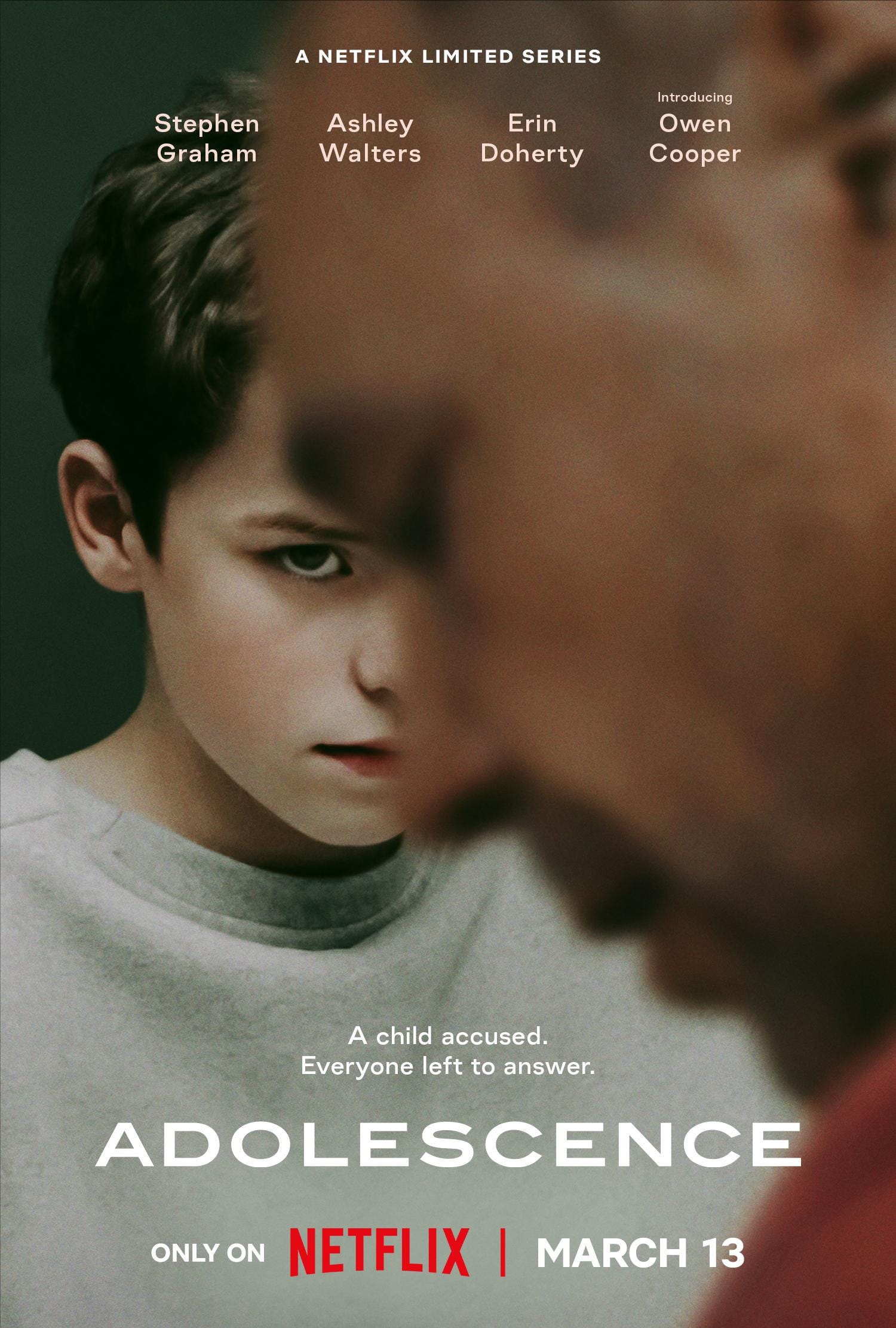
The starkest recent example of this phenomenon is the 2025 Netflix miniseries Adolescence, co-created by Stephen Graham and Jack Thorne. Shot in an ambitious one-take style, the four-part drama explores the harrowing aftermath of a thirteen-year-old boy who is arrested for the brutal stabbing murder of a teenage girl, his classmate Katie.
The Real-World Inspiration vs. The Fictional Portrayal
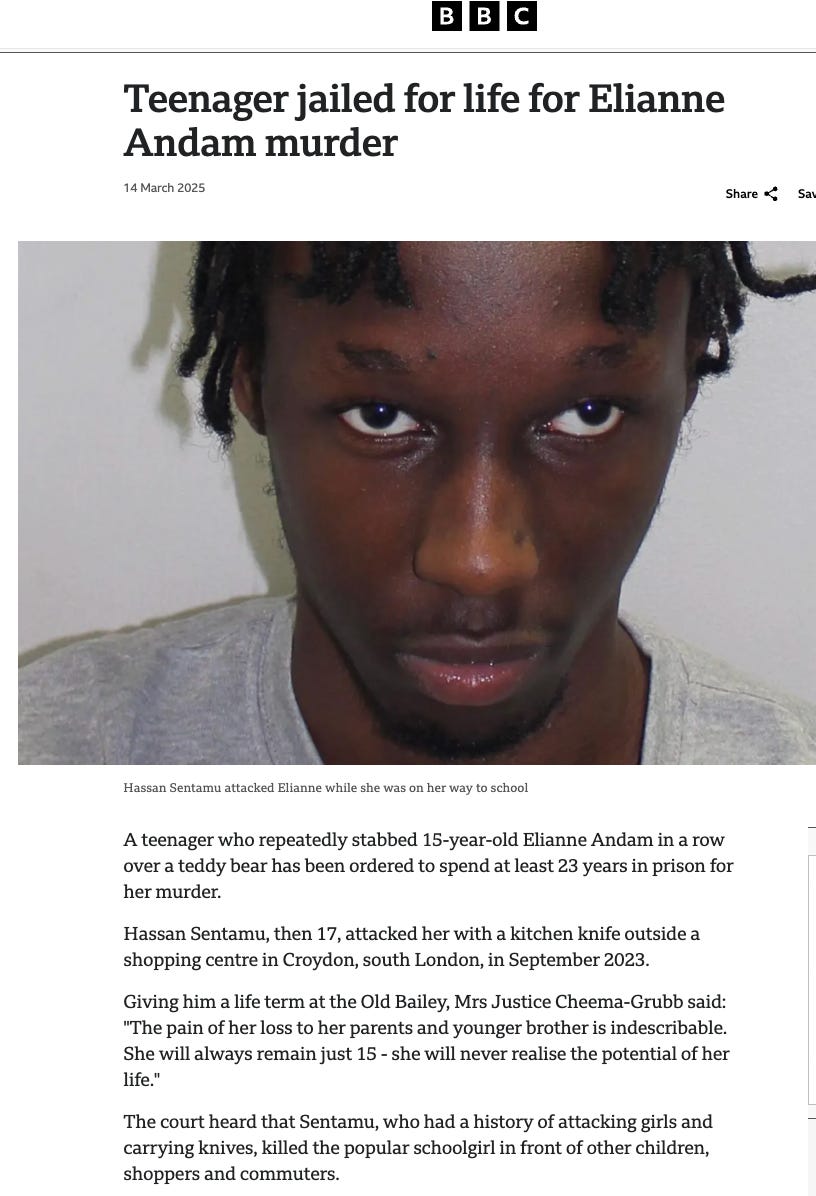
The creators have publicly stated that the series was inspired by a spate of real-life tragedies involving youth knife crime in the UK, questioning “what’s going on in society where a boy stabs a girl to death?”.13 Specifically, the narrative bears striking similarities to the tragic September 2023 murder of fifteen-year-old Elianne Andam, who was repeatedly stabbed with a kitchen knife by a seventeen-year-old boy at a bus stop in Croydon, South London.14
In the real-world case of Elianne Andam, the convicted murderer was Hassan Sentamu, a Black teenager with a documented history of violence, carrying knives, and abusing girls. During his trial, it was revealed he lashed out in a “white-hot” rage over a minor dispute, stabbing the victim mercilessly as she begged for her life.15
Yet, in the Netflix adaptation of this specific societal crisis, the perpetrator is entirely race-swapped. The killer is portrayed as Jamie Miller, a baby-faced, white British boy with “alabaster skin” from a working-class Yorkshire family.16
The creators actively chose to centre a white protagonist to bear the burden of a societal pathology, youth knife crime and the horrific stabbing of young women that, particularly in the urban centres of the UK like London, is statistically and disproportionately carried out by non-white demographic cohorts. By transforming the likeness of Hassan Sentamu into Jamie Miller, the media apparatus protects a minority demographic from association with a horrific, highly publicised crime, while simultaneously offering up the white working class as the acceptable face of toxic male violence.
When challenged on this, the creators argued that the show was not based on a single true story and that children of “all races” commit these crimes. Jack Thorne explicitly denied the “race-swapped” claims, asserting that the show is intended to explore “masculinity” rather than making a point about race. Yet, the public backlash, including commentary from Conservative leader Kemi Badenoch, who noted that “the boy who committed that crime was not white” and that the story had been “fundamentally changed” highlights the palpable frustration of a populace that recognises it is being ideologically gaslit.
Here, the doctrine of “it doesn’t matter” is weaponised to overwrite reality. Identity, it seems, is highly malleable when a studio wishes to appropriate a beloved European fantasy intellectual property to increase positive minority representation, and it is equally malleable when it wishes to obscure the uncomfortable racial realities of modern urban crime by shifting the blame to the white working class. In both directions, the mechanism operates to the detriment of the Western, native population, either by erasing them from their own foundational myths or by unfairly burdening them with the sins of the modern social fabric.
Conclusion: The Necessity of Cultural Seriousness
The cultural significance of race-swapping in modern media extends far beyond the confines of online fandom disputes, casting announcements, or television reviews. It is not only a debate about whether an actor like Paapa Essiedu can deliver a compelling performance as Severus Snape, or whether a white boy should represent the face of urban knife crime in a Netflix drama. It is a fundamental struggle over the ownership, continuity, and survival of Western civilisational memory.
The willingness of Western elite institutions to treat their own cultural heritage as infinitely flexible, available to be disassembled, race-swapped, and retrofitted to appease contemporary political sensibilities is the ultimate symptom of a civilisation that has lost its nerve. A society that refuses to defend the aesthetic and historical particularity of its own folklore, its own literary achievements, and its own contemporary realities is a society preparing for its own obsolescence.
To cast Paapa Essiedu as Severus Snape, when viewed as part of a systemic, unidirectional trend, a trend that encompasses everything from the historical revisionism of Bridgerton and the folkloric disruption of The Little Mermaid to the deliberate distortion of real-world tragedies in Adolescence, it becomes clear that this is not about expanding the artistic stage. It is about replacing the actors, rewriting the script, and dismantling the cultural and ethnic continuity of the Western world.
If Western civilisation is to endure as a distinct and meaningful entity in a multipolar world, it must recover the cultural seriousness required to treat its myths, its history, and its identity not as blank canvases for ideological projection, but as inheritances worthy of solemn, unapologetic preservation. Fictional worlds are the ultimate reflection of the societies that forge them; to erase a people from their own fiction is the first step toward erasing them from history.
https://medium.com/@aeon151514/race-swapping-in-remakes-ac5910a28499
https://montevallo.dspacedirect.org/entities/publication/665b3683-01a9-4758-833a-3698d1f8b2aa
Ibid
https://www.scribd.com/document/628115423/An-Archaeology-of-Materials-Substantial-Transformations-in-Early-Prehistoric-Europe-Chantal-Conneller
https://ro.ecu.edu.au/context/theses/article/1047/viewcontent/Critical_literacy_in_a_global_context__reading_Harry_Potter.pdf
https://medium.com/@nettlefish/harry-potter-and-the-spectre-of-british-identity-c12779f56f9a
Ibid
Ibid
https://www.newstatesman.com/culture/2017/06/harry-potter-british-culture
http://www.redwoodandbirch.com/2016/06/03/the-moral-universe-of-harry-potter/
https://andynaselli.com/potter
https://www.theguardian.com/commentisfree/2025/apr/20/black-snape-harry-potter-paapa-essiedu-actor
https://fullfact.org/online/netflix-adolescence-race-swap-claims-online-kemi-badenoch/
https://www.theguardian.com/tv-and-radio/2025/mar/17/adolescence-netflix-powerful-tv-could-save-lives
https://fullfact.org/online/netflix-adolescence-race-swap-claims-online-kemi-badenoch/
https://wearethemeteor.com/netflixs-adolescence-isnt-about-race-except-maybe-it-is/
Excellent writing! I made a similar point about the "dual posture" to which you refer in a conversation I had with a black American colleague. You've expressed it far more eloquently, though!
An articulation of what an increasing number of British feel, but who (like me) lack the erudition to set it out in such powerful and forensic detail as the exceptional Celina does here.
I recall a time when Britain was broadly homogeneous and helping ethnic minorities feel less excluded, less different was morally justified. But, this initially good impulse morphed into advertising agencies and TV show producers going out of their way to virtue signal they had got with the program and under a momentum of its own drove this process to excess. The road to hell really is paved with good intentions. Whether or not cultural institutions realise they are erasing a nation's history and identity, and whether that is now an actual intention - it is for the UN and EU perhaps - it is a subject that needs consideration and debate.
Re-engineering can be an emergent property of society rather than reflect an explicit blueprint. I suspect our current predicament is a mixture of both. That is, the untethering of a nation from its history begins as drift and is then utilised by globalism. Fully anchored societies like Hungary, Poland are redoubts against this. But then they have the advantage of not having succumbed to the cult of multi-culturalism.
Since the article considers the role of fantasy, I have one of my own, a feverish dream, in which Kathryn Viner, editor of The Guardian, one day suffering some particularly large hormonal imbalance perhaps, inadvertently publishes Celina as its lead article. MPs momentarily acquire an IQ higher than typically obtains these days and start having a genuine and exploratory debate, further reported by an intially bewildered main stream media but pushing the topic into fully articulated national consciousness and discussion. Meanwhile, the goverment rewrites its social cohesion paper and stops playing whack-a-mole with the problems of multiculturalism but seeks solutions that respect history.
A feverish dream indeed and one that probably requires a Harry Potter spell to bring about.
My pre-order for Celina's book of essays remains.