

Australian Values or Mass Third World Immigration: Pick One
The Coalition has finally admitted that migrant values matter. It still refuses to think at the level on which values actually exist.

The Liberal Party discovers “Australian” values
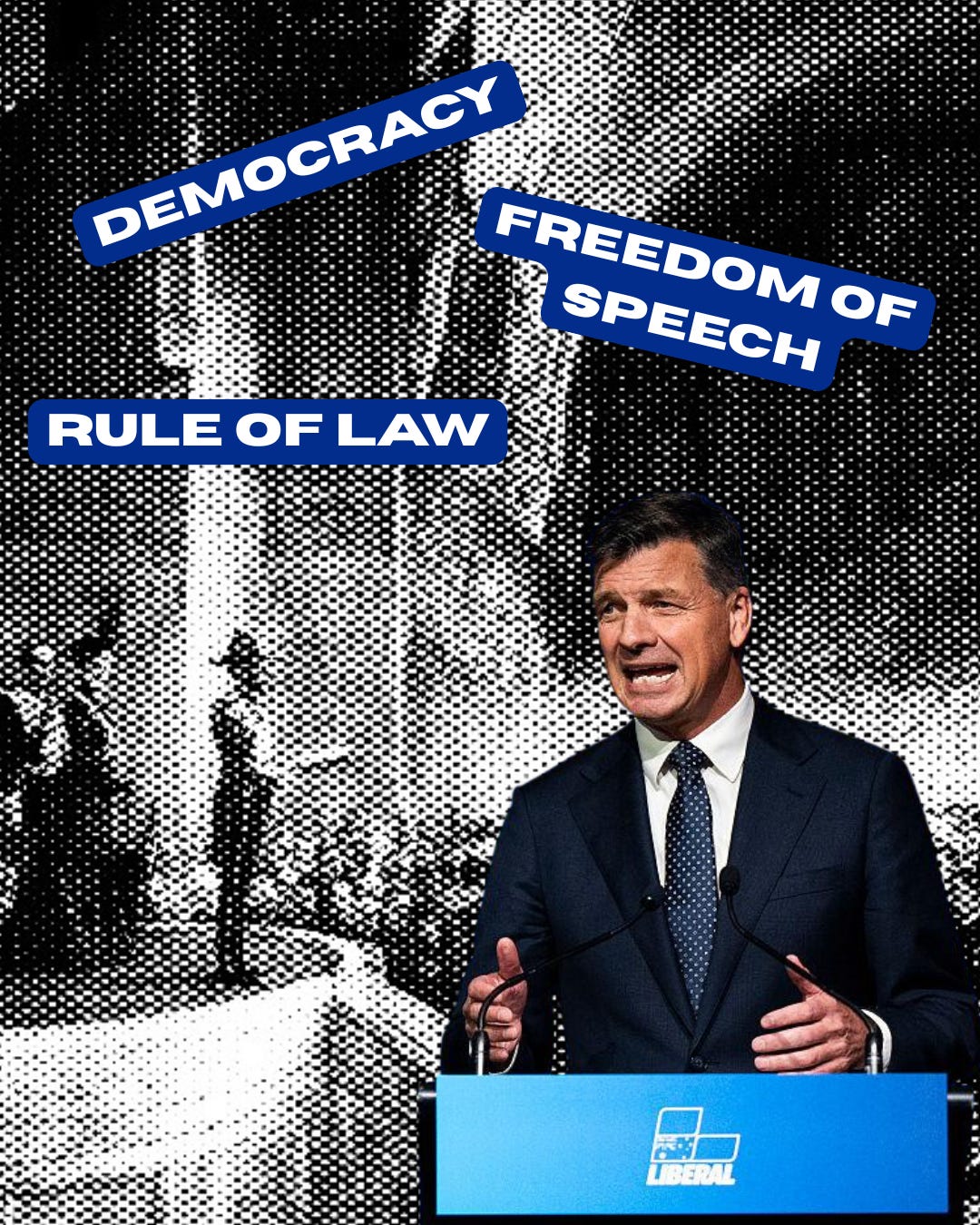
The leader of the Liberal Party, Angus Taylor, announced that a Coalition government would put “Australian values” at the centre of its immigration policy1 The Coalition has promised that the Australian Values Statement, which is a document every visa applicant currently signs - promising respect for freedom of speech, association and faith, commitment to the rule of law and democracy, and equal opportunity would cease to be just a tick-box exercise.

At first glance, you should recognise that these are Western values, not specifically Australian. None of them are unique to Australia. They are Western values derived from British settlement, and Australian values come from the fact that this country was founded by British people carrying a British and more broadly Western institutional inheritance.
Taylor also stated something whose implications he may not fully grasp: migrants from liberal democracies have “a greater likelihood of subscribing to Australian values.”2 For the past few decades, both major parties have treated the demographic composition of the migrant intake as culturally irrelevant. A Swede and an Afghan were held to be equally probable carriers of Western values, and to suggest otherwise was inappropriate wrong-think. This comparison becomes more absurd once the values in question are recognised as Western rather than uniquely Australian.
Sweden is a Western country whose institutions and people already produced the political culture Australia inherited, Afghanistan is not. So with this, Taylor has now conceded the obvious. Origin does matter as political culture travels, and the institutions and peoples that formed a person shape the probability that he will flourish under ours.
This is a rhetorical advance from the Liberals, but also a cowardly half-measure. Having admitted that values are produced at the level of societies, the Coalition still proposes to manage them at the level of individuals, through a signature, a social-media audit, a character test and deportation powers.
The very premise of testing values at the individual level is laughably unrealistic. Applicants can be trained to pass the tests. They will tick all the boxes and say, “Yes, I agree with all this stuff.” But how do you know they mean it?
You cannot know what someone believes by putting them in a situation where they are incentivised to lie to get what they want. You can know what someone believes by looking at the evidence of their actions. But it is not possible to run a full character analysis on every individual person arriving in the hundreds of thousands. The only feasible way is to analyse it at the level of the country and the group. There may be individual Iraqis who sincerely want to assimilate and adopt “Australian values”. Yet, it is not feasible to separate those ones from the ones who do not. The only practical course is to bring migrants from places where pretty much all of them already have these values, where they have been established organically in the culture over centuries.
When Taylor was asked what conduct would actually breach “Australian values,” he said the details would be fleshed out in government.3 Existing law already bars criminals, security risks and advocates of violence.4 The values test is a fig leaf for continuing the largest non-White immigration program in the developed world. And that program rests on a lie about what values are.
If you’d like to support what I do, one easy way is by purchasing any books through The Rite Books. Just use the code CELINA at checkout for 5% off, it helps support both the bookstore and my writing :)
The group aggregation hypocrisy
A migration program is an aggregate. The modern Australian immigration bureaucracy treats the migrant as a singular atom, but no other domain of policy pretends otherwise.
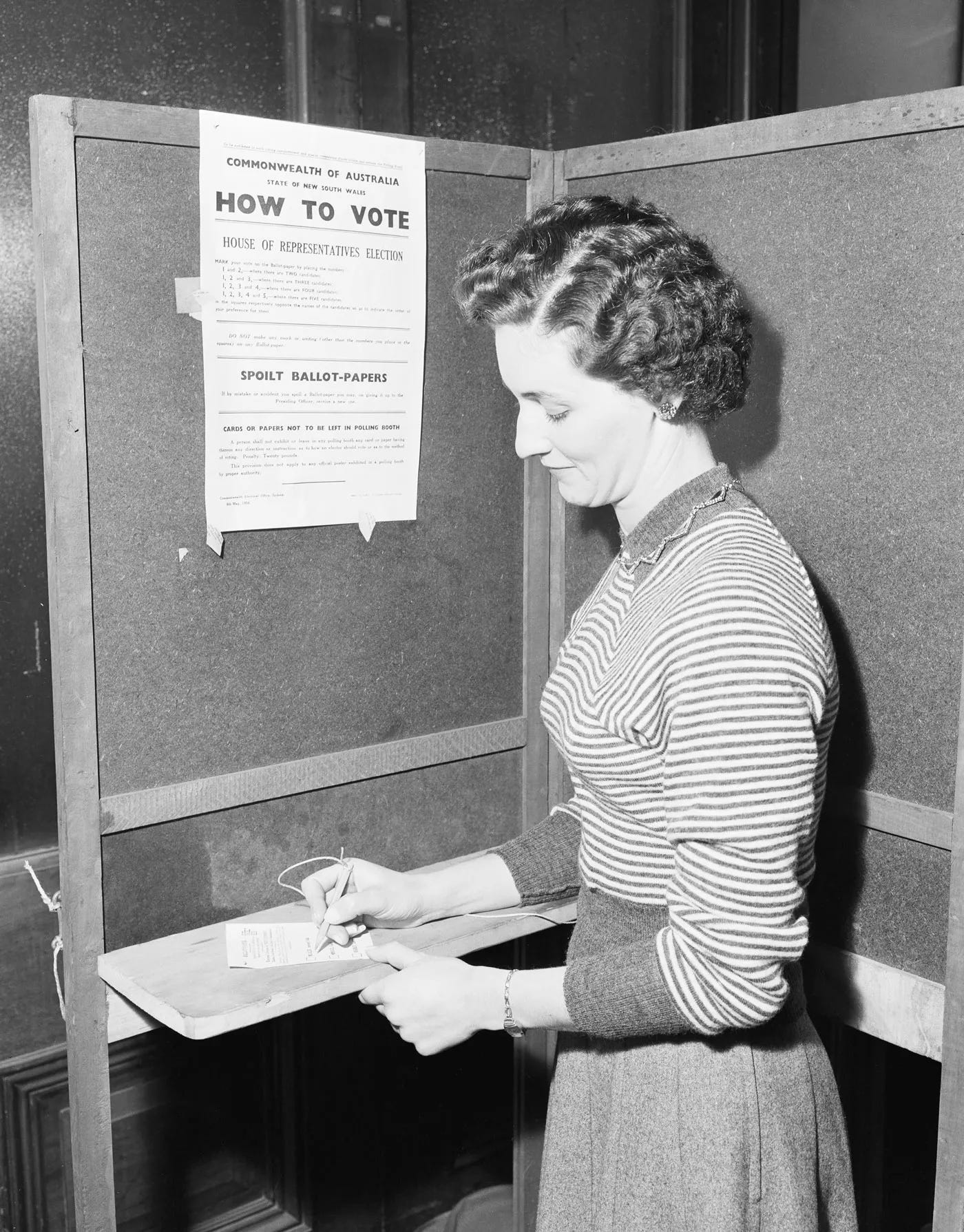
Democracy itself is rooted in aggregation. That is the reason why political polling works. Pollsters take a sample of a few thousand people and make sure the ratios match the total population on race, gender, income, age and so on. And because it is representative across these group aggregations, they can create a sample that predicts the views of millions of people within a few percentage points of error. The reason that is possible is because group aggregation actually works. Political polling then informs political strategy, and politicians seemingly understand group aggregation perfectly when they are competing for voters.
The same Liberal Party that says it does not matter what race you are will then come out and say we need to change our rhetoric to appeal more to non-White voters, or that we need to not criticise the CCP so much for fear of alienating Chinese voters.56 Or go after Jacinta Price for embittering Indian voters by pointing out their left-wing voting patterns (despite their apparent conservative disposition).7 Price was literally dumped from the frontbench over this and her refusal to apologise for the Indian comments. Liberal frontbenchers Alex Hawke and Julian Leeser had publicly rebuked Price, Hawke demanded an apology, and the ABC reported that some Liberals believed the party’s electoral future depended on improving its standing with migrant communities.8
There is an almost comic celebration parallax here, as Left-wing pollsters, journalists and politicians will openly celebrate the fact that particular migrant groups vote disproportionately for the them. Yet the moment someone on the Right cites the very same voting pattern as evidence that immigration has political consequences, the observation becomes improper and scandalous. It seems group behaviour is perfectly legitimate to discuss when it flatters the Left, but suddenly taboo when it comes from the Right.

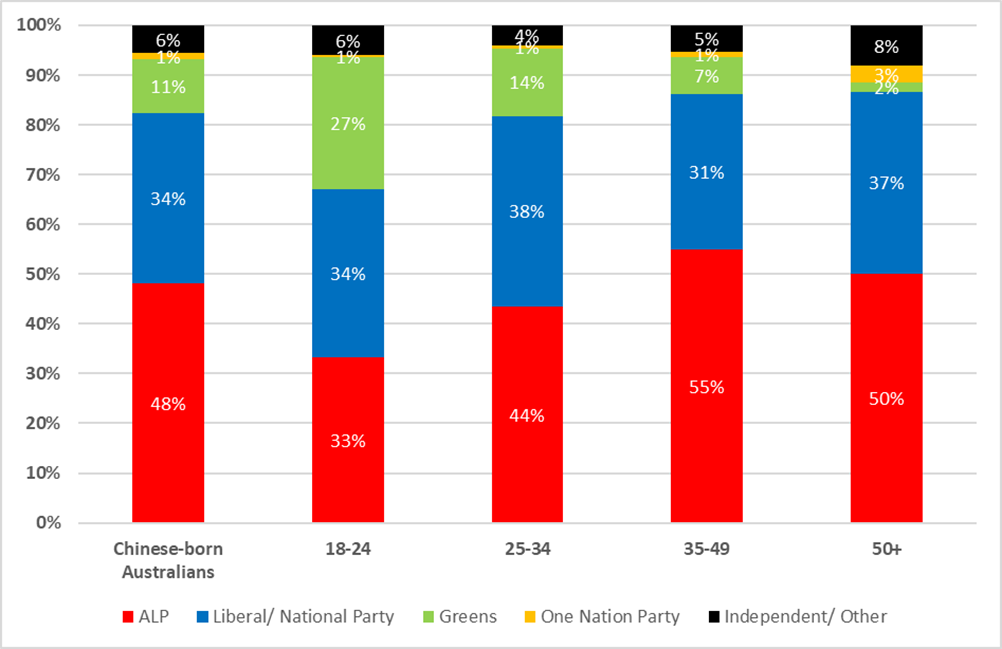
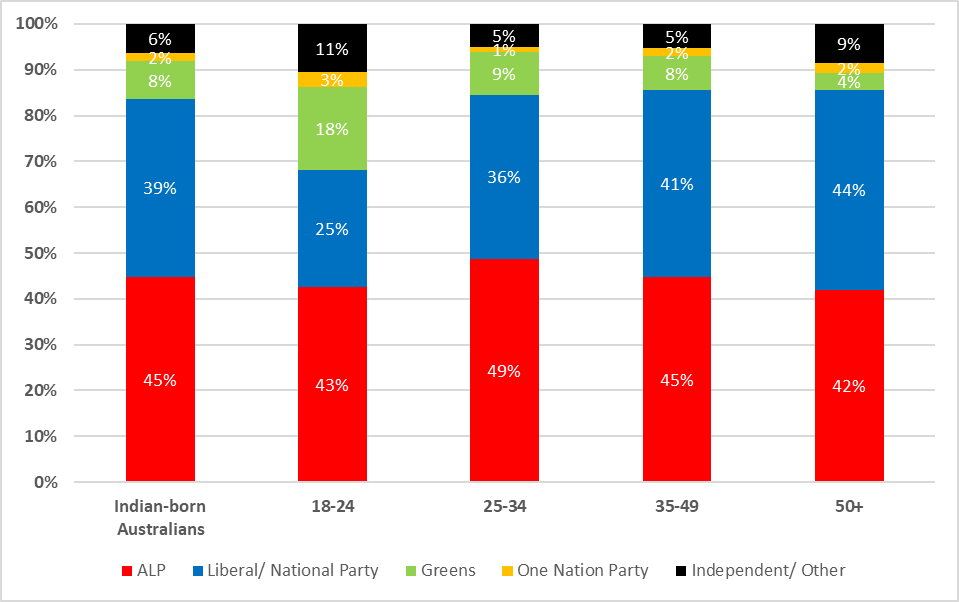
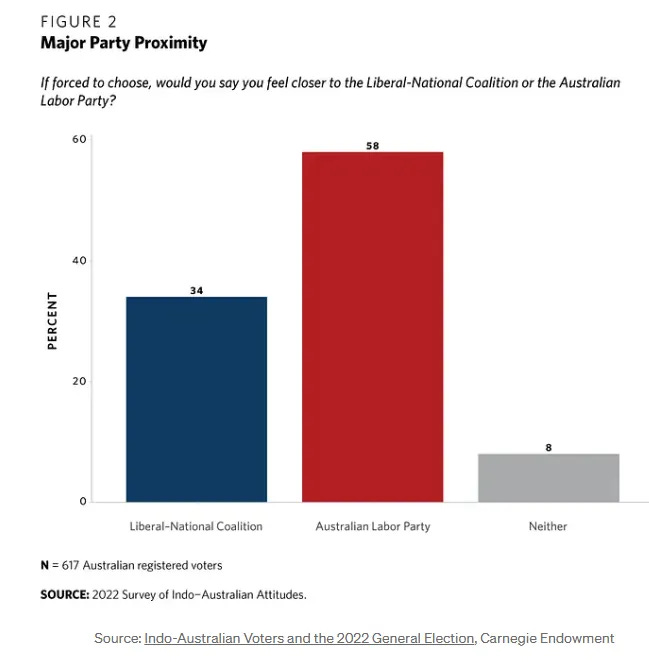
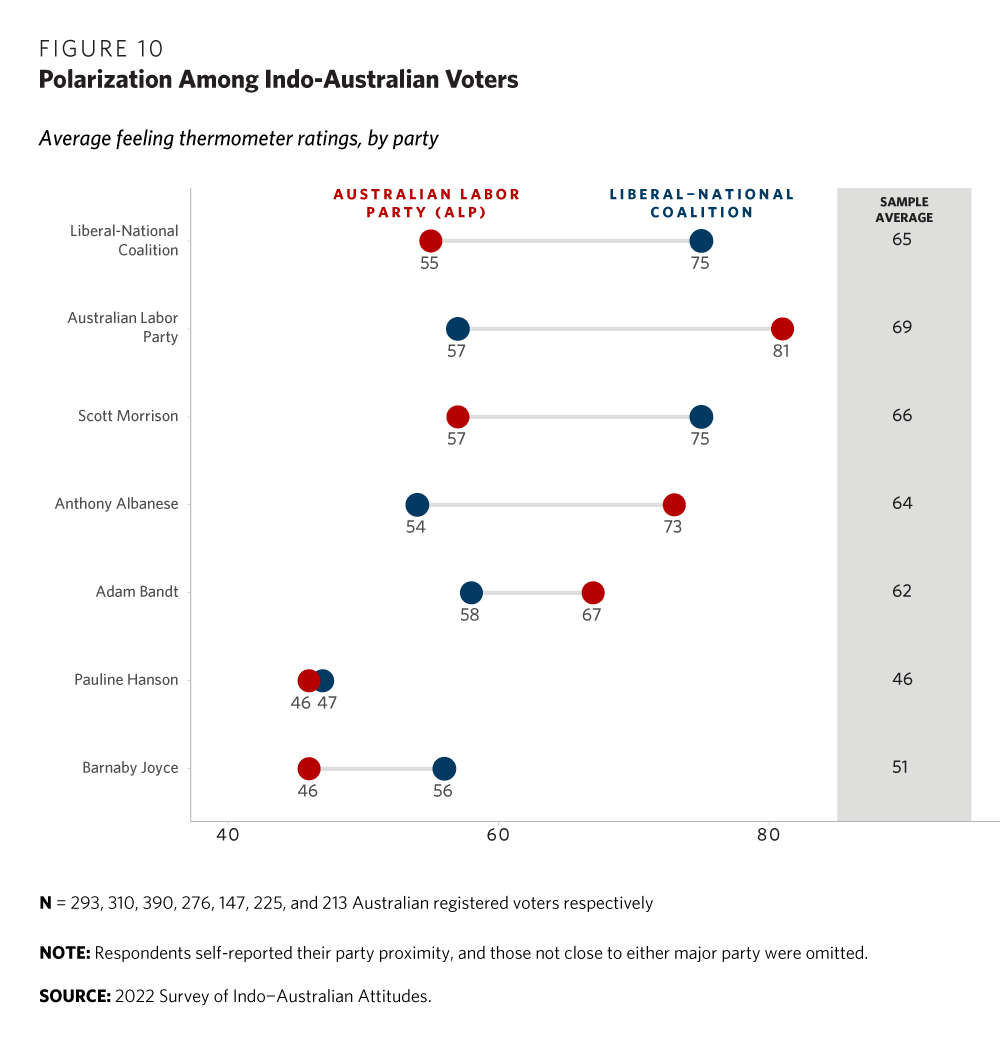
Politician understand that group aggregates exist when it comes to political campaigning and messaging. But the moment the same logic is applied to immigration policy it suddenly becomes fundamentally illegitimate; that is the group aggregation hypocrisy. They pretend it does not exist when it is convenient.
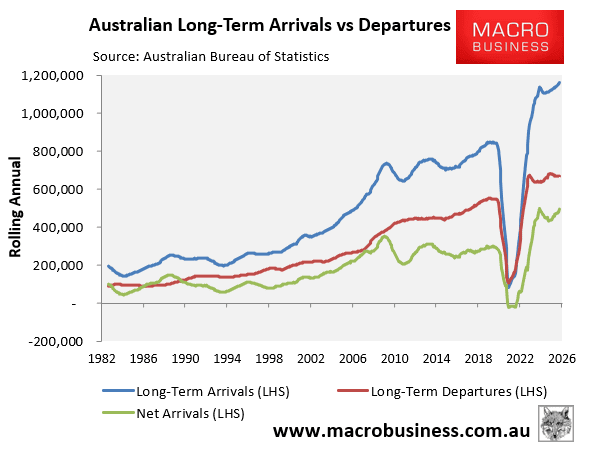
But reality is otherwise. People migrate with families, settle near co-ethnics, marry within communities, sustain homeland media and homeland politics, and transmit identity to their children.9 This is simply what human beings do. It is what the British did when they settled this continent. An immigration program is therefore an aggregate policy. The Coalition’s plan claims to address the problem while refusing to think at the level on which the problem actually exists.
Methodological individualism, the idea that values are portable properties that can be bolted onto any person who signs a form has been rejected by essentially all mainstream sociologists for precisely this reason. It is pure ideology, not social science. Values are derivative of a culture one must live inside and identify with. Values cannot conjure identity, identity produces values.
Where values come from
The Coalition’s values test assumes that values are propositions that anyone can absorb.
But this is not how any serious tradition of political thought has ever understood political culture. In fact, the father of conservatism, Edmund Burke called the real constitution of a nation its “manners,” which are according to him the settled dispositions beneath the written rules.10 Furthermore, the World Values Survey which is the largest empirical study of human beliefs has mapped the planet’s populations into stable cultural zones. Joseph Henrich’s work on WEIRD psychology argued that distinctive individualism, impersonal trust, and rule-following of Western populations were produced over a millennium by specific Western institutional pressures. These traits are psychological outliers specific to Westerners, not human defaults.
White people are WEIRD

Imagine you could pluck an ordinary person off the street in Melbourne, Munich or Minneapolis and drop them, language barrier magically dissolved into the middle of Tang dynasty China or a highland village in Papua New Guinea. You might expect culture shock, strange foods, strange gods, strange manners. What you might not expect is that the deepest shoc…
Western values are downstream from White Western identity. They are group properties, not atomised individual ones. Yes, you can find individual exceptions in any population, but the distribution of attitudes is a group fact.
Australia’s borrowed inheritance
What, then, is the inheritance the statement gestures at? Not “mateship,” the “fair go” or the “Anzac spirit.” Politicians of every stripe reach for these because they are warm and pretty unfalsifiable. But, if you break them down one by one, they fall apart.
Firstly, mateship. People have friends in all countries, Australia is not unique in the idea of having friends. That is a universal human value. In some respects, other countries’ cultures are more community-focused than Australian culture. The word is just a different label for friendship or friendliness. It is meaningless as a distinctively Australian claim.
Secondly, the fair go. Once again, another banal statement. Fairness as a principle is not unique. But an interesting way to look at this concept is through etymology. Fair originally meant “beautiful” in Old English (fæger) before shifting to mean light-coloured or white-complexioned. “Advance Australia Fair” carries that older sense. Fairness means whiteness, in the same way that kindness comes from the root word “kin”, how you treat one’s kinsman and “gentleman” comes from the Latin gens, the root of the word genetics, meaning to be of one stock. To be kind, gentle and fair are etymologically interrelated with shared descent and appearance. On top of that, fairness as a principle is understood differently in the Western world than in non-Western societies. It is a WEIRD outlier.
Finally, the Anzac spirit. First, you cannot really have the Anzac spirit if you are an immigrant from outside Australia and New Zealand, by definition. Second, the Anzacs were literally fighting for British imperialism. Third, they were fighting for a White Australia. The soldiers at Gallipoli, the old recruitment posters, parliamentary speeches and letters home make this unambiguous. These three things are not universalisable.
The first is global. The second is problematised by both etymology and the WEIRD thesis. The third is historically bounded and particular.
What is actually distinctive about Australia’s political order is its provenance. The colonies received the accumulated institutional capital of Britain: the common law, trial by jury, responsible government, a free press, property rights, the presumption of innocence, and, most importantly, its people. Federation in 1901 was drafted by men who understood themselves as British, ratified by voters who understood themselves as British, and interpreted by judges trained in a British legal tradition. Until 1949 there was no Australian citizenship. Australians were British subjects. Empire Day once mattered more than Australia Day.
Of course Britain was not the sole source. The inheritance was composite, Christian, classical, Enlightenment, commercial adapted under Australian conditions. But Australian values did not fall from the sky over Canberra. They are the customs of a particular people with a particular history. Modern Australia has spent fifty years celebrating the customs while disowning the people and the history. The official national story now effectively begins in 1973 with the end of the White Australia policy and the proclamation of multiculturalism. Everything earlier is retained selectively, like Anzac Day without the Empire the Anzacs died for.
The free-speech test
If values were universal, attitudes toward free speech would not differ systematically by civilisation and race. They do.
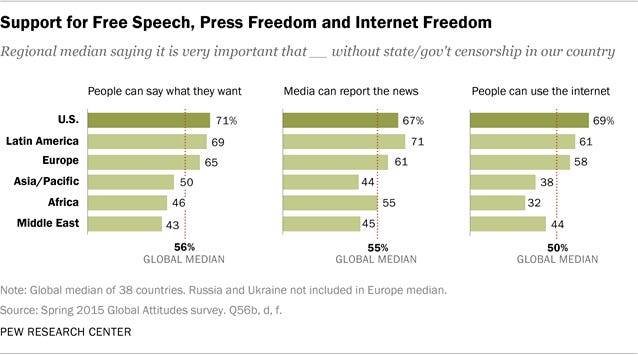
In 2015, Pew Research surveyed 40,786 people across 38 countries on the limits of expression. A global median of just 35 percent said people should be allowed to make public statements offensive to the respondent’s own religion. The United States topped the table at 77 percent, Australia recorded 62 percent and Canada 64 percent.11 In much of Africa, the Middle East and South Asia, clear majorities favoured government suppression of religiously offensive speech.12 The same survey found sharp differences within countries that track group identity. White Americans supported the right to say things offensive to minority groups at 72 per cent, non-White Americans at 57. In Israel, 39 per cent of Jews but only 15 per cent of Arabs supported such speech.13
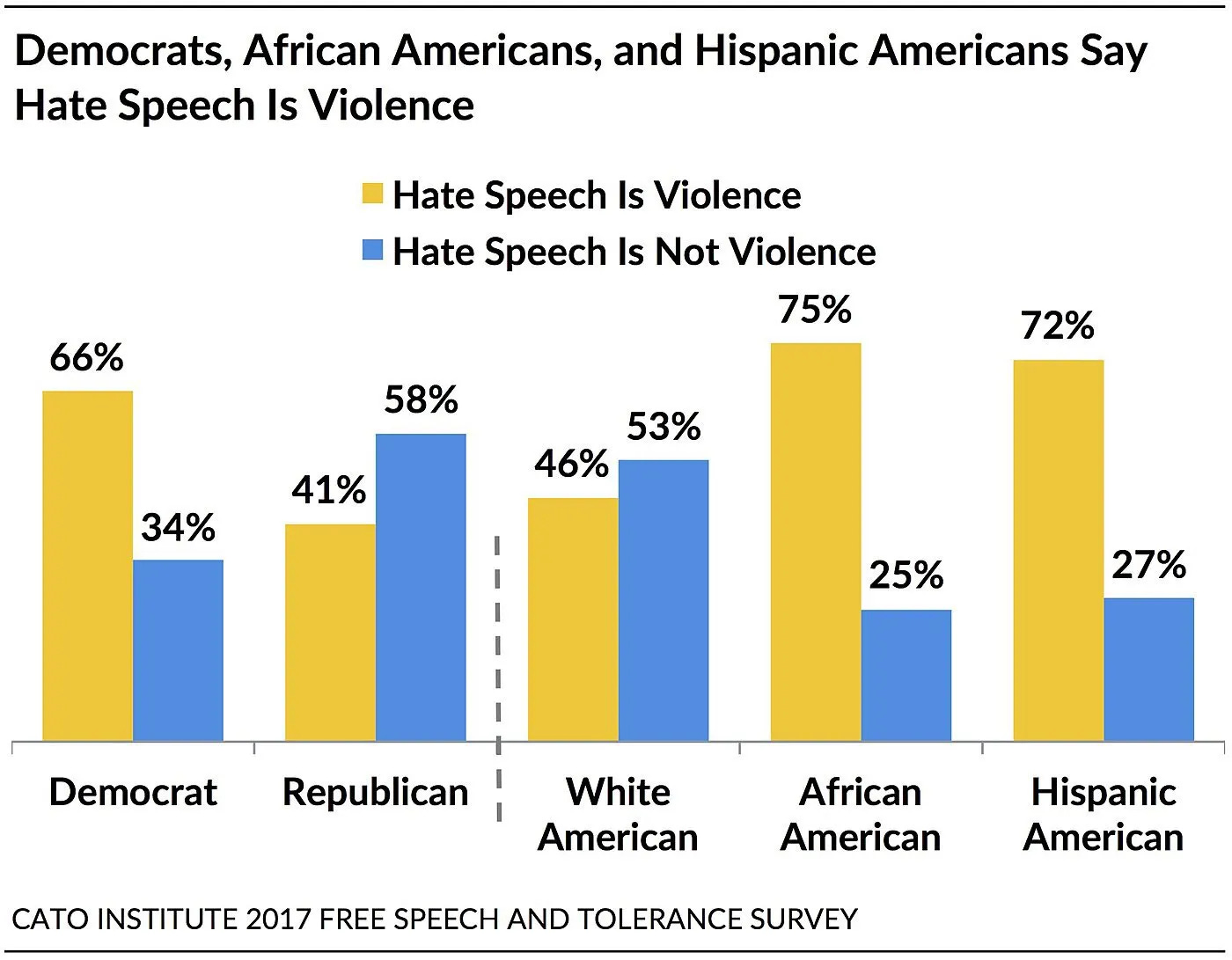
The Cato Institute’s 2017 Free Speech and Tolerance Survey found that 75 per cent of Black respondents and 72 per cent of Hispanic respondents agreed that hate speech is an act of violence, against 46 per cent of Whites; majorities of Black and Hispanic respondents, versus roughly a third of Whites, agreed that people who don’t respect others forfeit their free-speech rights. Sixty-two per cent of African Americans favoured a legal ban on hate speech directed at African Americans.14 At the level of states, Pew’s global audit found 79 of 198 countries maintained blasphemy laws in 2019, including ninety per cent of the Middle East and North Africa; 22 criminalised apostasy, thirteen of them in the same region.15 Pew’s 2013 study of the Muslim world found large majorities in several major migrant-source countries favouring the death penalty for leaving Islam among those who supported sharia as official law.16
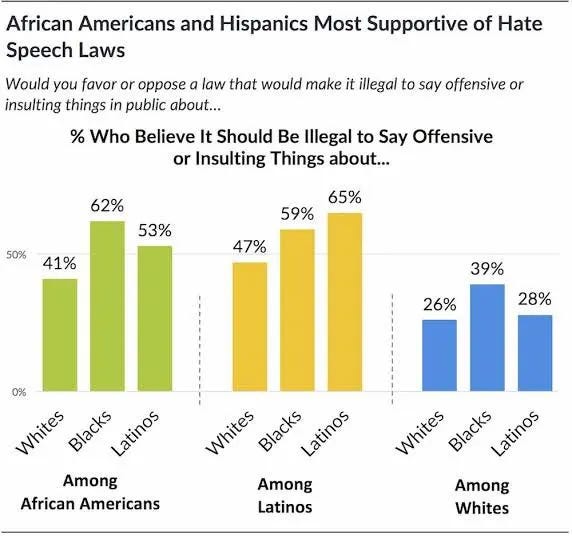
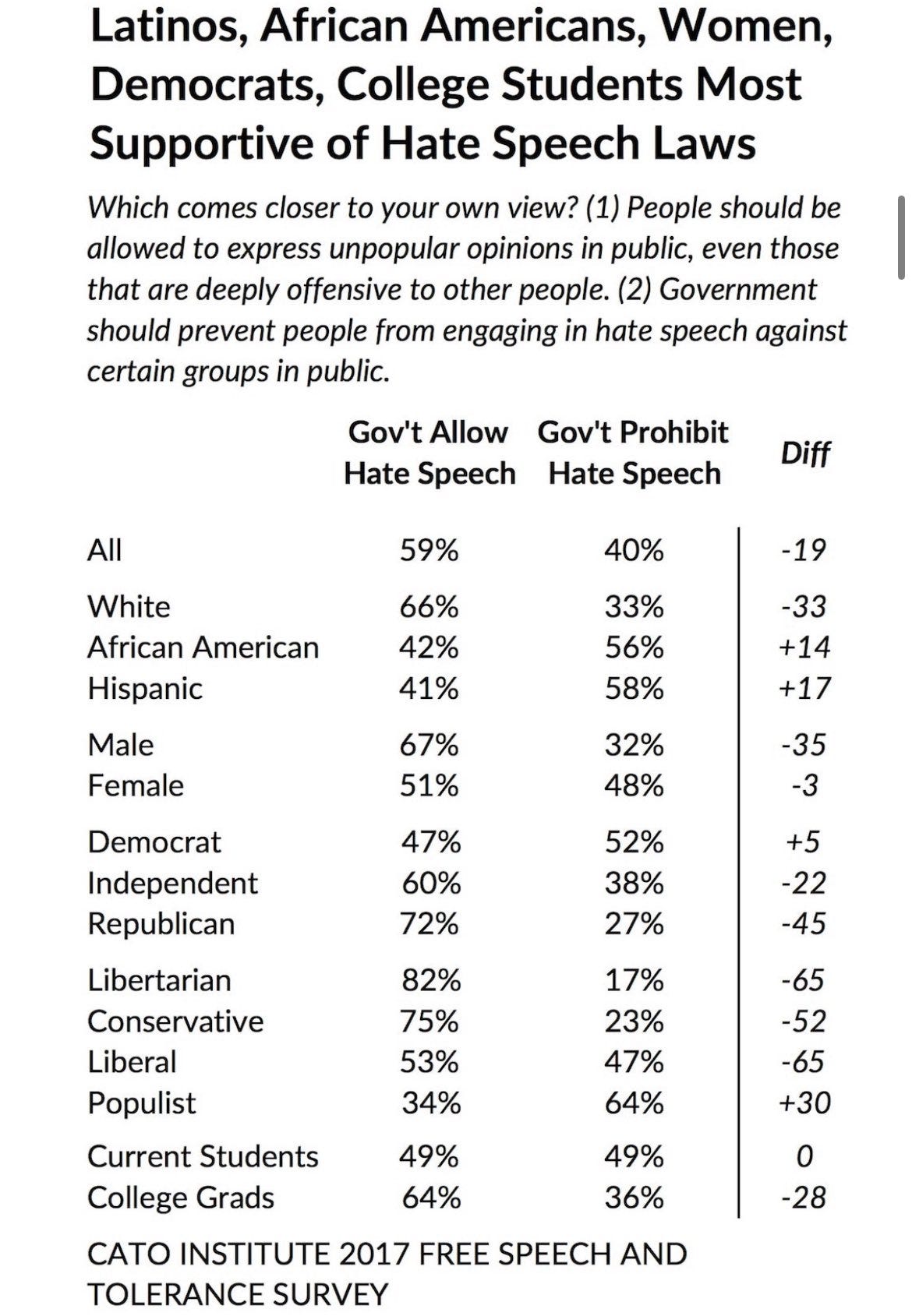
What the evidence supports is that populations formed under different peoples and institutions carry measurably different assumptions about what speech is for and when it should be punished. A migration program drawing heavily from such societies shifts the national distribution of those assumptions. A values test and social media audit might catch the man who posts beheading videos. It cannot catch the tens of thousands of arrivals whose settled instincts are alien to ours. Yes, it might be a value to them. It is simply not an “Australian” one, or was not, until the composition of Australia began to make it so.
The multicultural contradiction
Australians are asked to believe two contradictory propositions.
First: the demographic composition of the migrant intake is culturally irrelevant as individuals from any society can adopt Australian values.
Second: Australia’s increasingly diverse society is so vulnerable to offence and intergroup hatred that it requires an expanding apparatus of speech regulation such as section 18C, widened state anti-vilification laws, hate-symbol bans, religious-vilification provisions, misinformation frameworks and a permanent administrative culture of communal sensitivity.
Both cannot be true. Free speech is supposedly an “Australian value”. Speech regulation itself is contrary to that value. It is not just that people are not getting along. The regulation is a direct violation of the thing claimed as an Australian value. If newcomers absorb the host political culture, that culture does not need to be re-engineered to keep the peace among them. If social harmony now requires that Australians say less about migration, religion and one another, then demographic composition has already altered the operation of Australian values. Mass third-world immigration that necessitates censorship has changed the values it was claimed to leave untouched.
In a society with a strong common ethnic identity, a man can attack your ideas while remaining your countryman. The argument is a contest inside the family. In a society reorganised into permanent ethno-cultural blocs, criticism of a migration stream is treated as an attack on the identity of the group. Meta-analyses show a robust negative relationship between ethnic diversity and social trust. Lower trust plus mobilised communal identity is precisely the environment in which anti-vilification law becomes attractive to governments of both parties. The adversarial public culture Australia inherited presupposes participants whose membership of the nation is never in question. That presupposition is a demographic fact.
The idea of “modern Australia” is that tolerance, diversity and multiculturalism are Australian values. This is fundamentally incoherent. If Australia possessed substantive values binding on all, they would be incumbent upon newcomers to accept. Instead, the elevation of diversity and multiculturalism as core values functions as a repudiation of any particular Australian inheritance.
They are anti-values by definition. If shared values are important, that implies homogeneity is better than diversity, because more homogenous populations have greater social cohesion and more shared values. Actively encouraging heterogeneity is a revealed preference against social cohesion and shared values. Defining these things as our shared values means the only value left is anti-values. Labor and the broader progressive project are rooted in this contradiction.
No values without the people who made them
Freedom of speech is not one Australian value among several. It is the precondition for noticing, naming and contesting everything else; intake numbers, ethnic voting patterns, civilisational identity, demographic change itself.
Under free argument, the defenders of mass third-world immigration must persuade the public to consent to all of these paradoxes, which more and more people are seeing through. But, under a mature censorship regime they need only prevent the public from articulating opposition. A patriotic movement that cannot legally name the policy it seeks to reverse has already lost.
So pick one. Australia can maintain the largest sustained third-world migration program in its history, institutionalise social incohesion, and progressively tighten the rules of public speech to manage the resulting frictions. Or it can preserve the inherited political culture drawn from its White British and Western inheritance. The Coalition’s plan pretends the choice does not exist.
A nation is an inheritance carried collectively through time by a particular people. Values are properties of that people. Because a values test cannot be meaningfully applied at the individual level, an immigration policy built around maintaining Australia’s values has to be applied at the level of the group. A country cannot lie about its values, its values are what they are. If you want migrants who will adopt Australian values, the easiest and only feasible way is to prioritise migration from other White Western countries, where those values are already established organically over centuries. Individual exceptions exist, but you cannot sort them at scale. Bring people from places where the distribution already matches what you claim to want.
If Australia transforms the people, suppresses the history, and restricts the speech through which the inheritance is defended, no values statement will save it. Western values require White Western people. There is no third option.
https://www.liberal.org.au/2026/04/14/coalition-launches-first-wave-of-australian-values-migration-plan
Ibid
https://www.abc.net.au/news/2026-04-17/coalition-migration-plan-policy-angus-taylor-martin-parkinson/106557600
https://www.ibanet.org/character-concerns-immigration-australia
https://cdn.liberal.org.au/2022/2022_election_review.pdf
https://www.abc.net.au/news/2026-07-16/gender-quotas-revived-in-liberals-soul-searching-mission/106920398?
https://www.abc.net.au/news/2025-09-04/liberal-party-faces-fierce-backlash-from-indian-community/105735164?
Ibid
https://link.springer.com/article/10.1007/s12546-022-09280-w?
https://lawliberty.org/burke-and-the-nation/
https://www.pewresearch.org/short-reads/2015/11/18/where-the-world-sees-limits-to-free-speech/
Ibid
https://www.pewresearch.org/global/2015/11/18/2-the-boundaries-of-free-speech-and-a-free-press/
https://www.cato.org/sites/cato.org/files/survey-reports/topline/cato-free-speech-tolerance-toplines.pdf
https://www.pewresearch.org/short-reads/2022/01/25/four-in-ten-countries-and-territories-worldwide-had-blasphemy-laws-in-2019-2/
https://www.pewresearch.org/religion/2013/04/30/the-worlds-muslims-religion-politics-society-overview/
Another penetrating exposé from Celina.
Politicians talk about values as assent to propositions. But, assent to a proposition - do you agree with freedom of speech? - is mere opinion and so volatile. It is beliefs - dispositions to think and behave in certain ways - that characterise cultures and these are not assessable by a short interview. An individual from a culture in which women are mere chattels subordinate to men, raised and socialised in such a culture, acquires beliefs, dispositions to think and act in certain ways, almost like reflexes. An individual may forgo ingrained beliefs but the probability is that most will not. The so called grooming gang scandal, in which savagery toward vulnerable girls in the UK included many perpetrators who had been outwardly living in accordance with western values for years. Their beliefs which morally excused themselves persisted.
It is astonishing how "Sticks and stones may break my bones, but words will never hurt me" has been turned in its head. It would seem that feeling development in humans and expressed in their politics is about the age of five.