

White Immigration is Good
Unlike Europe, Australia can still run an immigration program with people who share our values, assimilate easily, and keep the right electable, without the crime, welfare, or demographic disasters

Australia stands apart from every other Western nation when it comes to immigration, as it can still run a high-volume immigration program largely with European peoples. There are literally millions of people from Britain and the rest of Europe who want to move to Australia and would do so. That is not true for Europe. Outside Europe, there are nowhere near enough white people eager to relocate to European countries, so the bulk of their inflows are African, Arab or Asian, and some of those groups deliver massive net negatives on the economy and culture.
Australia’s story is completely different; this country was literally built out of immigration in a way that is only really analogous to North America and other Anglo-settler nations. The majority of the people arriving now are East or South Asian, and they come legally. Of course we still have the usual immigration-associated problems, but they sit inside a different paradigm altogether.
Australia was not only built by immigration at some distant point in the past. It continues to be built through immigration. The colonial settlement of the continent was an expanding British civilisational project, and immigration remained one of the principal mechanisms through which that project reproduced itself. New generations of settlers arrived, established families, built towns, institutions and industries, and extended Australian society across the continent. That is to say, immigration was a continuous part of Australian history.

This is why Labor’s familiar claim that Australia is “a nation of immigrants” is simultaneously true and misleading. Australia was created through immigration, but it was not created through immigration in the abstract. It was created overwhelmingly through British and European immigration. The society, institutions, language, legal system, political traditions and cultural assumptions of modern Australia emerged from that particular population.
Obviously, being a nation of immigrants does not mean being a nation without an identity, Australia’s identity was established by a historically identifiable migrant population. The fact that Australians arrived from elsewhere does not render the resulting nation culturally empty, it simply means that Australia’s national identity was transplanted and developed rather than arising indigenously from the continent.
Even after the formal dismantling of the White Australia policy, the immigration intake remained heavily European for a considerable period of time. The broader point, however, remains unchanged, the legal end of racial selection did not instantly transform Australia’s demographic intake. The movement from predominantly European immigration to the present Asian-dominated system occurred gradually over several decades. That historical fact makes the Australian situation unique, it is not a European-style argument about “native people being replaced.” Trying to force that template onto Australia produces idiotic claims and muddies the waters. The conversation here is distinct, and almost no one is having it properly.
The description of Australia as a migrant nation should therefore strengthen the case for Western immigration rather than weaken it. The nation’s historical success was inseparable from a particular form of migration: European. If Labor wishes to celebrate the migrant origins of modern Australia, it should be required to explain why it now appears uninterested in attracting the kinds of migrants who historically built and assimilated into the country.
If you’d like to support what I do, one easy way is by purchasing any books through The Rite Books. Just use the code CELINA at checkout for 5% off, it helps support both the bookstore and my writing :)
The Wrong Immigration Debate
In Europe, the entire debate is around shutting the border, sending people back, and dealing with the crime and welfare disasters that follow low-skill, culturally distant arrivals. In Australia that is obviously not the primary dimension as illegal migration is not a serious problem the way it is in the United States or Europe. Crime and welfare rorts exist, but they are not the central axis of the conversation.
The real Australian discussion is about returning to primarily European migration.
Australia also possesses a strategic advantage that most European countries lack: it remains exceptionally attractive to potential migrants from other Western societies. Its climate, beaches, wages, political stability, low population density and general standard of living make it one of the most desirable destinations in the world. For many people in Britain and Europe, Australia represents a combination of prosperity and lifestyle that they may regard as superior to what is available at home.


This attraction is not limited to Britain, although British migration provides the most obvious case.12 There is likely considerable latent demand throughout Europe among people who would consider moving to Australia if the process were made easier. Evidence concerning British interest already exists, according to a poll Robert Half ran on LinkedIn over one week in August 2022, 53% of British jobseekers would consider moving to Australia for a new job.3

If Australia established migration agreements with Britain and selected European countries approaching the freedom of movement enjoyed by New Zealanders, it could attract very substantial numbers of Western migrants. Britain is particularly important because no country is more culturally compatible with Australia. Australia’s language, parliamentary system, common-law tradition and many of its fundamental social norms were inherited from Britain.
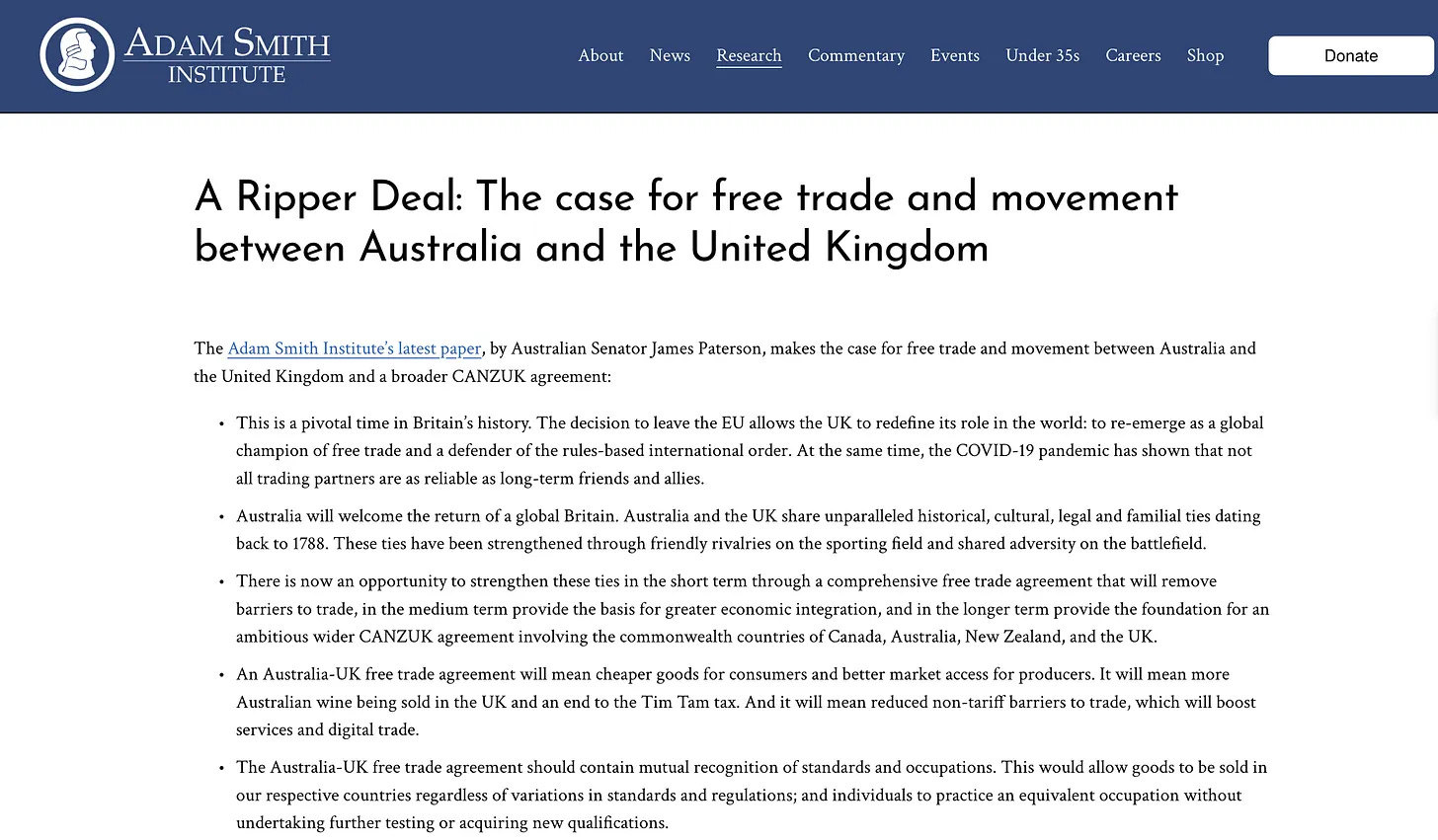
Following Brexit, proposals were raised for a much more liberal movement arrangement between Britain and Australia, allowing the citizens of each country to live and work more easily in the other.4 Australia should be pursuing deeper mobility arrangements with Britain and Europe instead of directing its most generous migration concessions towards India.
The Alternative: Keep Immigration (but lower it) and Change the Composition
That is why this idea needs to be pushed, as it should be an obvious point to anyone paying attention, yet it is barely discussed; resulting in a discourse plagued by the wrong framing. Properly stated, the case is positive rather than purely defensive. European immigration is good. Australia can have the economic and demographic benefits of immigration without the downsides that plague Europe simply by prioritising the right source countries. You can have your cake and eat it too. Deportation and remigration still matter, but this is the constructive alternative: Decrease the inflow, change the composition.
Obviously, Immigration still needs to be reduced substantially, the argument that the current level is excessive is already mainstream. Housing shortages, infrastructure pressure, declining living standards and public dissatisfaction have made lower migration politically difficult to avoid. But the relevant question then becomes who should receive those limited places to migrate to Australia.
This distinction must be made explicit. Australia should reduce the overall number of migrants while simultaneously prioritising applicants from Western and culturally compatible countries. Lowering the intake addresses economic and infrastructural pressures. Changing its composition addresses assimilation, social cohesion, political continuity and national identity. These are related but separate questions.
There is also the economic pressure. People constantly claim we need high migration to prop up an ageing population and fill labour shortages. If net migration went strongly negative for several years and large numbers were deported, a recession would follow, and the political pressure to reopen the taps would become immense. Birth rates will take a generation to recover even under the best policies. Therefore any serious plan must include a sustainable, high-quality immigration stream, and that stream should be Western.
This also raises another problem with the economic case for migration. The system is usually defended as though Australia were importing isolated units of labour: one engineer, one doctor, one technician, each selected to fill a particular shortage. But, human beings do not migrate as detached economic inputs, they come with their wives, husbands, children, parents and wider extended family.
This is completely normal and obvious, families want to live together, and it is unrealistic to recruit someone to the other side of the world and then tell him that his family has no place in his future. The problem is that this reality completely undermines the fiction that immigration can be organised purely around economics. Even when the first visa is awarded for a particular skill, the government is establishing the conditions through which an entire family, and potentially an extended chain of relatives, can be transferred from one country into Australia.
That is the reason why the composition of skilled migration matters so much. If Australia prioritises a Western engineer, and that engineer brings his wife, children and eventually other members of his family, the result is more Western immigration. The family stream ceases to be an unfortunate loophole and instead becomes part of the benefit. Australia is not only gaining one skilled worker, it is gaining a whole family that is more likely to share the country’s broad cultural assumptions and assimilate into its existing society.
This does not mean ACTUAL skills should be ignored. Australia should still favour genuinely qualified migrants where there is a real and demonstrated national need. But economic criteria cannot be the only criteria, as that model has failed even on its own terms. Many of the occupations placed on skilled-migration lists are barely credible as genuine national shortages. The system has at various times admitted applicants in fields that do not remotely justify permanent migration, while large numbers of supposedly skilled migrants end up working in jobs that make little or no use of the qualifications under which they entered.
A Policy Already Inside the Overton Window
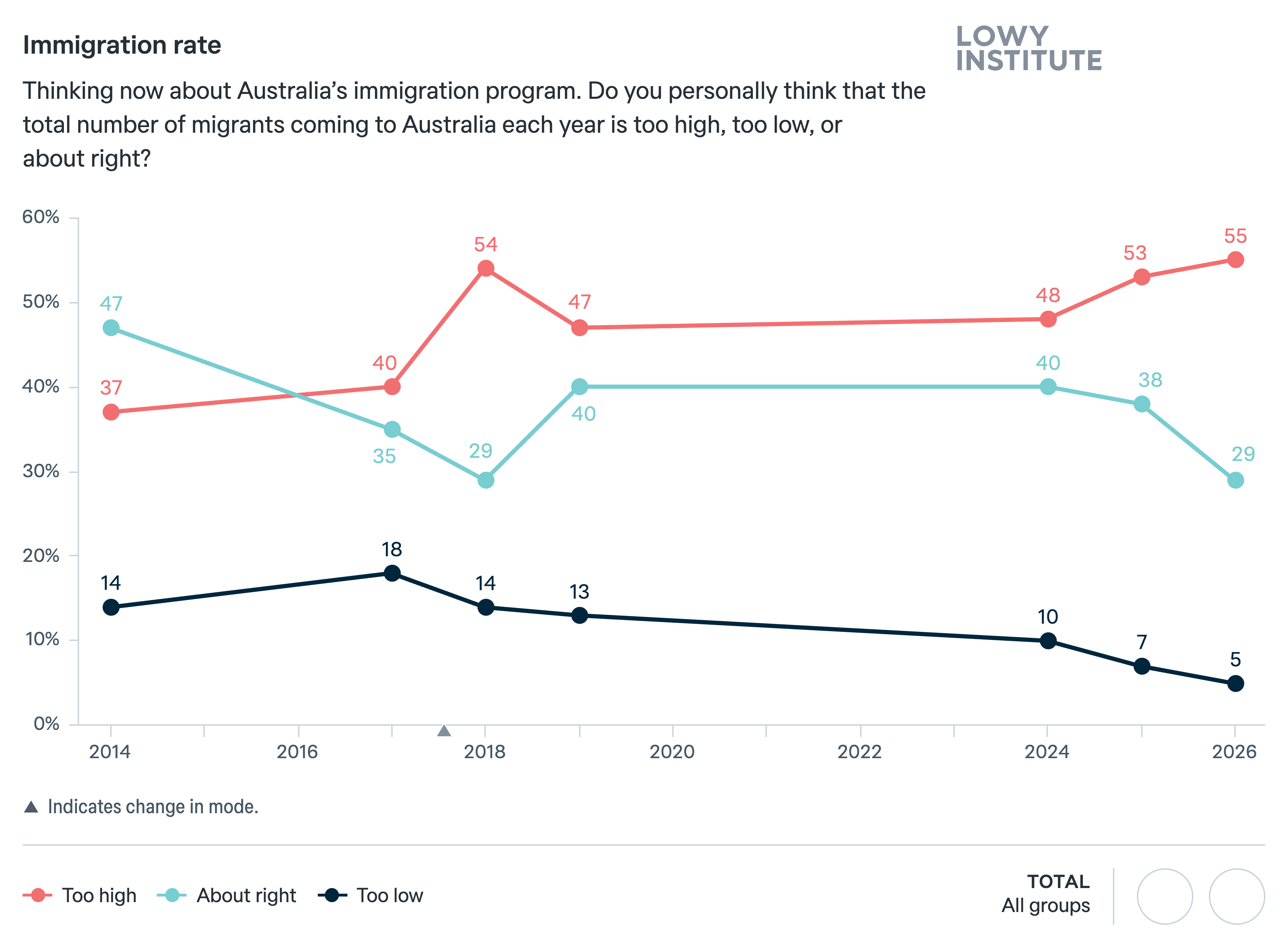
There are several natural ways to advance the argument. One is the abstract claim that European immigration is good in itself. Another is the practical political angle for One Nation: it is not realistic to demand a full restoration of the White Australia policy, but it is entirely realistic, and already inside the Overton window, to say that Australia should prioritise Western migrants because they come from countries that share our values and have a proven track record of assimilating. That rhetoric is mainstream-compatible. Empirical evidence already shows it would be wildly popular. European immigration is more popular with the Australian public than simply stopping immigration altogether.5 Plenty of people hold positive views of immigration in principle; they just prefer it to be from Europe.6
There are also practical ways in which such a policy could be implemented. Australian migration operates through a series of visa categories, planning levels, eligibility requirements and administrative priorities. Each category admits a limited number of applicants, whether through formal caps, annual planning levels or practical processing constraints. A future government could give priority within those categories to applicants from Britain, Europe and other culturally compatible societies.
One Nation has also discussed requiring temporary visa holders who seek permanent residency to leave Australia and apply again from their country of origin. Under such a system, temporary residence would no longer create an implicit expectation of permanent settlement. Applicants would have to compete again for a limited number of permanent places. If Western applicants were prioritised within those permanent visa allocations, and there were enough qualified Western applicants to fill the available places, very few positions would remain for applicants from other regions. Large numbers of non-Western temporary residents would consequently be required to leave when their visas expired and would have no guarantee of returning as permanent migrants.
The Commonwealth already possesses extensive control over visa categories, planning levels, ministerial directions and eligibility criteria. Immigration composition is already determined by government policy. The system is not neutral, a government that wanted to prioritise Western applicants could redesign the criteria and allocations accordingly.
This is also politically more effective than attempting to compile a long list of countries to ban. One Nation has previously advocated restrictions on immigration from Muslim countries, and there has historically been measurable public support for such proposals.7 Migrants from Muslim-majority countries also tend to receive particularly unfavourable responses in public-opinion research.
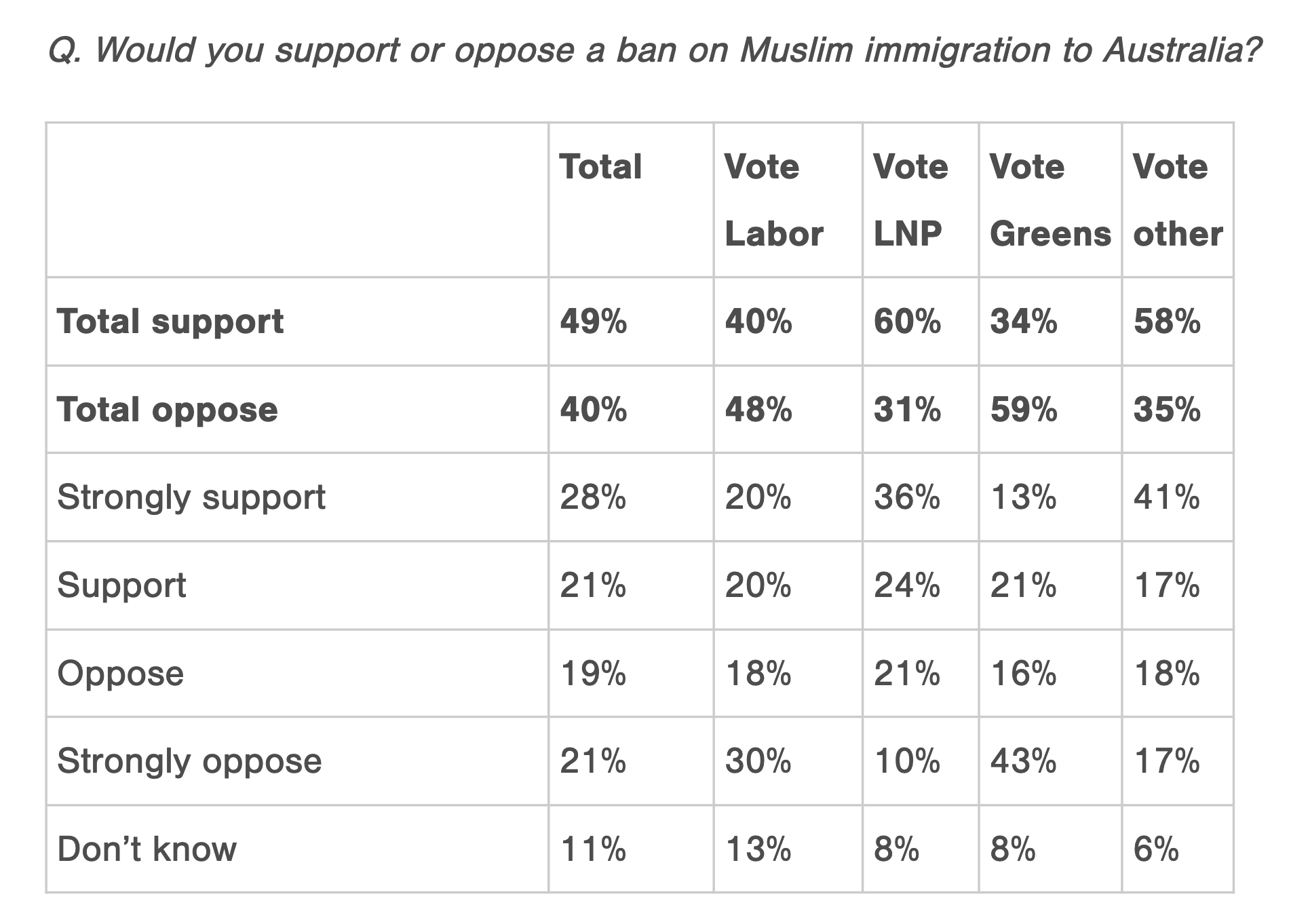
However, a prohibition-based policy quickly encounters political and rhetorical difficulties. It may be possible to argue for restrictions on countries associated with jihadism, sectarian conflict or Islamist extremism. It is more difficult to move systematically through every culturally distant country and explain why each one should be excluded. A campaign against Hindu migration, for example, would not have the same established political language available to it as a campaign concerned with Islamism.
The more politically intelligent approach is therefore to speak less about which countries Australia wants to ban and more about which countries it wants to prioritise. Instead of announcing that applicants from dozens of countries are prohibited, the government would establish a hierarchy of preference. Western applicants would be considered first. Applicants from culturally comparable and strategically aligned countries would receive the next priority. By the time the available places were filled, there would be few or no positions left for less preferred migration streams.
The practical effect could be similar to exclusion without requiring the government to announce a formal racial or religious ban. It would be easier to defend because the government would not be claiming that every individual from a particular country was unacceptable. It would simply be stating that, in a system with limited places, Australia has the right to select the applicants most likely to assimilate and contribute to national cohesion.
There nevertheless needs to be explicit changes to the preferential arrangements Australia has already created with India. Agreements such as the Australia–India Economic Cooperation and Trade Agreement and the Migration and Mobility Partnership Arrangement have expanded or facilitated pathways for Indian students, graduates, workers and professionals.
Those arrangements should be repealed and replaced by far more ambitious agreements with Britain and Europe. Australia should not be making it easier for Indians to migrate here than for citizens of the countries from which Australian civilisation emerged. If special mobility pathways are justified, the strongest case exists for extending them to Britain and culturally compatible European states.
Why Aren’t Europeans at the Front of the Queue?
The political task of a party like One Nation is to put Labor on the back foot instead of the other way around. Why does it seem like the government makes it harder for Europeans to migrate here than for non-Europeans? Why does it not want European migrants? Is it because Europeans vote for the right? Is it anti-white racial animus? These are the questions that need to be asked. If immigration is supposed to be about people who come, work hard and assimilate, then European migrants should be at the front of the queue: they arrive from some of the best-educated countries on earth with higher average IQs and a high standard of human capital.
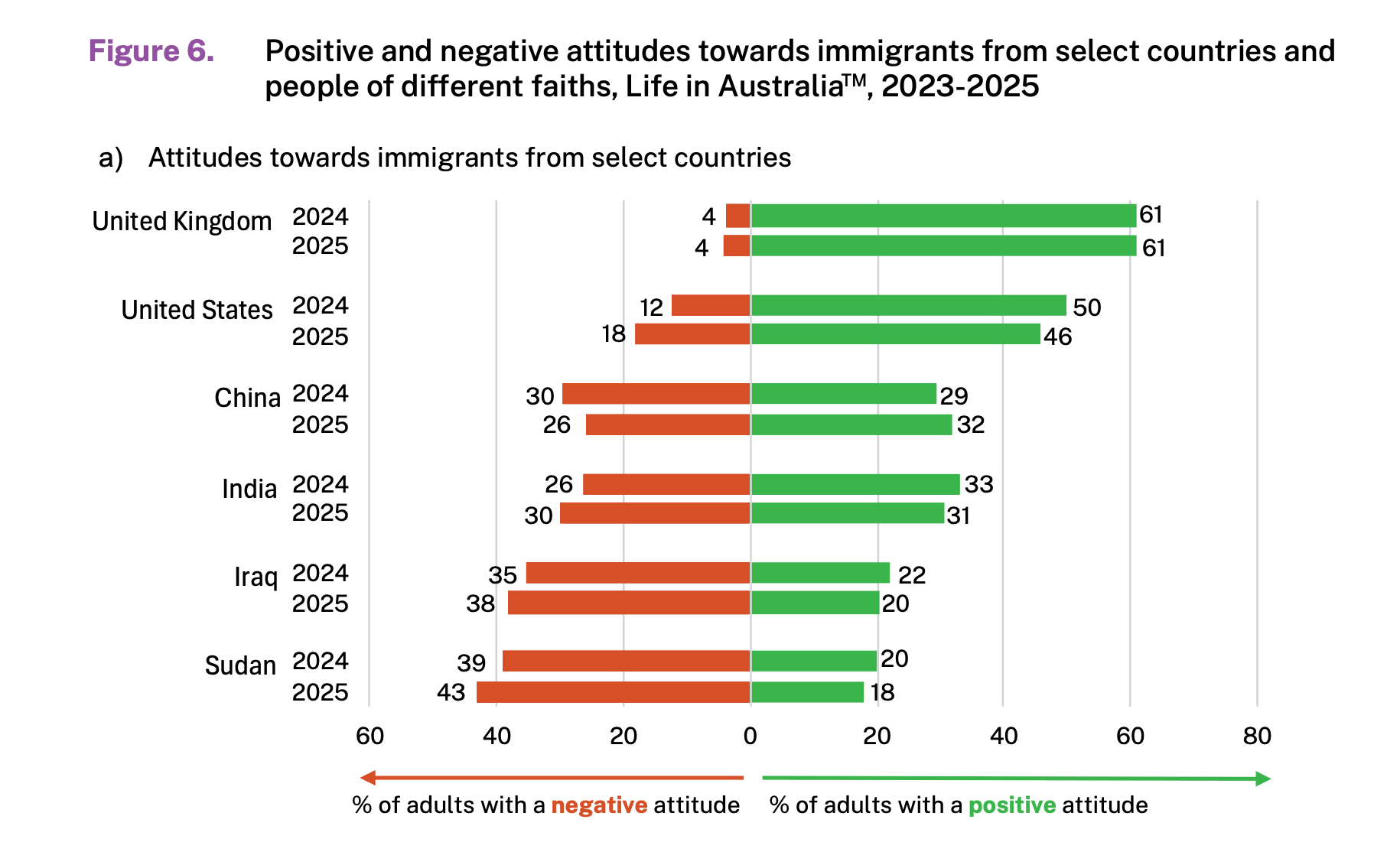
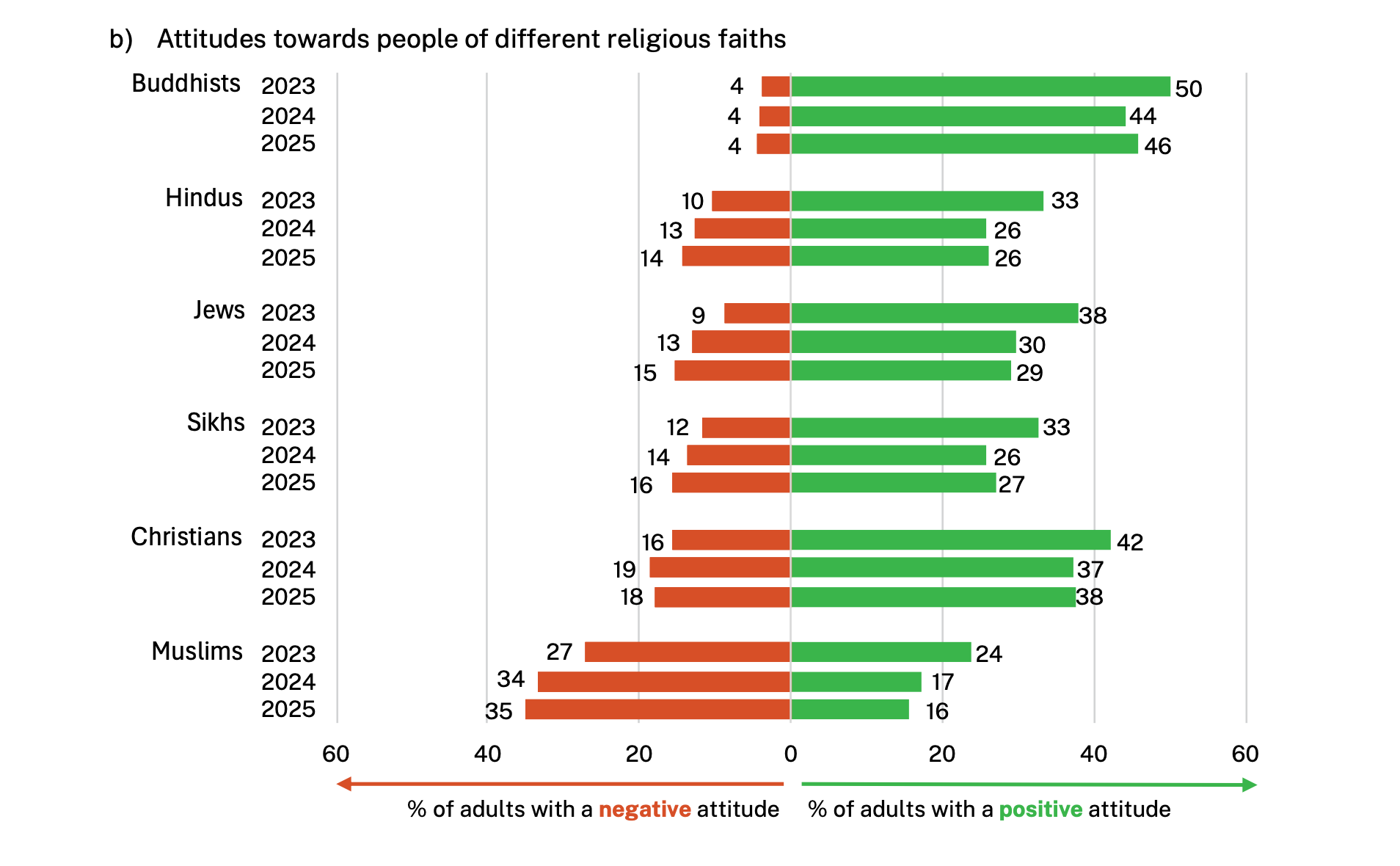
In fact, Anthony Albanese loves to talk about his own family’s European migration story and pretends that history validates today’s policy. Fine, then why are we making it easier for Indians from a third-world education system than for Europeans? Public-opinion research, including Scanlon Institute data, shows the majority of Australians are strongly positive about migrants from European countries and almost no one is negative. 61% of Australians have a positive attitude towards migrants from Britain, whereas only 31% have a positive attitude towards migrants from India, and only 18% report a positive attitude towards migrants from Sudan. In terms of attitudes towards religious groups, more people expressed a negative attitude towards Muslims than a positive one.
This would transform the political framing of immigration. The debate would no longer be reduced to Labor being pro-immigration and One Nation being anti-immigration. Labor would instead be forced to defend its preference for the existing composition of migration. It would have to explain why prioritising Western migrants is supposedly undesirable and why Indian and Chinese migration should be favoured over European migration.
That is a far weaker position for Labor. Research indicating that Australians view European migrants more positively than migrants from many non-European countries would make the contrast especially difficult. Prioritising Western immigration may prove significantly more popular than either maintaining the existing system or eliminating immigration altogether.
Labor would be required to argue against the preferences of much of the electorate. It would have to tell voters why migrants from societies with similar languages, institutions and values should not receive priority. It would have to justify why the government has constructed special pathways for India while failing to create equivalent arrangements with Britain and Europe.
Immigration Is an Electoral Question
The electoral data makes the pragmatic case unavoidable, as non-European migrants vote heavily for the left. That is why Labor works so hard to bring people in from India rather than Europe: Indians vote Labor.8 Right-wingers may personally like people from East and South Asia, but the hard truth is that we need primarily European migrants if the right is to keep winning elections and if we are to retain Western values. Western migrants assimilate more easily, adopt Western norms, and show little interest in the leftist politics of diversity and multiculturalism. For white Australians who care about demographic replacement, this is existential. For the political right, it is also existential. It is also important to note that racial anxiety now generates the bulk of the right-wing vote; church attendance and class politics no longer do the heavy lifting. On the other side of the ledger, leftism is propped up by non-European migrants. Even conservatives who find the racial framing extreme have to confront the necessity: adopt something like this or lose permanently.
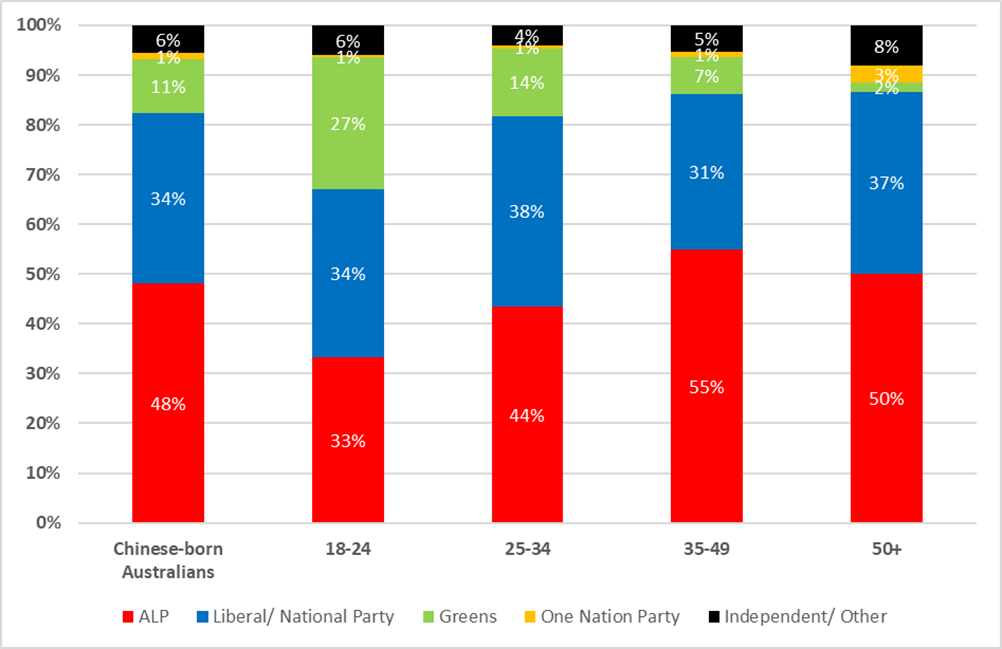
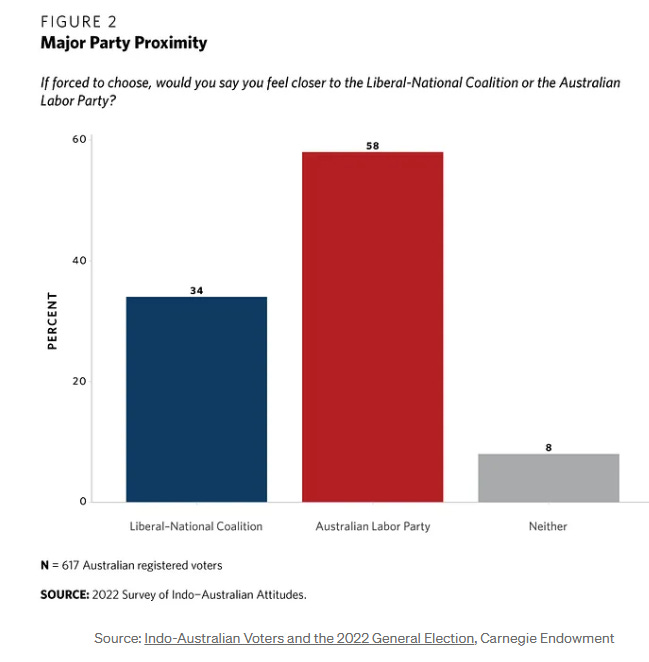
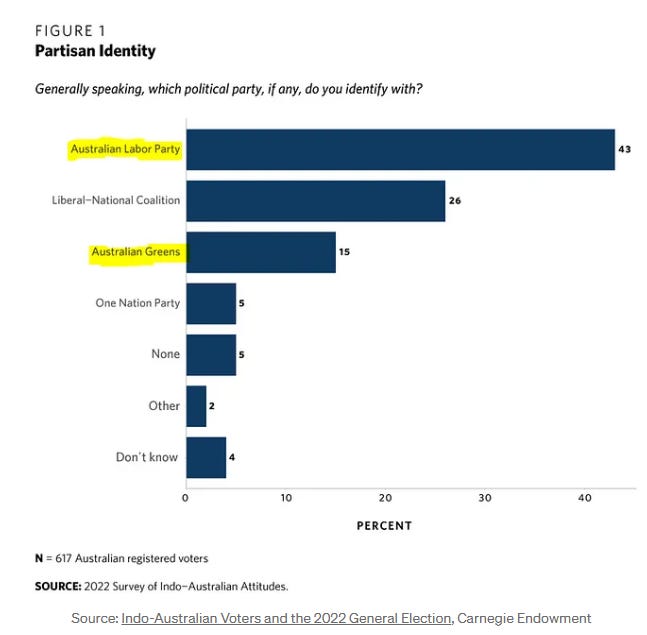
This reframing also creates a direct response to the accusation that Western-priority immigration is just an attempt to recreate the White Australia policy. The answer is that Labor’s own migration policy can be interpreted as an attempt to import a more favourable electorate. If Labor claims that One Nation is selecting migrants for political reasons, One Nation can point to the voting patterns of existing migrant communities and ask whether Labor’s demographic preferences are truly politically innocent.
The charge becomes: you accuse us of wanting to preserve our electorate, but you are importing yours.
As seen above, many non-European migrant communities vote disproportionately for Labor, while migrants from some European and Anglosphere countries are more favourable to centre-right and right-wing parties.
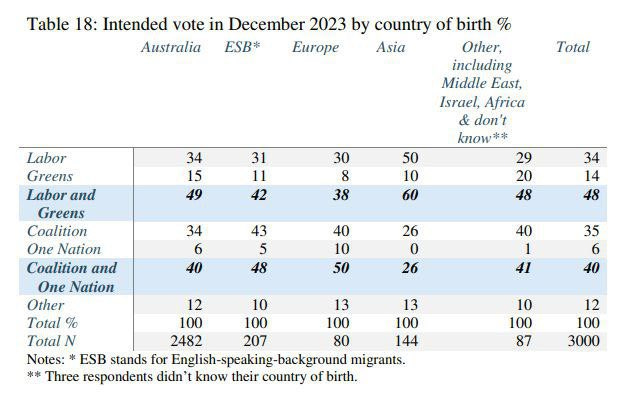
The right should ask why Labor appears to prefer migration streams that strengthen the Labor vote. Why does it favour countries whose diaspora communities are more receptive to multiculturalism, public-sector expansion and minority-based political organisation? Why is the possibility that immigration changes the electorate treated as illegitimate when conservatives mention it, but seemingly understood perfectly well by the parties responsible for administering the system?
Most Australians want Australia to remain recognisably Western. They may disagree about migration numbers, particular cultures or the meaning of assimilation. Still, they generally expect the country’s language, institutions, alliances and social norms to remain grounded in Western civilisation. A policy that prioritises migrants who already share those assumptions should therefore be comparatively easy to defend.
The political attack on Labor should be simple: why do you oppose migrants who share Australian values? Why are you more interested in creating pathways from India than Britain? Why do you treat Western cultural compatibility as morally suspect while expecting Australians to celebrate every other form of ethnic and cultural identification?
This question becomes even more important when considering the scale of China and India. Each contains more than a billion people. Even a tiny proportion of either population is sufficient to transform Australia demographically. Migration from countries of that size can also produce large, self-sustaining communities with their own media, business organisations, political networks and connections to foreign governments.
Australia should not permit the formation of politically organised communities capable of functioning as foreign-aligned blocs or informal fifth columns. Large diaspora populations can be mobilised by foreign states, ethnic organisations or domestic political parties, particularly when they retain intense connections to their countries of origin.
One Nation’s existing rhetoric does not fully capture this. Its immigration message remains too vague and often narrows the issue almost entirely to Muslims. Muslim immigration raises legitimate concerns, but Muslims constitute only a fraction of Australia’s total migrant intake. A policy focused almost exclusively on Islam cannot address the scale of Indian and Chinese migration or the broader demographic transformation occurring through the skilled, student and family visa systems.
Immigration Without Social Fragmentation
Why does Labor insist on deliberately importing the more divisive forms of immigration that undermine our social cohesion? I ask this because we must learn to use the left’s own language against them: “stop the divisiveness, protect social cohesion”.
The assimilation problems we are facing are the foreseeable consequences of bringing in people from incompatible cultures and regions. European cultures are Western and compatible with ours; that is not rocket science. This same point feeds directly into the multiculturalism debate, as difficulties of cohesion, ethnic lobbying and free-speech restrictions all become clearer once the source-country mismatch is acknowledged.
The strongest policy is to reduce the intake, prioritise European applicants, end preferential arrangements that accelerate non-Western migration, and revive mobility agreements with Britain and the rest of Europe. It would allow Australia to continue receiving migrants while ensuring that immigration reinforces our national character.
The political objective should be to put Labor on the back foot and make them defend the least popular and most ideologically vulnerable aspects of their program. Instead of allowing One Nation to be endlessly interrogated about why it wants lower immigration, Labor should be interrogated about why it opposes European immigration. The debate should concern why Labor wants to favour India and China over Britain and Europe.
That places the government in an uncomfortable position, as it must either concede that cultural compatibility matters or openly argue that Australia’s historic Western and European identity should have no influence over the selection of future citizens. Additionally, it must either acknowledge the political consequences of migration or pretend that millions of new voters arrive without affecting the balance of electoral power.
Australia’s immigration conversation does not have to be a gloomy European-style fight over borders and deportation alone. We still possess the unique ability to run a large, selective program with people who share our civilisation. Prioritising European, Western migrants is the positive, data-based, electorally viable way to keep the benefits while discarding the costs. It is the policy that lets Australia remain Australia.
Australia is a nation created and continually recreated through immigration, but that does not mean every immigration policy produces the same country. The people admitted today will shape the society that exists tomorrow.
The question is not whether Australia will continue to be built through immigration. The question is who will be invited to build it.

https://www.gbnews.com/travel/expats-most-popular-country-2026-australia
https://www.telegraph.co.uk/news/2025/07/29/over-half-young-people-considered-leaving-uk-under-labour/
https://www.roberthalf.com/gb/en/insights/finding-a-job/why-consider-career-australia-uk-citizen
https://www.adamsmith.org/research/a-ripper-deal
https://www.afr.com/politics/federal/australia-isn-t-the-uk-but-its-migration-model-faces-a-test-20260610-p605ln
https://www.theguardian.com/australia-news/2024/nov/19/australia-social-cohesion-at-record-low-but-70-believe-migrants-make-country-stronger
https://scanloninstitute.org.au/wp-content/uploads/SI0001_MappingSocialCohesion_2025_v5.pdf
https://www.macrobusiness.com.au/2025/05/why-labor-loves-high-immigration/
The initial settlers were just that, settlers, not immigrants. Settlers create a new polity in what for them is a wilderness. Immigrants join an already-established polity.
==
This article could have been half as long while still adequately covering its points.
It all boils down to this: Allow immigrants who enter legally, respect the law, and fully assimilate into the fabric of the host society. That is not happening in many host nations.
We are constantly told that immigrants are almost universally a “valuable asset” to the countries receiving them. If they possess such extraordinary value, why are they not even more valuable in their own countries?
The real problem begins when immigrants arrive and try to remake the host nation in the image of the shithole they fled—or demand that the host abandon its own customs, standards, and conventions to accommodate them or their “culture.” Immigration should require adaptation by the immigrant, not unconditional surrender by the host.