

The Multicultural Lobby
Abolishing Multiculturalism Means Abolishing This

Pauline Hanson’s National Press Club address last week has thrust the conversation of multiculturalism back into the centre of Australian politics. With One Nation now the most popular party in the polls, her pledge for a “monoculture” is no longer being pushed into the fringes. Yet, as it stands One Nation doesn’t really have any concrete policy on how to abolish multiculturalism.
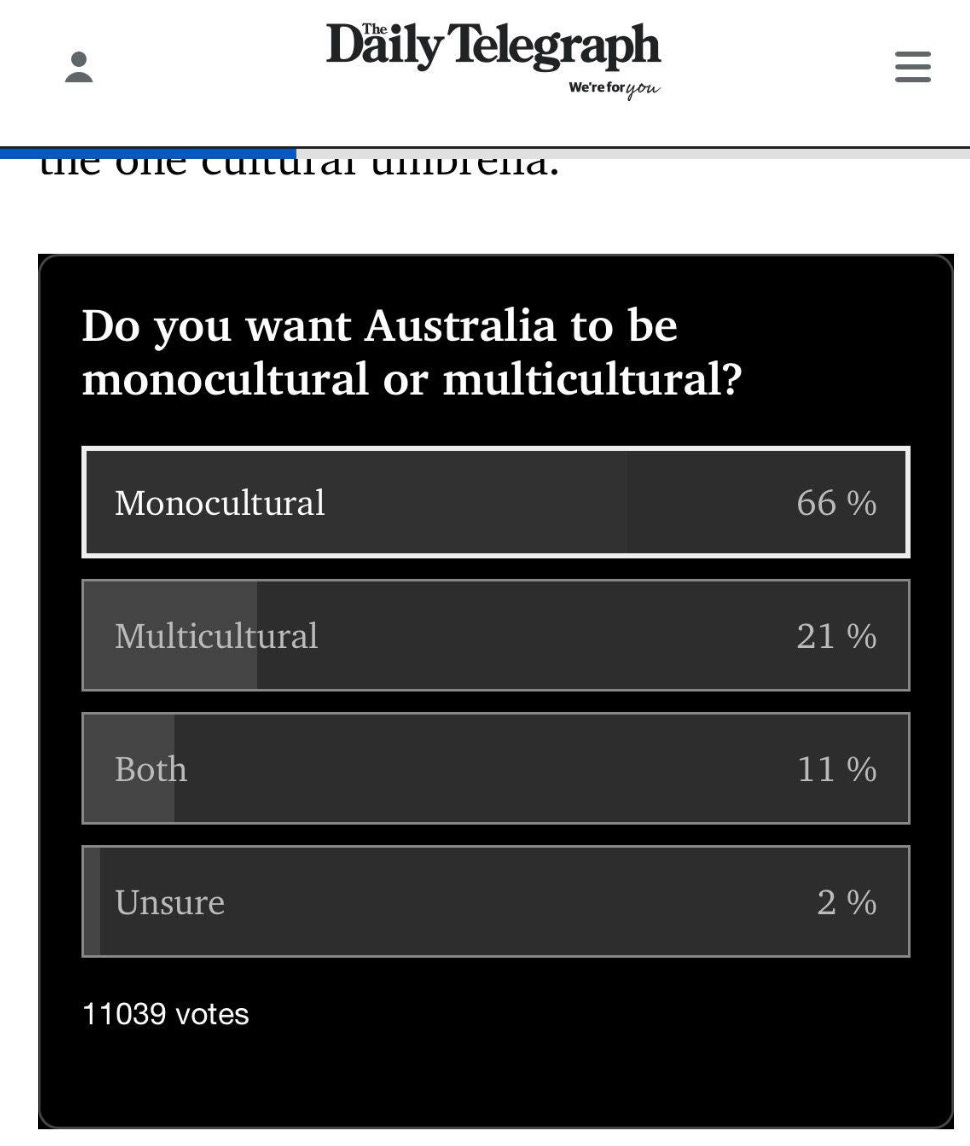
Firstly, we must distinguish what is meant by multiculturalism in relation to politics. Multiculturalism is not just the presence of different cultural practices in Australia. That is a deliberate straw-man. “Abolish multiculturalism and you lose your Bah mi or Chinese takeaways” is a lazy reductionism pushed by people who are either stupid or as a sarcastic question from the left about the lack of One Nations ability to provide actual policy.
Multiculturalism, as it operates in Australia, is the institutionalisation of minority ethnic and religious lobbying. It is a system in which governments treat organised ethnic, religious and minority identity-based groups as permanent stakeholders with privileged access to policy-making. These groups receive taxpayer funding, sit on advisory bodies, submit formal recommendations, and see their priorities turned into law on hate speech, anti-discrimination, social cohesion and diversity policy. The broader Australian public is expected to accept the resulting consensus.
The Machinery That Actually Exists
Australia maintains a Minister for Multicultural Affairs, an Office for Multicultural Affairs inside the Department of Home Affairs, an Australian Multicultural Council, and a Ministerial Forum on Multicultural Affairs. States have their own legislation: the Multicultural NSW Act, Victoria’s Multicultural Victoria Act, South Australia’s Multicultural Act, Queensland’s Multicultural Recognition Act and others. They create recurring funding streams, annual reporting obligations, advisory councils and grants programs that sustain an entire ecosystem of peak bodies, settlement providers and advocacy organisations.

Commonwealth multicultural grants run into tens of millions annually. Additional streams exist for “social cohesion,” security upgrades for specific communities and settlement services. Peak bodies such as the Federation of Ethnic Communities’ Councils of Australia (FECCA), the Executive Council of Australian Jewry (ECAJ), the Australian Federation of Islamic Councils (AFIC) and the Hindu Council routinely prepare submissions, appear before inquiries and maintain ongoing relationships with ministers and bureaucrats. Personnel overlap between federal and state advisory structures is visible and recurring.

This is what political scientist Theodore Lowi called “interest group liberalism.”1 Lowi’s insight was that the pluralist system does not represent the public interest but rather rewards whichever organised groups can gain access to the machinery of government. The democratic problem is that the state has granted specific groups a structural position that ordinary, unorganised citizens do not enjoy. This results in something called mobilisation of bias, as coined by E.E. Schattschneider. described this form of power as the “mobilisation of bias,” where “some issues are organised into politics while others are organised out.”23
Prominent Lobbying Examples: Jewish Lobby
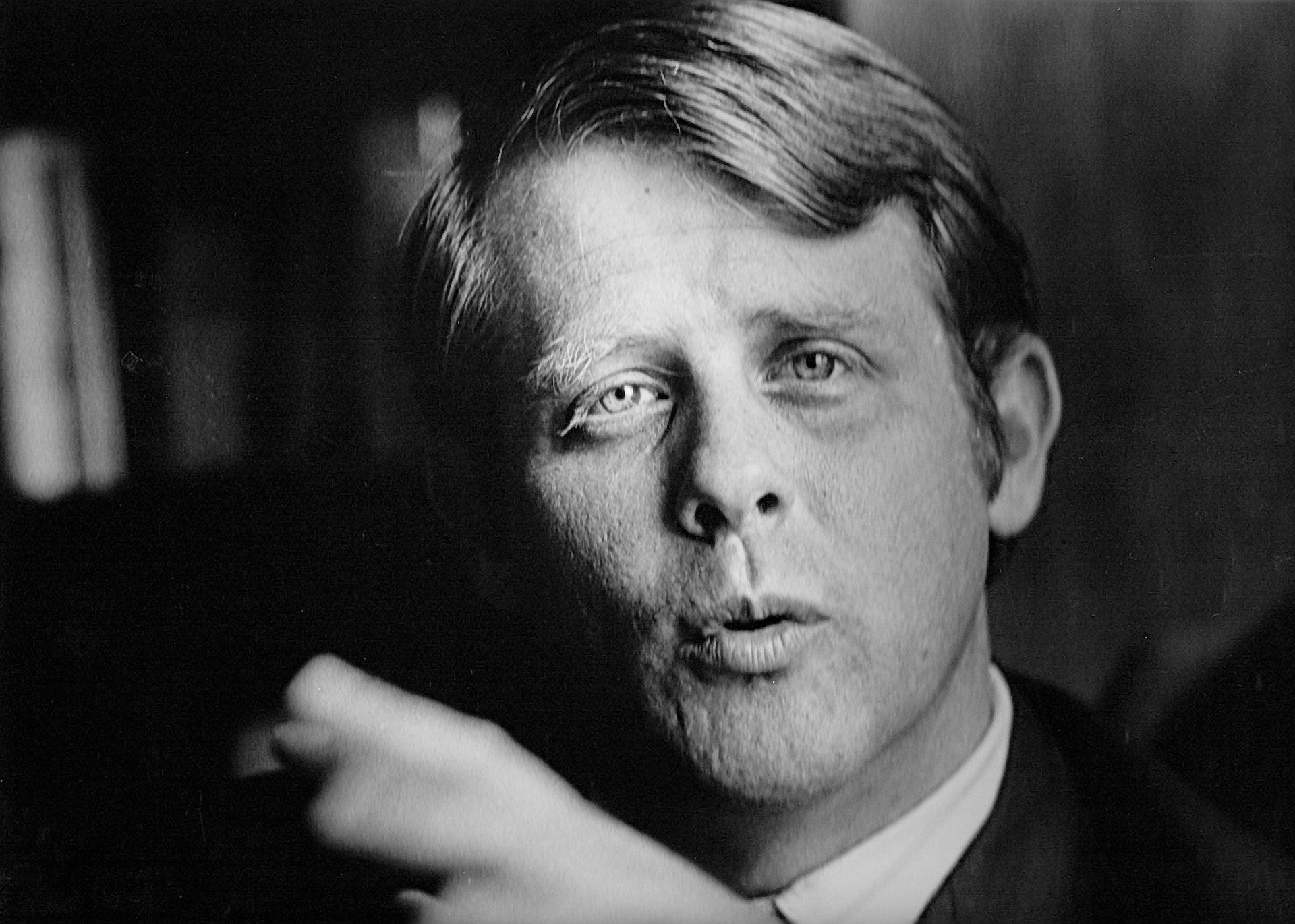
One of the most established and effective participants in this system is the Jewish organisational network. The Executive Council of Australian Jewry (ECAJ) is widely recognised as the peak representative body. It prepares detailed submissions to government on religious freedom, anti-discrimination law, antisemitism policy, education, refugee issues and matters relating to Israel.

The ECAJ is the clearest example that multiculturalism is institutional power and not just food, festivals or vague “diversity.”
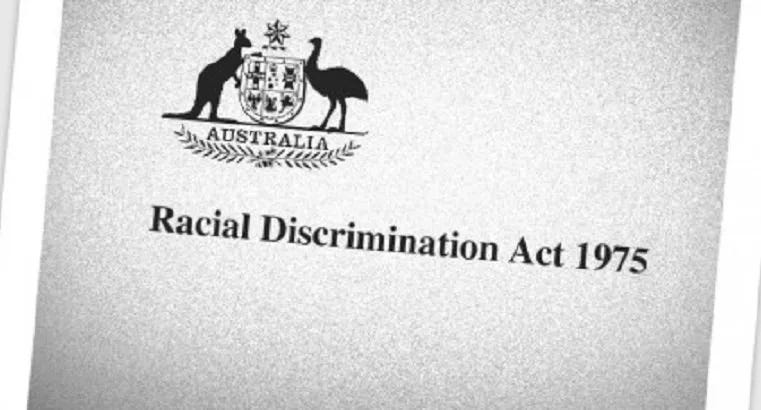
Section 18C of the Racial Discrimination Act is one of the best examples of this. It makes it unlawful to do an act reasonably likely to “offend, insult, humiliate or intimidate” a person or group because of race, colour, national origin or ethnic origin.
Organisations such as the ECAJ have consistently argued and lobbied for strong anti-vilification laws which they claim are necessary to protect minority communities. Following the highly publicised Andrew Bolt case, Tony Abbott’s government attempted to amend the Racial Discrimination Act in 2014 by removing the words “offend”, “insult” and “humiliate” and replacing them with a narrower standard focused on genuine intimidation or incitement. The proposal was framed as a free speech reform and Abbott argued that people have a right to be wrong, a right to offend, and a right to participate in robust public debate without fear of legal sanction.
The response from the multicultural institutional framework was immediate and overwhelming. The ECAJ, alongside numerous other minority advocacy organisations, strongly opposed the changes. Submissions from these groups flooded government consultations warning that weakening 18C would endanger social cohesion and expose minority communities to harm.4
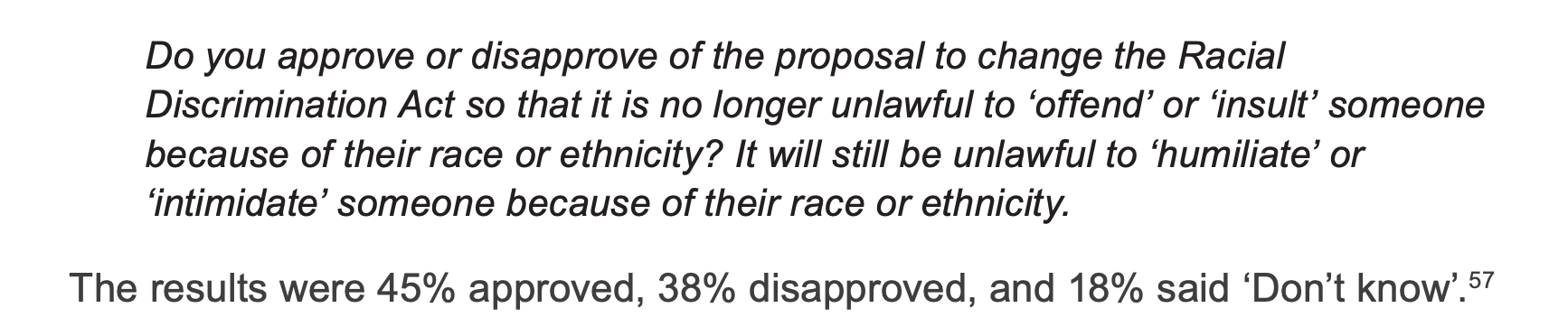
This resulted in Abbott ultimately abandoning the reform despite holding government. Public opinion polling at the time frequently showed substantial support for amending 18C, yet the institutional pressure proved stronger than the electoral mandate.
In 2025, New South Wales passed the Crimes Amendment (Inciting Racial Hatred) Act, creating a criminal offence of intentionally inciting racial hatred. Victoria also strengthened its anti-vilification regime, introducing serious criminal vilification offences under its anti-vilification and social cohesion reforms. Both were justified through the language of social cohesion, community protection and anti-hate policy.
Then in 2026 after the Bondi terror attack which was perpetrated by an Indian Muslim, we got the federal Combatting Antisemitism, Hate and Extremism Act. This marked a further escalation which was pushed by these lobby’s, as they created a framework for prohibited hate groups.5 In May 2026, the Australian Government listed White Australia, also known as the White Australia Party and formerly linked to the National Socialist Network, as a prohibited hate group under the Criminal Code.6
Other Prominent Examples: Islamic and Hindu Organisations
The Australian Federation of Islamic Councils (AFIC) serves as the largest national umbrella body for Muslim organisations. Established in 1964, AFIC explicitly positions itself as a representative of Muslim interests to government and the wider society. It coordinates state-based Islamic councils and regularly engages in advocacy on legislation, religious freedom, education, halal certification, discrimination issues and national security policy. AFIC and affiliated groups participate in government consultations, human rights inquiries, discrimination law debates and discussions around counter-terrorism measures.
The Australian government has allocated various specific grants and funding packages to Islamic and Muslim community organisations, most notably a $27 million to $28.1 million security grant awarded to the Australian National Imams Council (ANIC) for facility upgrades under the Security Uplifts for Muslim Communities program.7
The Hindu Council of Australia represents another rapidly growing example. The organisation has become more active in engaging government on religious discrimination, education and foreign policy matters relating to India. While still less institutionalised than bodies like the ECAJ or AFIC, the Hindu Council and similar Indian community organisations are increasingly participating in public debates and policy consultations.
As the Indian-born population continues to grow, these efforts mirror the pattern seen with other communities. Demographic increase leads to organised lobbying, which in turn gains access to government funding streams, advisory roles and policy influence under the multicultural framework.

The Democratic Problem
The practical consequences of bureaucratic multiculturalism are straightforward, policies on hate speech, online regulation and antiwhite DEI measures are routinely justified by reference to recommendations from these same organisations and commissioners. The justification is never “this is what a majority of Australians want.” It is “these recognised community representatives have told us this is necessary.”
That arrangement inverts democratic accountability as ordinary Australians become the diffuse, unorganised interest whose preferences can be set aside when they conflict with the demands of better-connected groups. When millions of voters express concerns about immigration levels, speech restrictions or cultural direction, the institutional response is that such views lack legitimacy within the multicultural framework, as the framework itself decides which opinions are admissible.
This is why for example the rejection of the Aboriginal Voice to Parliament was so telling. When the unorganised Australian majority was given an opportunity to vote on a constitutionally entrenched body for one group (Aboriginals), they voted no.
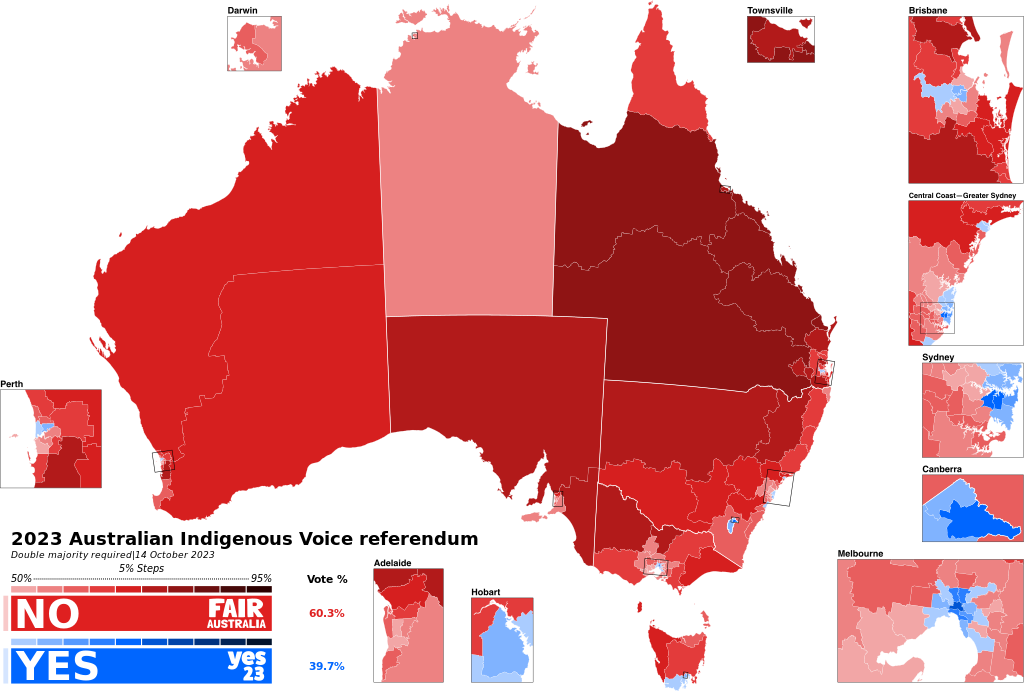
Yet the same logic is applied daily to other groups through non-constitutional channels where they get dedicated funding and policy influence. White Australians, as the historic majority, are told they require no such structures because the general political process already represents them while everyone else receives supplementary representation.
DEI and Antiwhite discrimination
Under the multicultural framework “cultural and linguistic diversity” (which actually just means less white people), is a measurable policy outcome that the government actively engineers inside its own institutions. The Albanese Government’s Employment Strategy sets an explicit target of 24 percent cultural and linguistic diversity representation in the Senior Executive Service, with an interim goal of 15 percent within four years. The Federation of Ethnic Communities’ Councils of Australia (FECCA), the main national peak body for ethnic communities, has long advocated for diversity targets in the Australian Public Service. In its 2022 policy platform, FECCA explicitly called for governments to “establish diversity targets in the Australian Public Service”, which is what the Albanese Government’s Employment Strategy did.8
The Race Discrimination Commissioner Giridharan Sivaraman reinforces the same framework. Before his appointment in March 2024, he served as Chair of Multicultural Australia (2021–2024) and as a member of the Queensland Multicultural Advisory Council. He has spoken at FECCA conferences and events, and multicultural organisations have hosted him as a keynote speaker since he took office.
He describes Australian systems as built to maintain white privilege and argues that claims of anti-white or reverse racism miss the point because racism must be understood through historical power imbalances and colonisation. Official multiculturalism positions white Australians as a background condition that requires active dilution at the top of the bureaucracy and it treats organised minority identities as the groups whose advancement constitutes progress.9
Free Speech and multiculturalism
Multiculturalism as an institutional project also explains the steady expansion of speech restrictions. Politicians and certain minority lobby’s like the ECAJ argue that a diverse society requires limits on expression to prevent offence and maintain harmony. The implication of this is that unrestricted political speech is incompatible with the current model of multiculturalism. Someone, somewhere, will always be offended, so the sensibilities that must be protected are those of organised minorities rather than the population as a whole, whose rights are subordinated.
Social cohesion rhetoric functions the same way. The original sociological concept referred to shared values and common enterprise. In contemporary Australian usage it serves as justification for managing the frictions created by multiculturalism itself. A shared culture produces cohesion. A policy that treats the maintenance of distinct group identities and their separate institutional representation as the goal is managing incohesion, not creating cohesion.
Immigration Numbers Are Not the Whole Story
One Nation and other restrictionist voices are correct that current immigration levels are too high and that public concern is widespread. Reducing the numbers is very necessary. But it is not sufficient. A government can slash migration tomorrow and still leave the bureaucratic and lobbying infrastructure untouched. That infrastructure continues to shape policy, allocate resources, define legitimate speech and decide which groups count as stakeholders. The underlying distribution of institutional power remains the same.
The more important question is therefore civilisational and institutional. Australia is a Western nation with a particular legal tradition, political culture and historical inheritance. Immigration policy should reflect that reality by prioritising entrants from societies with compatible norms, IQs, institutions and expectations. For the sake of appealing to the majority of voters within One Nations this argument does not require explicit discussion of race. It rests on observable differences in integration outcomes and cultural continuity. It is compatible with both civic and cultural nationalism.
Why Mainstream Rhetoric Has Failed
Liberal leaders have repeatedly declared opposition to multiculturalism in principle. John Howard and Tony Abbott both did so. Yet while in office they left the grant programs and advisory councils wholely intact. Right-wing Liberals have used rhetoric without changing anything structurally. In fact, during their time the institutions continued to grow, adapt and embed themselves deeper into government.
If Pauline Hanson and One Nation are serious about ending multiculturalism, the test is whether they are willing to do what previous governments would not: defund the peak bodies, abolish the dedicated multicultural departments and offices, repeal the speech and discrimination laws that flow from this framework, and restore the principle that government represents the Australian people as a whole.
A Point of Broad Agreement on the Right
This approach does not require any faction on the right to abandon its existing commitments. Civic nationalists, conservatives, cultural nationalists and ethno nationalists can all support the same concrete steps: dismantle the multicultural bureaucracy, restore free speech, end taxpayer-funded identity lobbying and reject anti-white discrimination in policy and institutions.
The advantage of this framing is that it shifts the argument from contested demographic questions to uncontested democratic ones. It does not ask Australians to dislike any particular group. It asks why unelected commissioners, funded activists and organised lobby groups should exercise greater influence over law and policy than millions of ordinary Australian citizens. That is a question any serious person on the right should be able to answer.
The institutions that have dominated Australian public life for three decades were built on a particular set of assumptions about diversity, representation and the role of the state. Those assumptions are now open to challenge. Forcing them to defend their legitimacy rather than simply exercising power is the necessary first step.

https://en.wikipedia.org/wiki/Interest_group_liberalism
https://www.powercube.net/analyse-power/forms-of-power/hidden-power/
(2011). Mobilization of bias. In K. Dowding (Ed.) Encyclopedia of power (pp. 424-424). SAGE Publications, Inc., https://doi.org/10.4135/9781412994088.n234
https://www.ecaj.org.au/joint-media-release/
https://www.aph.gov.au/Parliamentary_Business/Bills_Legislation/Bills_Search_Results/Result?bId=r7422
https://www.tonyburke.com.au/media-releases/2026/white-australia-listed-as-a-prohibited-hate-group
https://www.dailytelegraph.com.au/subscribe/news/1/?sourceCode=DTWEB_WRE170_a_GGL&dest=https%3A%2F%2Fwww.dailytelegraph.com.au%2Fnews%2Fnational%2Fcleric-urged-jihad-on-israel-weeks-before-his-islamic-council-was-awarded-27m-labor-government-grant%2Fnews-story%2Fd3687a0162e6b3168c2dd7d1f6e5d816&memtype=anonymous&mode=premium&v21=GROUPA-Segment-1-NOSCORE
https://fecca.org.au/wp-content/uploads/2022/04/FECCA-Policy-Platform-2022.pdf
https://www.smh.com.au/politics/federal/australia-s-new-commissioner-says-anti-white-racism-claims-miss-the-point-20240319-p5fdk1.html
et voilà. Must be "tonight" in Australia.
multiculturism is anti australian poison labors favored imports are about taking over our country