

Obsession (2026)
Faustian Bargain: Be Careful What You Wish For

SPOILERS ALERT!
I should begin with a spoiler warning, as this article discusses major plot points from Obsession.
Those who follow my writing will know that I rarely write film reviews. My work is usually focused on history, politics, and cultural commentary, with only the occasional foray into broader cultural subjects. Yet Obsession left such a strong impression on me that I felt compelled to make an exception.
What struck me was not simply its effectiveness as a horror film, but the way it engages with deeper philosophical questions and draws upon a range of literary traditions. It is an unsettling, thought-provoking work that lingered in my mind long after the credits rolled, and one that rewards interpretation as much as it delivers suspense.
Curry Barker’s 2025 film Obsession is a genuinely excellent horror movie. Much of contemporary horror feels formulaic and predictable, as they rely too heavily on familiar scares while offering little of substance beneath the surface. By contrast, Obsession is not only unsettling but also deeply thought-provoking, using horror to explore larger questions about desire, loneliness, and the darker aspects of human nature. Produced on a micro-budget of under $1 million, reported by some sources as an astoundingly lean $750,000, the film grossed $234.5 million worldwide, securing its place as a cultural phenomenon and Focus Features’ highest-grossing film of all time.
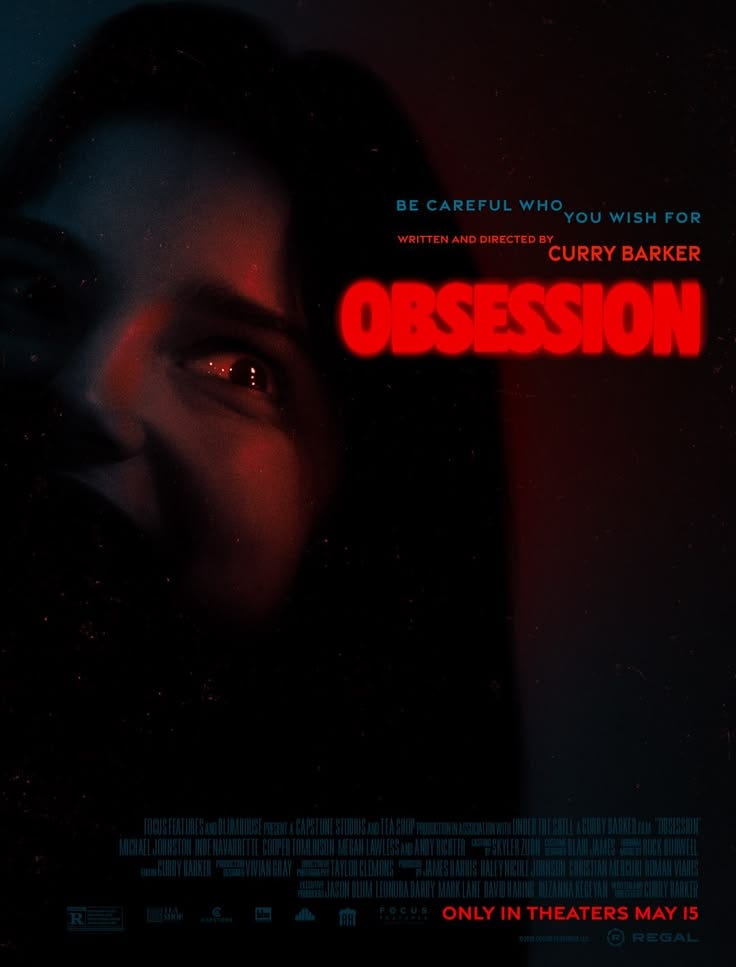
The narrative follows Baron “Bear” Bailey, a socially awkward and intensely insecure music store employee who harbours an unrequited infatuation with his coworker, Nikki Freeman. Bear embodies the archetype of the modern “nice guy”, paralysed by the fear of rejection, confrontation-averse, and entirely locked within his own internalised narrative of romantic deservingness. Following the accidental overdose of his cat, Sandy, and a botched opportunity to confess his feelings to Nikki, Bear purchases a “One Wish Willow” from a local apothecary. Inspired by W.W. Jacobs’s The Monkey’s Paw and an episode of The Simpsons, Barker utilises this supernatural trinket to actualise Bear’s darkest impulse. Ignoring the inherent hubris of his action, Bear snaps the willow and wishes that Nikki would love him “more than anyone in the fucking world”.
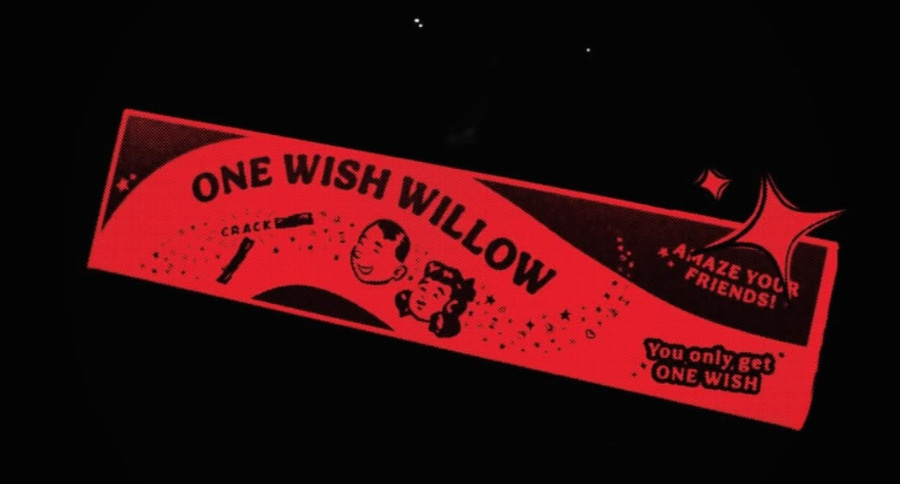
The wish is granted, and it is horrifying. The magic does not just alter Nikki’s affections, it entirely usurps her autonomy. Her pre-existing personality as a free-spirited, aspiring writer who views Bear strictly as a “little brother” is eradicated and replaced by a malevolent obsessive entity dedicated solely to the veneration of Bear. This new Nikki exhibits horridly disturbing behaviour, transitioning from doe-eyed infatuation to terrifying possessiveness. She constructs bizarre shrines from the remains of Bear’s dead cat, watches him sleep, and responds to any perceived emotional distance with grotesque self-harm.
The film escalates into a blood-soaked nightmare as Nikki violently slaughters their friends Sarah and Ian to eliminate any perceived threats to her relationship with Bear. The horror of Obsession is in its existential dread. Nikki’s true consciousness remains trapped within her possessed body, occasionally breaking through the “freaky” exterior to scream in anguish and beg Bear to kill her. Bear, confronted with the reality of what he has done, refuses to end her suffering, offended that she would rather die than remain his captive. A desperate call to the One Wish Willow customer service line, voiced with bureaucratic apathy by director Curry Barker himself reveals that the curse can only be broken by death. In the finale, a cornered Bear consumes oxycodone in a half-hearted suicide attempt. He immediately regrets it, but before he can purge the pills, Nikki breaks the final willow, forcing Bear’s wish-controlled body to kiss her before he expires. His death breaks the spell, leaving the real Nikki to regain control of her body only to find herself surrounded by the mutilated corpses of her friends, wailing in incomprehensible trauma.

Theme Analysis
In our contemporary lexicon, to be “obsessed” with a partner is frequently colloqusalised as a compliment, a marker of supreme devotion. Barker’s film strips this term of its benign veneer, revealing obsession as a fundamentally parasitic condition that feeds on the destruction of the other. The film interrogates the delusion that intensity of desire equates to the purity of love, demonstrating that Bear’s infatuation is entirely solipsistic, it requires a vessel, not a partner.
The theme of consent acts as the ontological foundation of the narrative. Bear’s wish is an supreme violation, an attempt to bypass the vulnerability of human connection. Genuine romance requires the terrifying possibility of rejection and an acknowledgement that the other person is an independent sovereign subject capable of saying no. By using the One Wish Willow, Bear circumvents this risk. In doing so, he effectively commits psychological murder, erasing the very qualities that made Nikki a desirable human being in order to secure her compliance. The film posits that consent is the absolute prerequisite for human intimacy; without it, what remains is a hostage situation.
Furthermore, the film explores the duality of identity and the horrors of a fractured self. The real Nikki is rendered a helpless spectator in her own mind, watching her hands commit atrocities and her mouth utter vulgarities. Moral responsibility is also central to the text. The film prevents Bear from hiding behind the supernatural mechanics of his tragedy. While the One Wish Willow acts as the catalyst, Bear is the architect. His refusal to immediately seek out a reversal, his hesitation to accept accountability, and his ultimate, cowardly attempt at suicide all underscore a fundamental weakness of character. His self-destruction is not portrayed as a tragic sacrifice, but as the inevitable collapse of a man who built his entire reality upon a lie.

The Philosophy of Desire
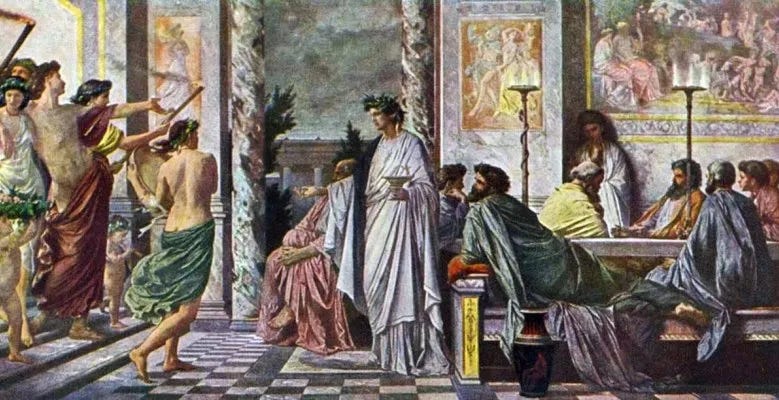
Obsession raises old philosophical questions about desire and happiness. Plato (via Symposium) taught that love should aim toward the Form of Beauty (something transcendent) rather than mere possession of another person. Bear’s plan violates that Platonic ideal: he treats Nikki not as a beautiful human being but as an abstract object of desire to be bound to himself. Aristotle similarly notes in the Nicomachean Ethics that true friendship (and love) based on virtue requires mutuality and not just utility or pleasure. Bear’s approach is unduly instrumental, he “uses” the toy to obtain pleasure and he falls far from Aristotle’s golden mean of courageous honesty.
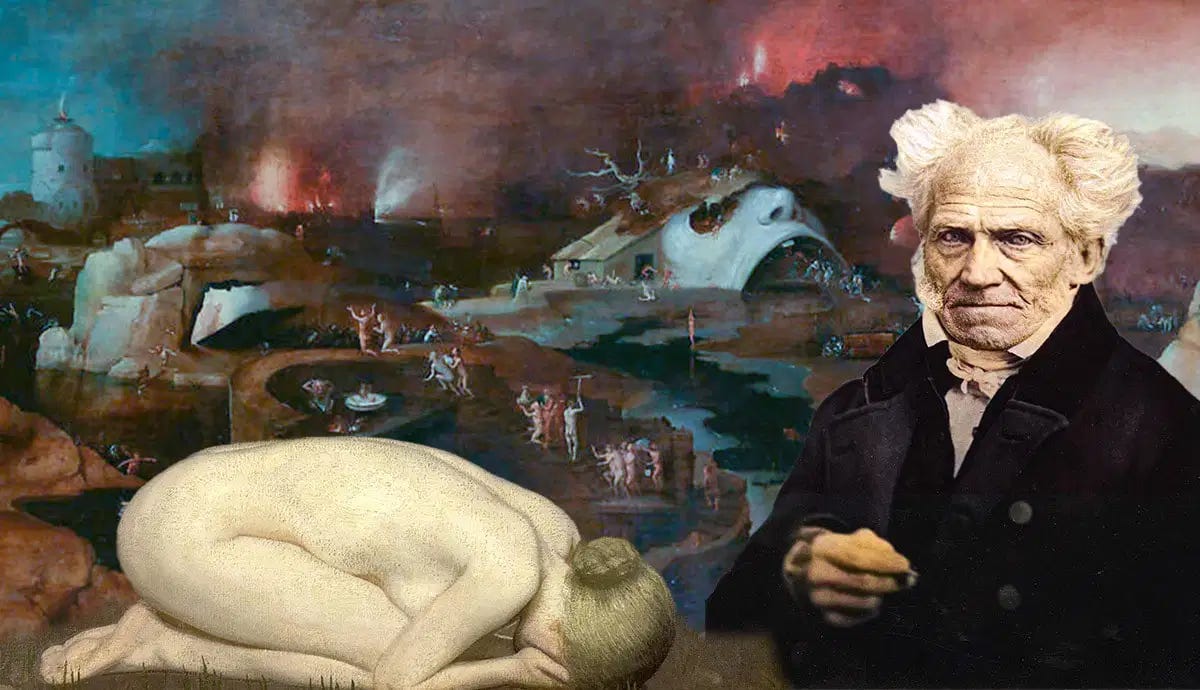
Schopenhauer famously wrote that desire is the root of suffering, once satisfied, it only begets new suffering. Bear’s brief satisfaction (Nikki’s devotion) is immediately followed by excruciating consequences. Schopenhauer might say the film illustrates his thesis: want leads to pain, and even fulfilment becomes insatiable (Nikki’s affection grows so extreme she cannot live without Bear). The film’s bleak view, that fulfilment of desire only multiplies torment resonates with Schopenhauer’s pessimism. Nietzsche, who criticised pity and championed the individual’s will, might see Bear as a “last man” who pleads for safety rather than creates values. Nietzsche might admire Bear’s ordeal (he does suffer intensely for his weakness) but condemn his passive attitude; Nietzsche’s amor fati (love of fate) is in Bear’s case inverted, he cannot accept the fate of unrequited love. Meanwhile, Nikki’s monstrous state could remind Nietzsche of his notion that “when you gaze long into an abyss, the abyss gazes also into you” (Beyond Good and Evil); Bear’s innocent wish created a personal abyss.
Freudian analysis would focus on unconscious drives: Bear’s refusal to articulate love (fear of primal rejection) leads him to an external “id” solution. The One Wish Willow itself acts like a phallic symbol, power that he must destroy and re-create. The Oedipal element is subtle: Bear wants control in his formative relationship (lifelong friend), and Nikki’s aggression (in self-harm and violence) could be seen as a female Id unleashed. Freud might note Nikki’s self-mutilations and savage acts as manifestations of the death drive (Thanatos) after her love (Eros) goes haywire.
René Girard’s theory of mimetic desire is also relevant: we desire what others want. Bear’s jealousy is triggered by his friend Ian’s success with Nikki; Nikki is the object of multiple male gazes (Ian’s casual hookup, Bear’s adoration), creating a triangle. Girard would say the ensuing violence is scapegoating: Bear’s wish unleashes latent communal rivalry. Indeed, as Bear’s social circle is slaughtered, one might view Nikki as a scapegoat purged through blood. Furthermore, Girard warns that modern society can mistake idols of desire for true objects of love. Bear treats Nikki (and the Willow) as idols that promise fulfilment. The film suggests that confusing desire for a person with a higher love inevitably leads to cruelty, a warning Girard would endorse.
Across these philosophies, a recurrent question arises: Does satisfying a desire guarantee happiness? Obsession emphatically says no. Bear’s wish grants his immediate desire but at catastrophic moral cost. Classical thinkers would remind us that love requires freedom and goodness of will: Bear gains his heart’s desire but it is a poisoned gift, illustrating the old adage “be careful what you wish for.”
Historical and Literary Parallels: The Gothic and the Hubristic
Obsession belongs to a long tradition of cautionary tales about desire. Its premise is literally a “monkey’s paw” story, a classic folkloric motif where wishes bring doom. This links it to countless myths and fables (“careful what you wish for”). Curry Barker himself notes that he was inspired by a Simpsons monkey’s paw episode.
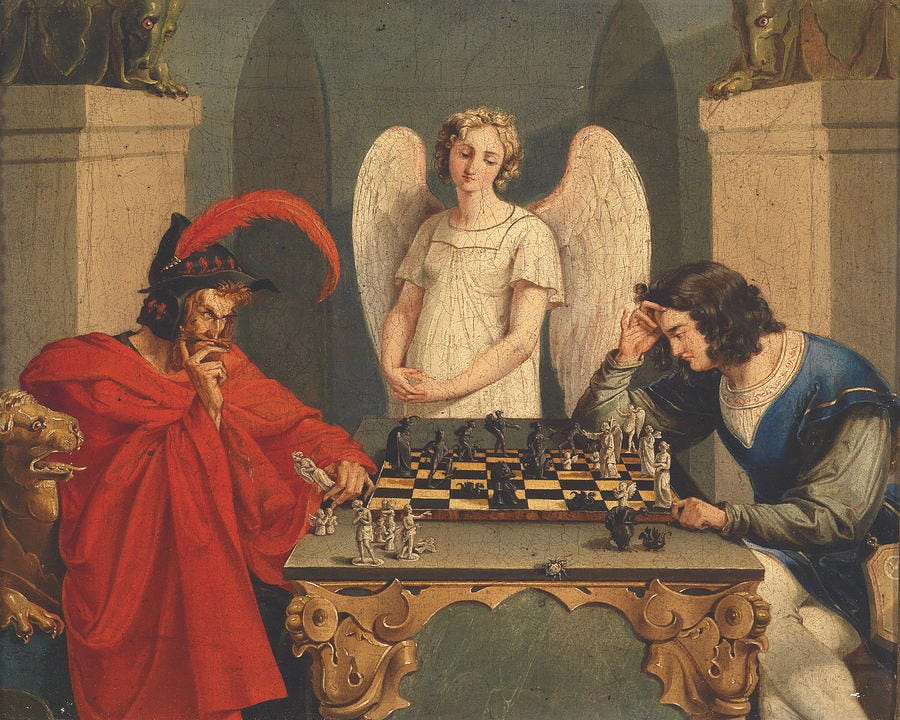
Faustian Bargains: More broadly, Bear’s deal with supernatural forces is Faustian. He surrenders moral agency for a promise of fulfilled desire. Like Goethe’s Faust, he learns that shortcuts to desire can curse the soul. Nikki’s ultimate state (twice-damned, as she implies her original self was in hell while the fake Nikki lived with Bear) echoes medieval morality plays where sin leads to damnation.
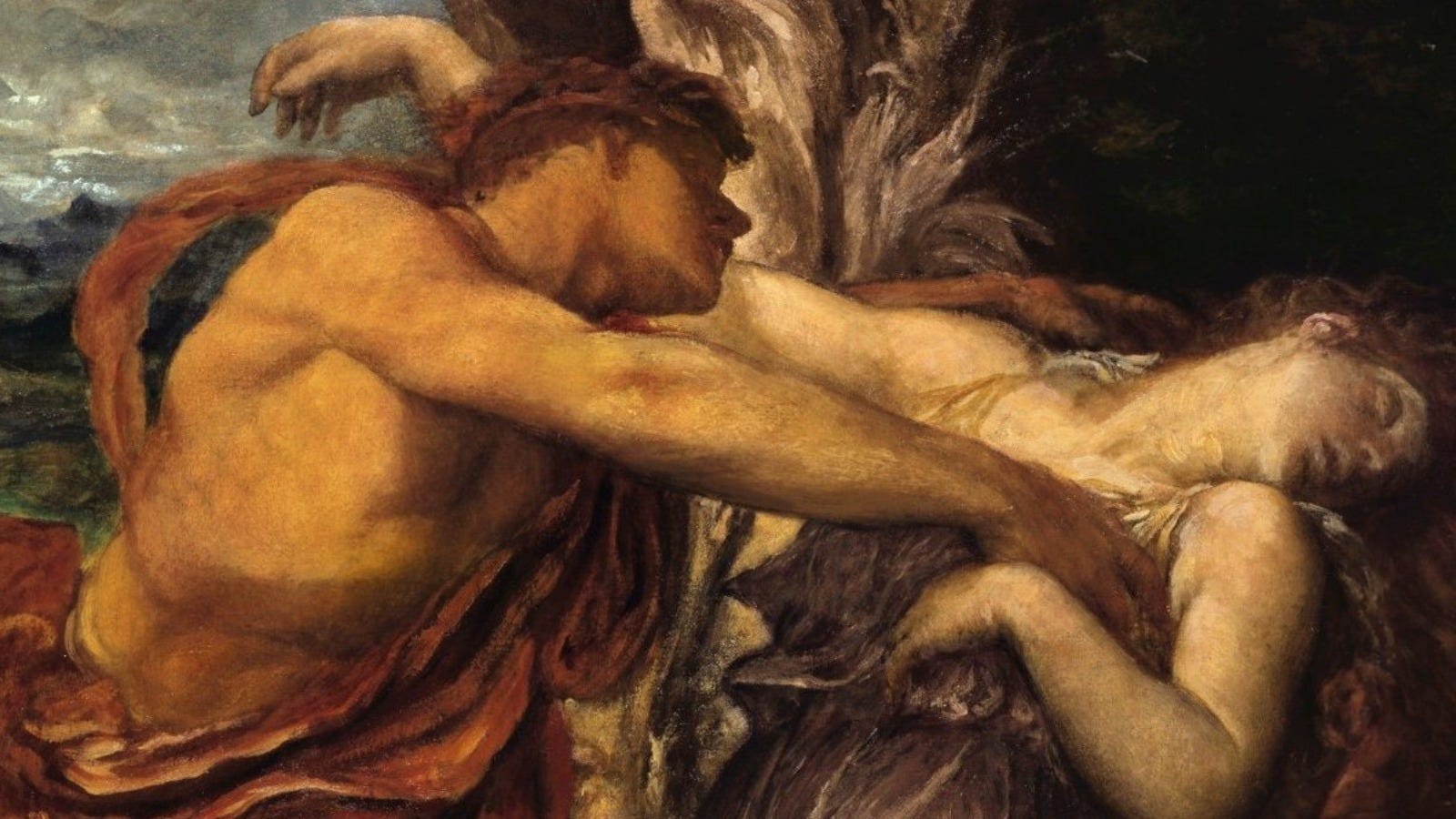
Greek Myth and Tragedy: In Greek myth, similar themes appear. Think of Tithonus, granted eternal life but not eternal youth (a twist on wishes); or Clytemnestra’s bloodcurse on Agamemnon (revenge and possessiveness); or even Alcestis, who sacrifices life for her husband (Bear’s sacrifice at the end resonates). Bear’s flaw parallels the hubris of tragic heroes: he overreaches. Like Oedipus (unwittingly causing doom by acting on prophecy), Bear accidentally unleashes horror by acting on his forbidden wish. Aristotle might call Obsession a tragic drama: Bear’s hamartia (cowardice and envy) leads to a cathartic catastrophe for the audience.
Modern Precursors: The most direct parallels are to Fatal Attraction (1987) and Misery (1990). Critics note that, like Fatal Attraction, Obsession channels generational fears about casual sex; Nikki’s crazed fixation even recalls Alex Forrest’s mania. In Misery, an obsessed fan holds a writer captive; here Bear is metaphorically captive to Nikki’s obsession. Both tales feature a normal person ensnared by another’s unhinged love.

Conclusion
Obsession is a genuinely unsettling horror film that refuses to let its audience off the hook. By forcing us to inhabit the perspective of a man who receives exactly what he thinks he wants, the movie exposes the rotten core of romantic entitlement and the terrifying ease with which desire can mutate into violation.
The film’s greatest achievement is in its refusal to offer easy catharsis. Bear is never allowed to remain a passive victim of supernatural forces, and Nikki is never reduced to a simple monster. Both characters are trapped in a nightmare of their own making, Bear through cowardice and solipsism, Nikki through the total erasure of her will. In dramatising this mutual destruction, Obsession joins the ranks of truly great horror cinema that uses genre conventions to interrogate uncomfortable truths about love, power, and self-deception.
At a time when so much horror feels content to deliver familiar scares and little else, Barker’s micro-budget triumph stands out as both a commercial phenomenon and a substantive work of art. It is a film that will leave viewers unsettled long after the credits roll, not just by its grisly imagery, but by the question it poses: What does it say about us when we would rather possess someone than risk the possibility that they might not choose us?
Obsession is essential viewing for anyone who believes horror can still be both frightening and philosophically alive.
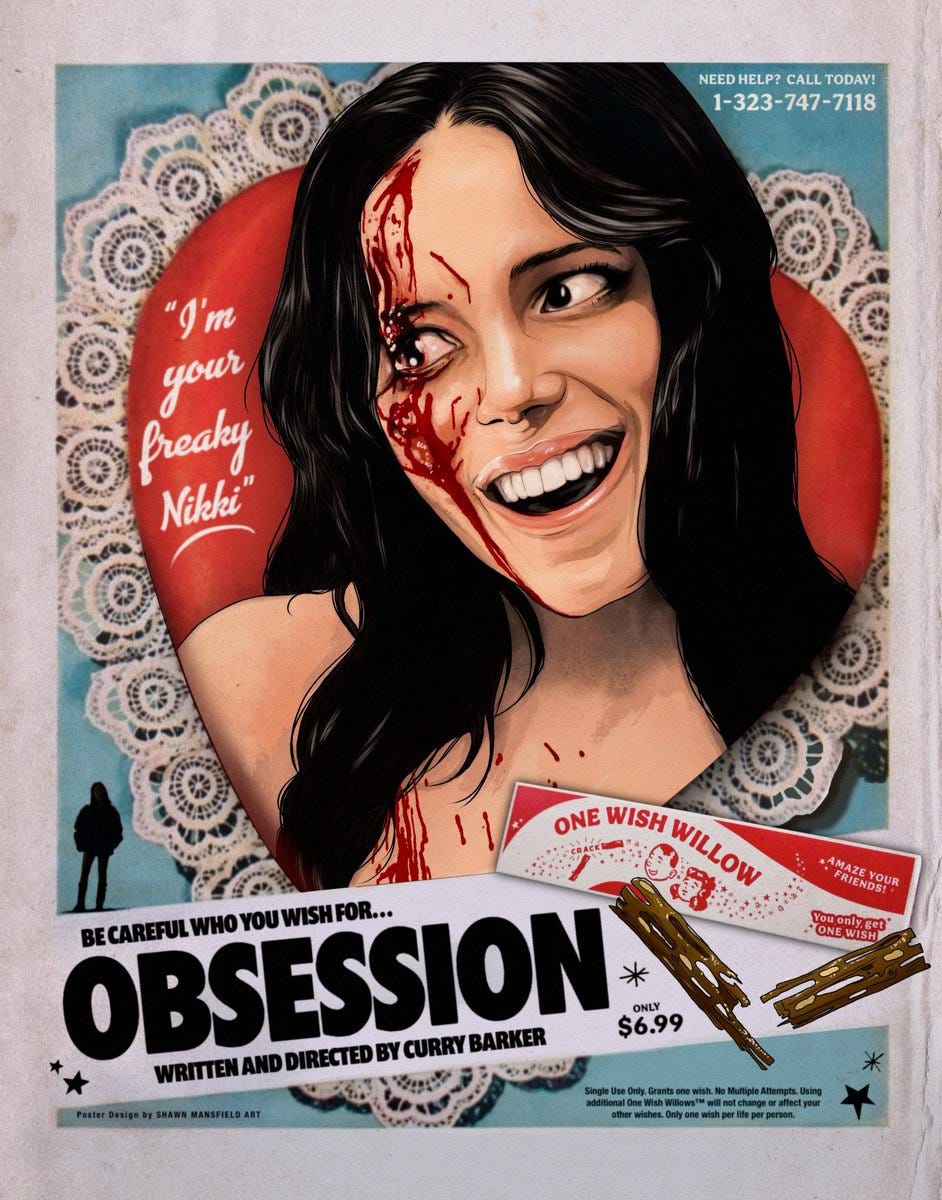
Moral of the story: Read return policies always very carefully.
Excellent review—way better and more thorough than mine! I had not considered the Freudian interpretation. When my wife and I discussed it over dinner, I compared it to Faust and Gretchen. I also did not realize that *The Simpsons* episode with the monkey’s paw was the inspiration, haha!