

Is Diversity Really Our Strength?
What forty years of research actually says about ethnic diversity, social trust and the communities we live in

“Diversity is our strength” has become the defining political mantra of the modern West. It is quite literally recited with the obnoxious confidence of a scientific finding, as if somewhere there existed a body of research demonstrating that the more ethnically and culturally varied a society becomes, the stronger it grows.
Indeed, there is a large body of research on diversity, mostly produced by scholars who are personally very sympathetic to non-European immigration. Yet, their research does not say what the slogan says. Most of there findings conclude that ethnic and cultural diversity tends, especially at the neighbourhood level, to be associated with lower social trust, weaker civic engagement and a diminished willingness to cooperate with strangers.
This article will examine whether trust and cooperation on which successful societies depend tend to decline, as ethnic and cultural heterogeneity increases.
If you’d like to support what I do, one easy way is by purchasing any books through The Rite Books. Just use the code CELINA at checkout for 5% off, it helps support both the bookstore and my writing :)
This article was inspired by a video by Keith Woods, ‘Diversity is NOT a Strength - A Look at the Data’
What social trust is, and why it matters
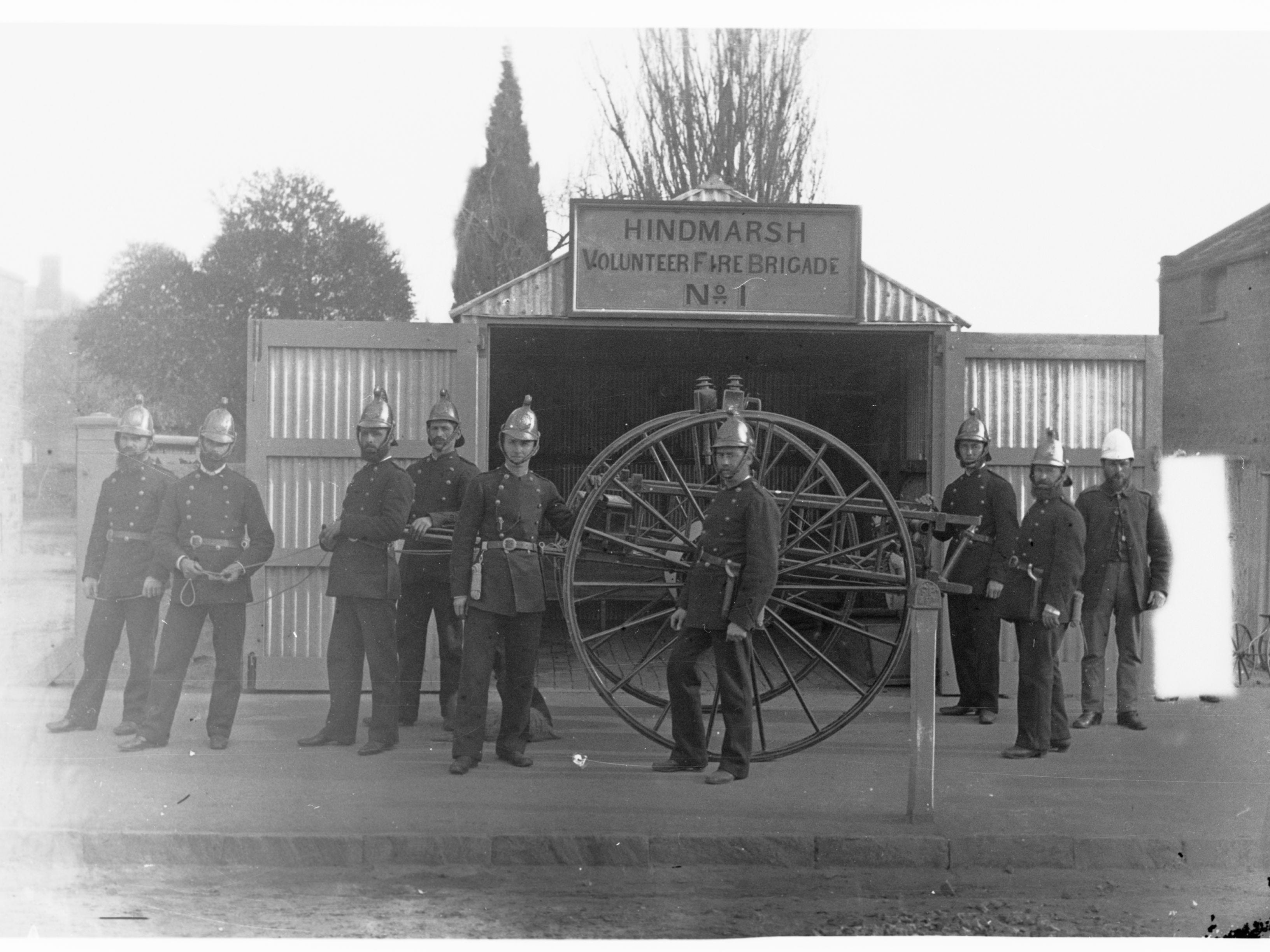
Social trust is the expectation that strangers will generally behave decently. That the person you have never met will return your wallet, honour the queue, pay their taxes and not vandalise your beautiful city. Sociologists distinguish it from particularised trust in family and friends, and from confidence in institutions like courts or parliaments. The related concept of social capital, popularised by the Harvard political scientist Robert Putnam, refers to the networks, norms and reciprocity that make collective life possible, for example the neighbourhood watch, the volunteer fire brigade and the school fete.
High-trust societies can enforce their contracts more cheaply, sustain generous welfare states with a lot less fraud, run governments with less corruption and cronyism, and endure crises with less panic. Economists Stephen Knack and Philip Keefer showed in the 1990s that trust predicts economic growth across countries.1 Trust is also simply what a good life in a good neighbourhood feels like from the inside: children playing outside, doors left unlocked, favours asked and returned. When it erodes, people start to withdraw from society.

Australia: the inequality explanation put to the test
The standard leftist/progressive response to declining community life is that inequality, not diversity, is the main culprit. I can understand why this sounds believable, especially in America as racial divisions and American income gaps map onto each other so closely that statistical models struggle to tell them apart.
Australia is a less muddied example, which is what makes the economist (now federal minister) Andrew Leigh’s 2006 study very valuable. In “Trust, Inequality and Ethnic Heterogeneity,” Leigh combined a large Australian social survey with fine-grained neighbourhood data to model both localised trust (in people in your area) and generalised trust (in people at large).2 He found things like education raising trust, long commutes lowering it and affluent neighbourhoods being more trusting. But two of his finding really stand out. First, in contrast to the American literature (which as stated is tricky to unpack because of the confounding variables), Leigh found no apparent relationship between neighbourhood income inequality and trust in Australia. Second, both ethnic and linguistic diversity were associated with lower trust. Linguistic diversity depressed localised trust for the native-born and immigrants alike, and depressed generalised trust among immigrants. Instrumental-variable specifications, a technique designed to reduce the risk that the correlation is spurious, produced similar results.
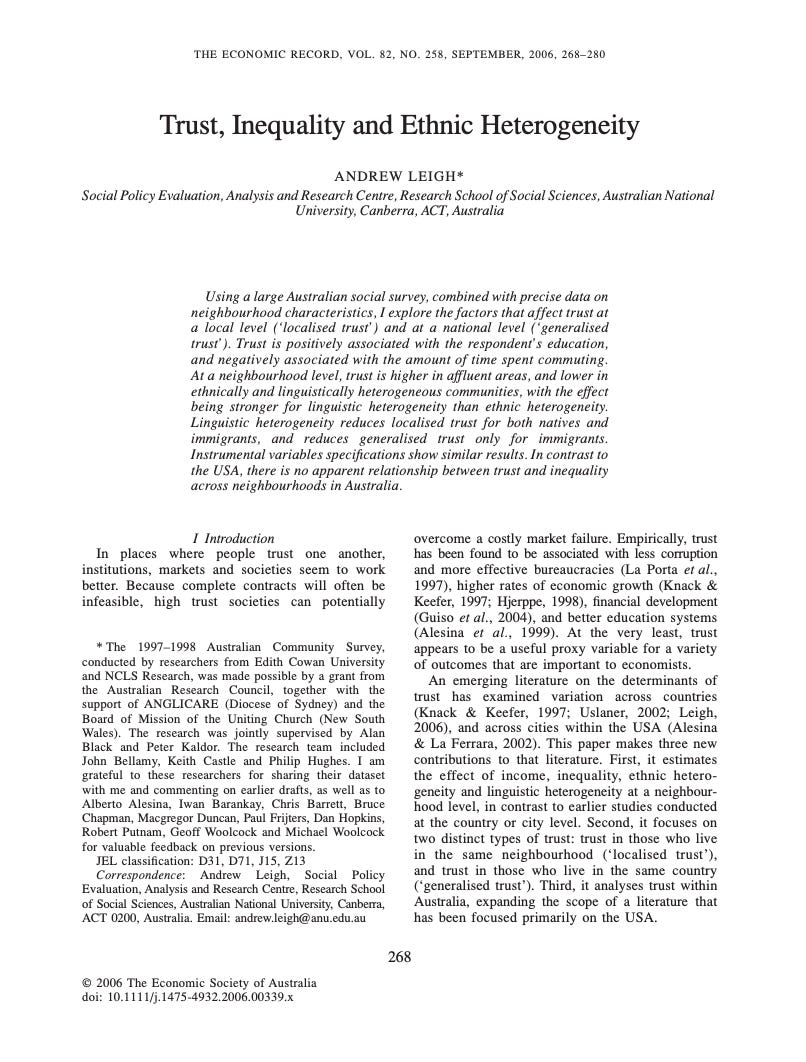
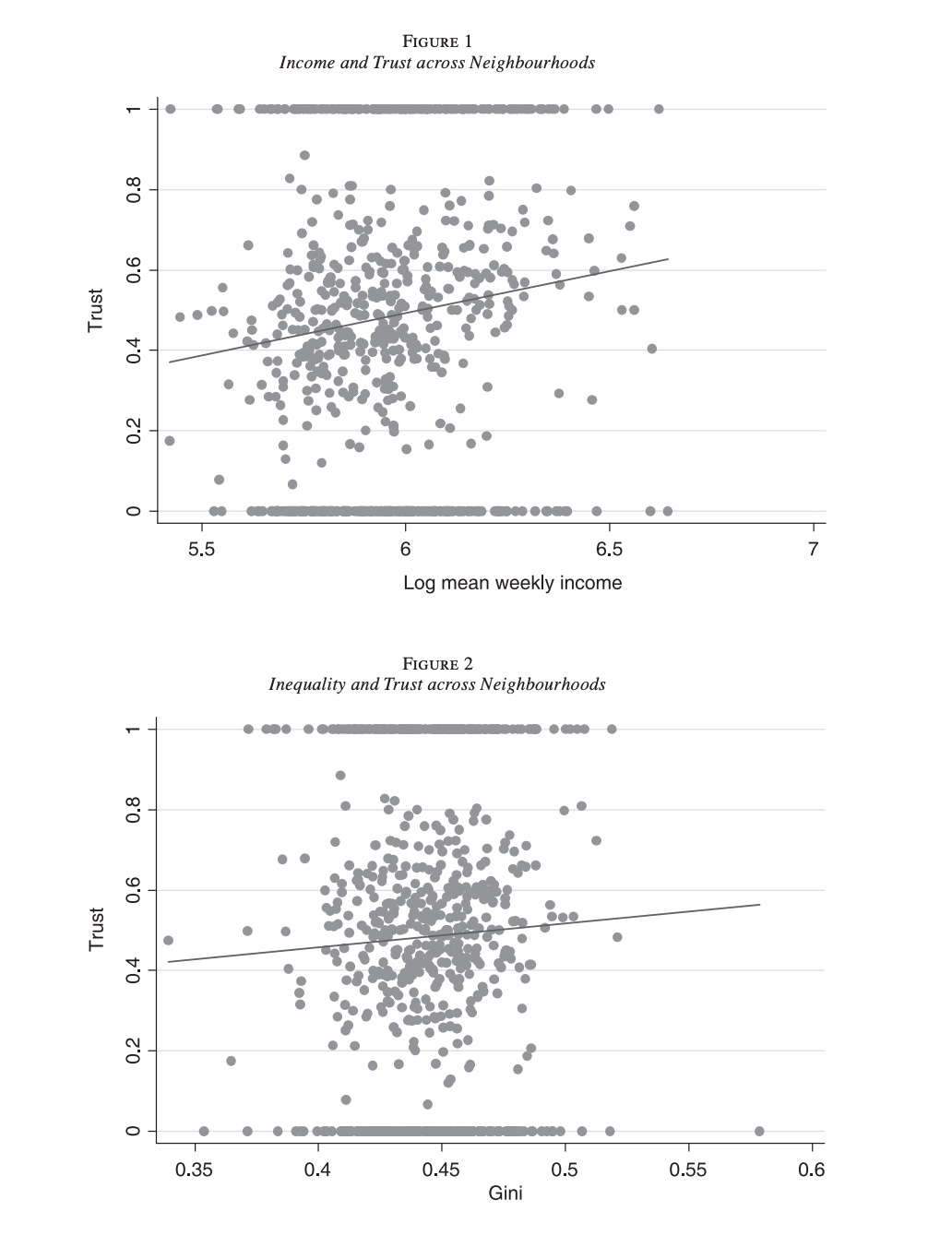
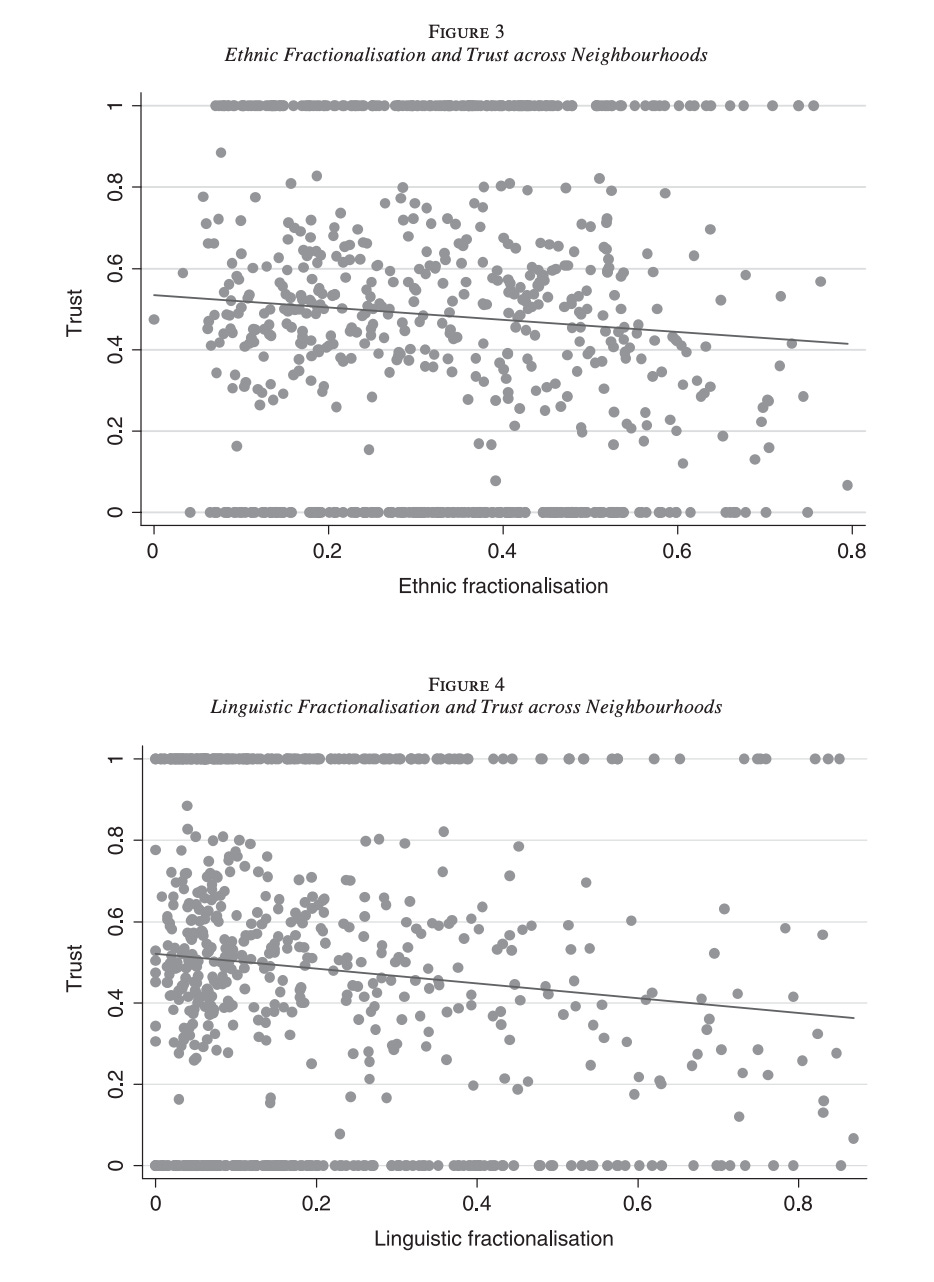
As the graph demonstrates, the study found that social trust rose alongside income. It also identified a slight positive correlation between inequality and trust. In contrast, both linguistic and ethnic diversity were associated with substantially lower levels of social trust. Left-wing critics of neoliberalism often attribute the erosion of civil society to inequality, yet findings such as these suggest that diversity is a more significant factor, and that inequality alone can sometimes correspond with higher, rather than lower, levels of trust.
The view from eighty metres
Another important things to flag, is that a lot of research on diversity measures the wrong thing. Sometimes when researchers, classifying a whole city or municipality as “diverse”, it will tell you very little about anyone’s daily experience, because diverse cities are usually self-segregated cities. For example, London is horrifyingly diverse in aggregate but many Londoners nonetheless live on streets that are anything but (although this is becoming less common now because of the sheer scale of immigrants). So, if diversity affects trust through actual exposure to difference, then coarse geography will blur the effect into invisibility.

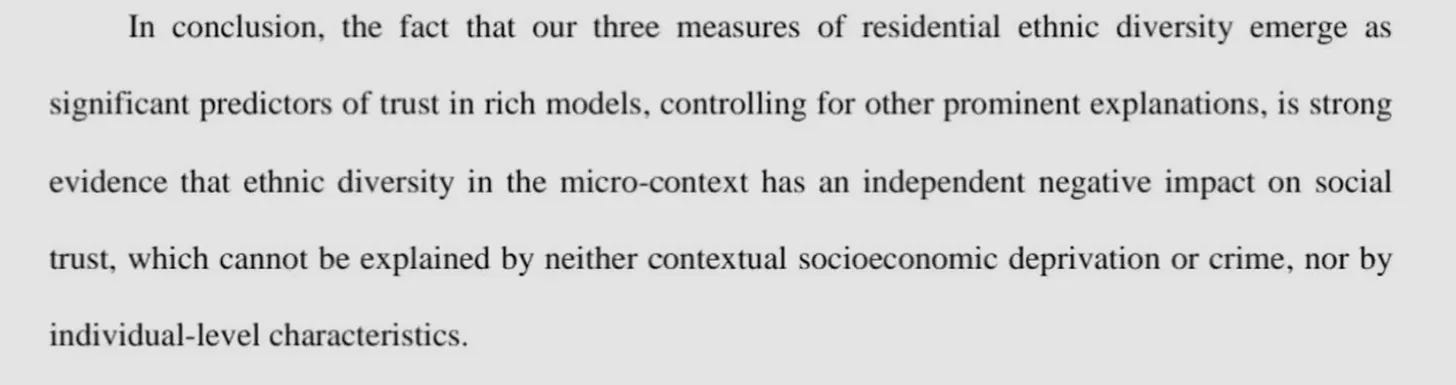
This is the problem that Peter Thisted Dinesen and Kim Mannemar Sønderskov solved in Denmark, as their country records where every resident lives and where they were born. In “Ethnic Diversity and Social Trust: Evidence from the Micro-Context,” published in the American Sociological Review in 2015, they linked survey responses to the precise ethnic composition of each respondent’s immediate surroundings, down to a radius of eighty metres, roughly the view from your window.3 Within that radius, exposure to diversity is the people in your stairwell and at your bus stop.
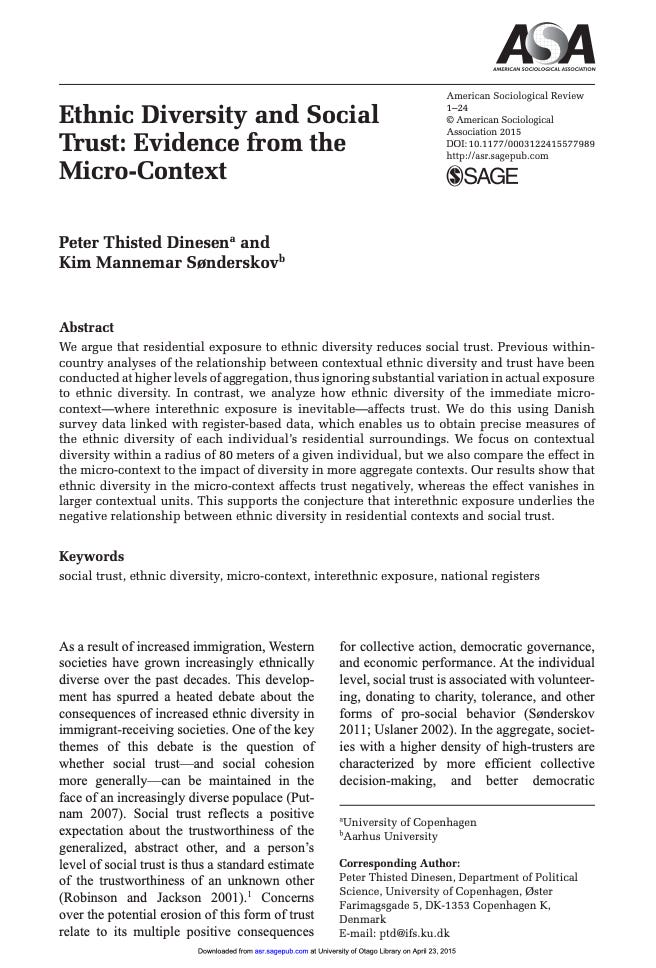
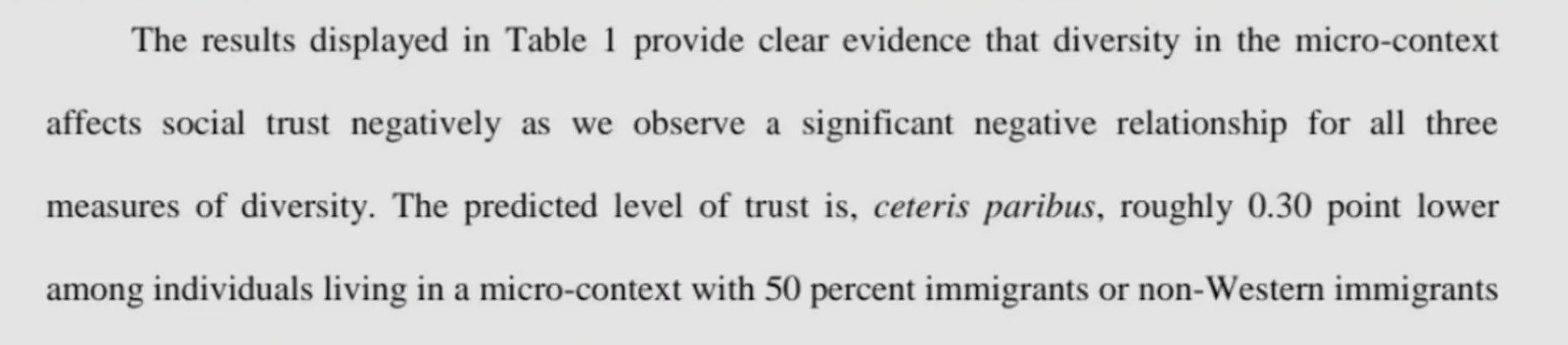
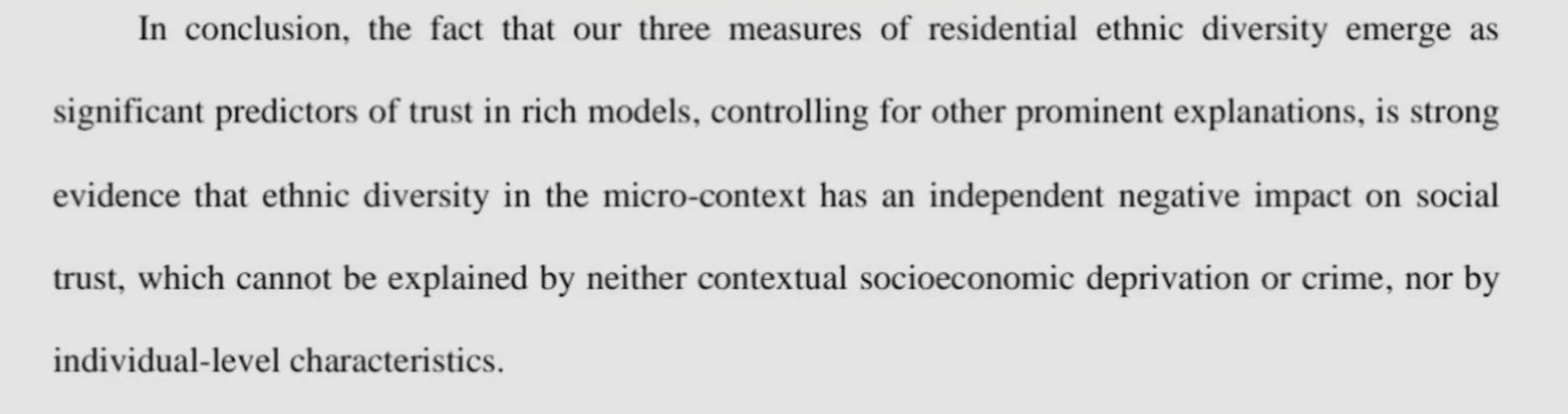
The result showed that ethnic diversity in the micro-context was negatively associated with social trust, and the association weakened and then vanished as the geographical unit grew. The people most exposed to diversity in their daily residential environment reported the least trust; measured at the municipal level. The effect dissolved, however, exactly what you would expect if aggregate measures were hiding segregation. The finding survived controls for individual characteristics and for the deprivation of the area.
Denmark matters a lot for another reason, as it is routinely cited as the Nordic exception, a country whose generalised trust is among the highest ever recorded and has risen in recent decades even as immigration increased. But, both things can be true at once.
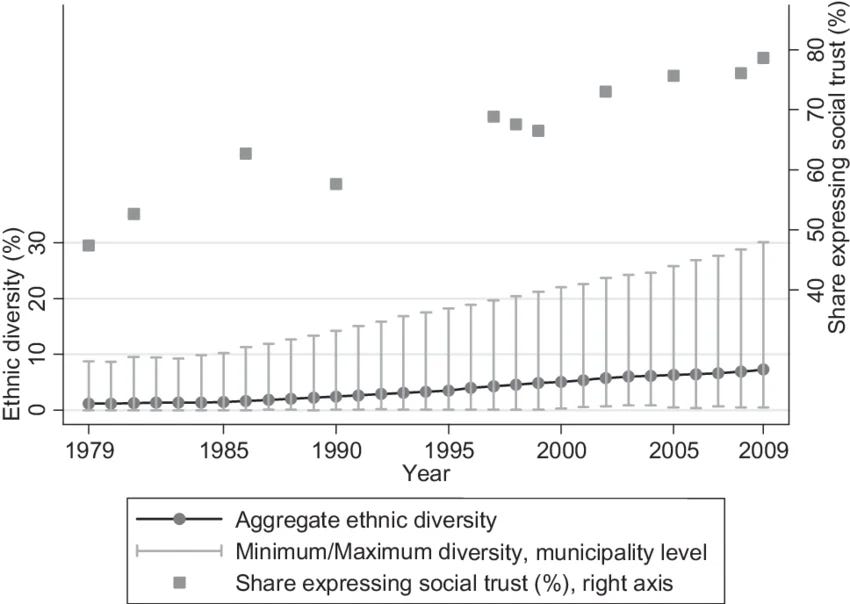
Denmark’s aggregate serenity coexists with a measurable trust penalty for those who actually live amid diversity. This suggests that the effects of diversity may not initially appear in national measures of institutional confidence, but instead emerge in the attitudes and behaviour of those most directly exposed to it.
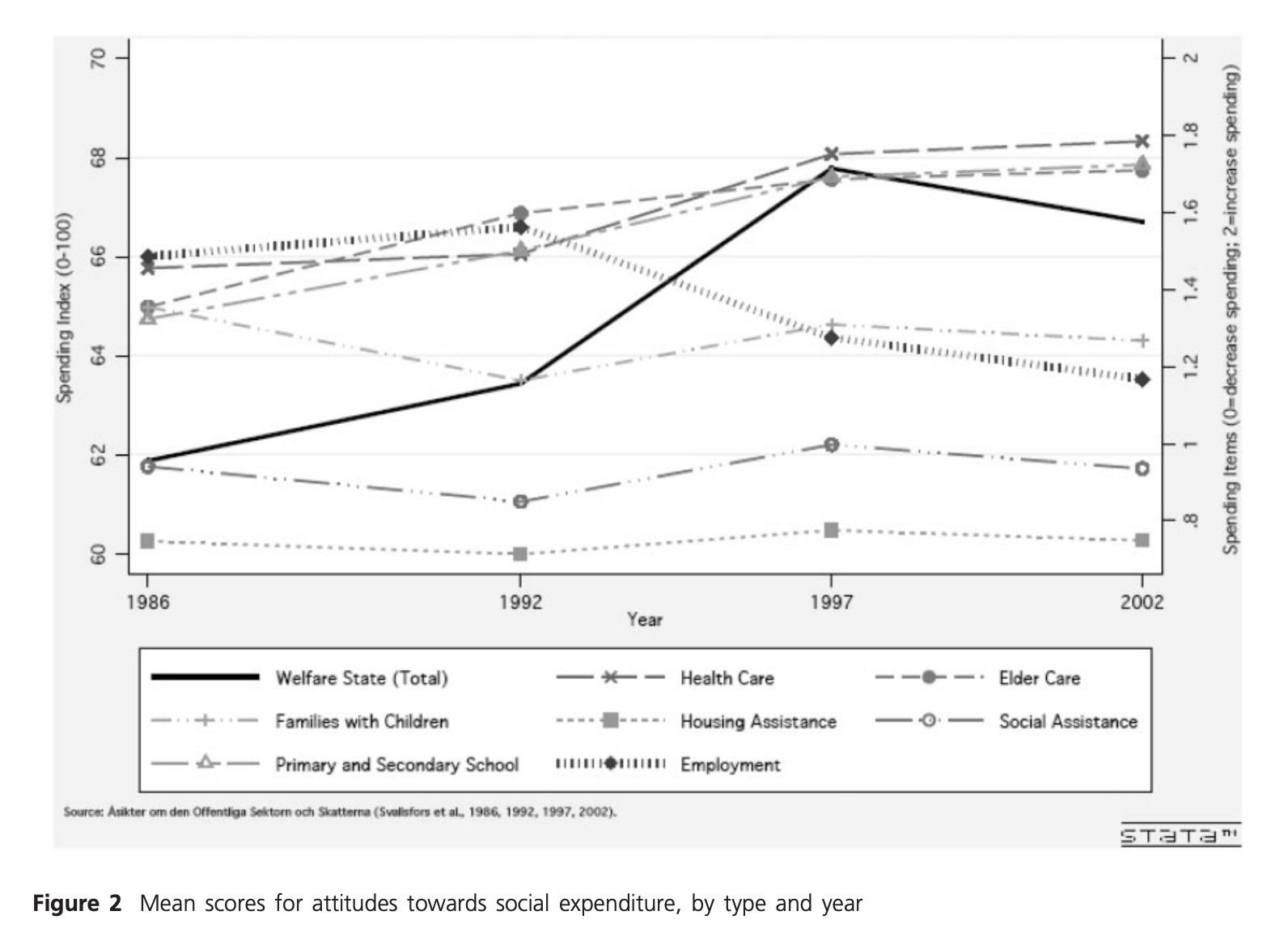
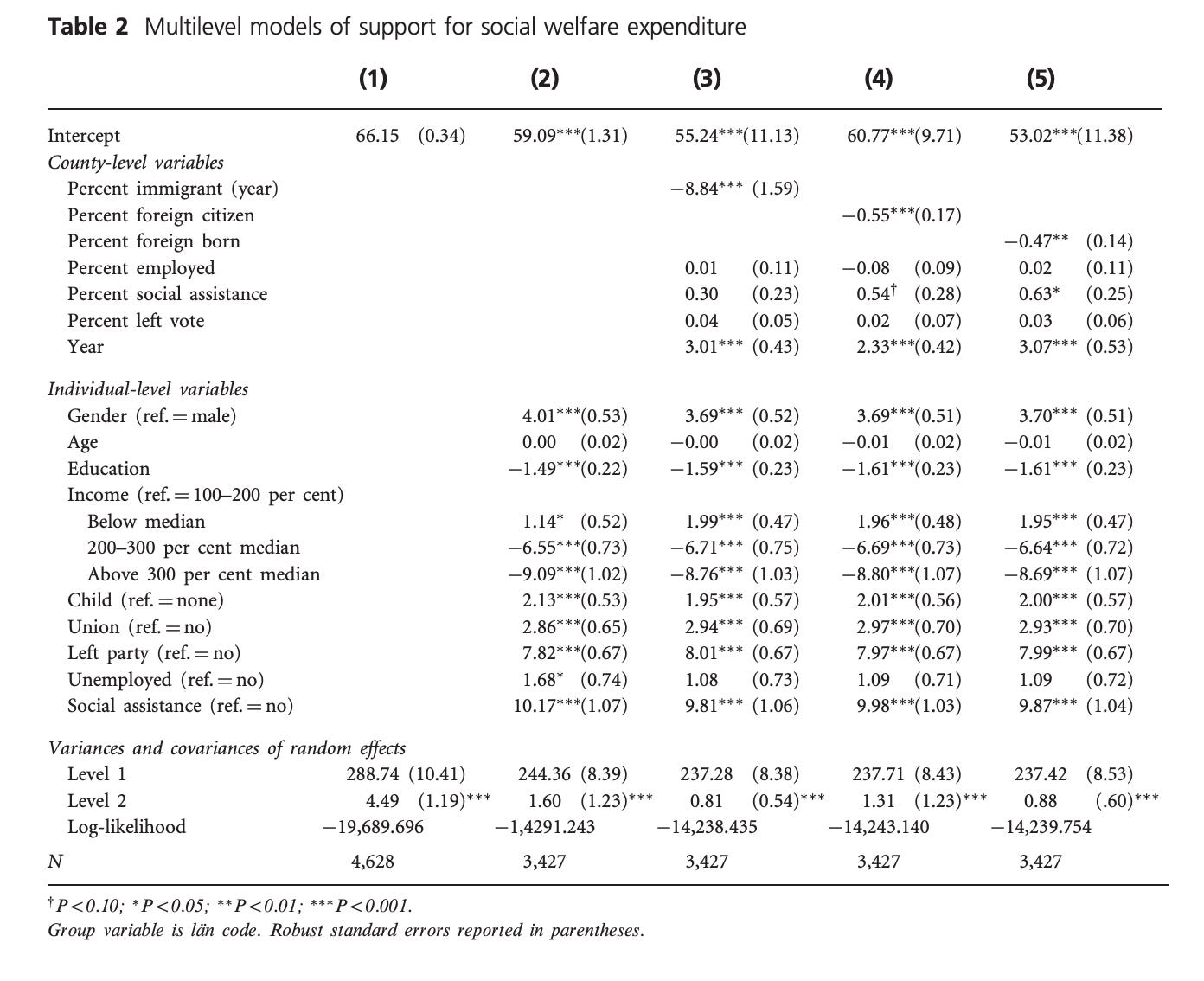
Similar data is visible across the Øresund in Sweden, where diversity appears to affect not only interpersonal trust but also support for the welfare state itself. Maureen A. Eger’s 2010 study, “Even in Sweden: The Effect of Immigration on Support for Welfare State Spending,” reached a similar conclusion. Analysing Swedish survey and demographic data from 1986 to 2002, Eger found that people living in areas with larger foreign-born populations tended to express less support for government welfare spending, even after accounting for income, education, employment and political ideology. Increasing ethnic diversity, in other words, was associated not only with lower interpersonal trust but with a reduced willingness to sustain the redistributive institutions for which the Nordic countries are famous.
In the researchers on words:
Both recent immigration and proportion of foreign born reduce support for the Swedish welfare state. Indeed, immigration is the only county-level variable that negatively affects Swedes’ attitudes, and it is the only regional variable that is significant across models. When universal spending is assessed by itself, recent immigration still has a negative effect on support, which demonstrates that these analyses are not merely picking up the effect of immigration on support for redistribution. Regardless, the redistributive nature of the Swedish welfare state is an integral part of the institution and is inextricably linked to its ideological roots—the idea that all Swedes are ‘all in the same boat’.
Taken together, the Danish and Swedish evidence suggests that attitudes towards immigration track exposure to it. That is perhaps why the professional and academic classes who most confidently celebrate diversity are disproportionately likely, by virtue of income and the housing, to not experience the horribly negative effects of it.
What heterogeneity does to civic life
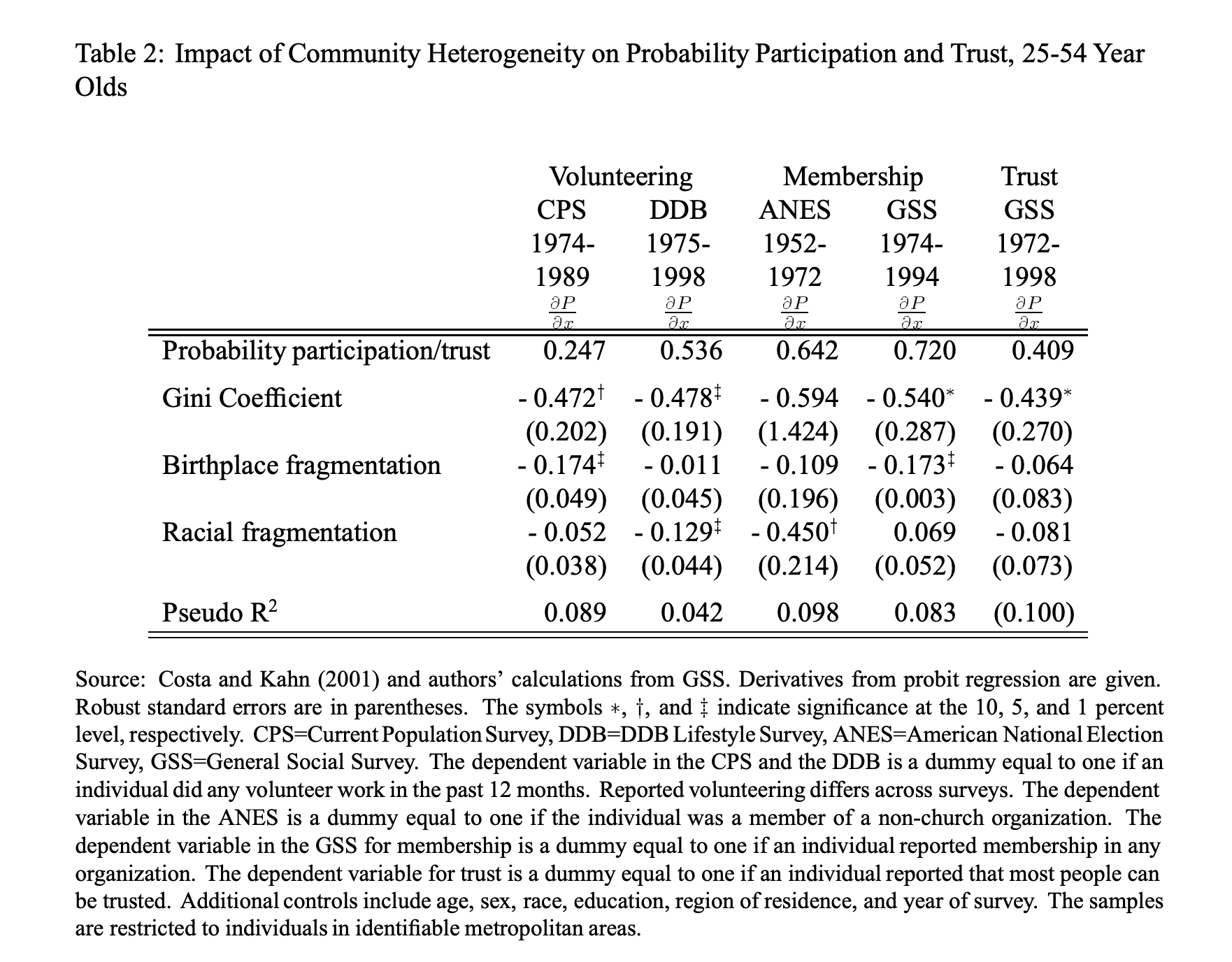
In 2003, Dora Costa and Matthew Kahn published “Civic Engagement and Community Heterogeneity: An Economist’s Perspective” in Perspectives on Politics, a review of roughly fifteen empirical studies produced since the late 1990s.4 Across different datasets, volunteering, membership of organisations, charitable giving, census response, trust, participation in community lending schemes, willingness to fund public goods and local schools, greater community ethnic diversity was repeatedly associated with less civic engagement. People, it seems, find it easier to act collectively with people like themselves.
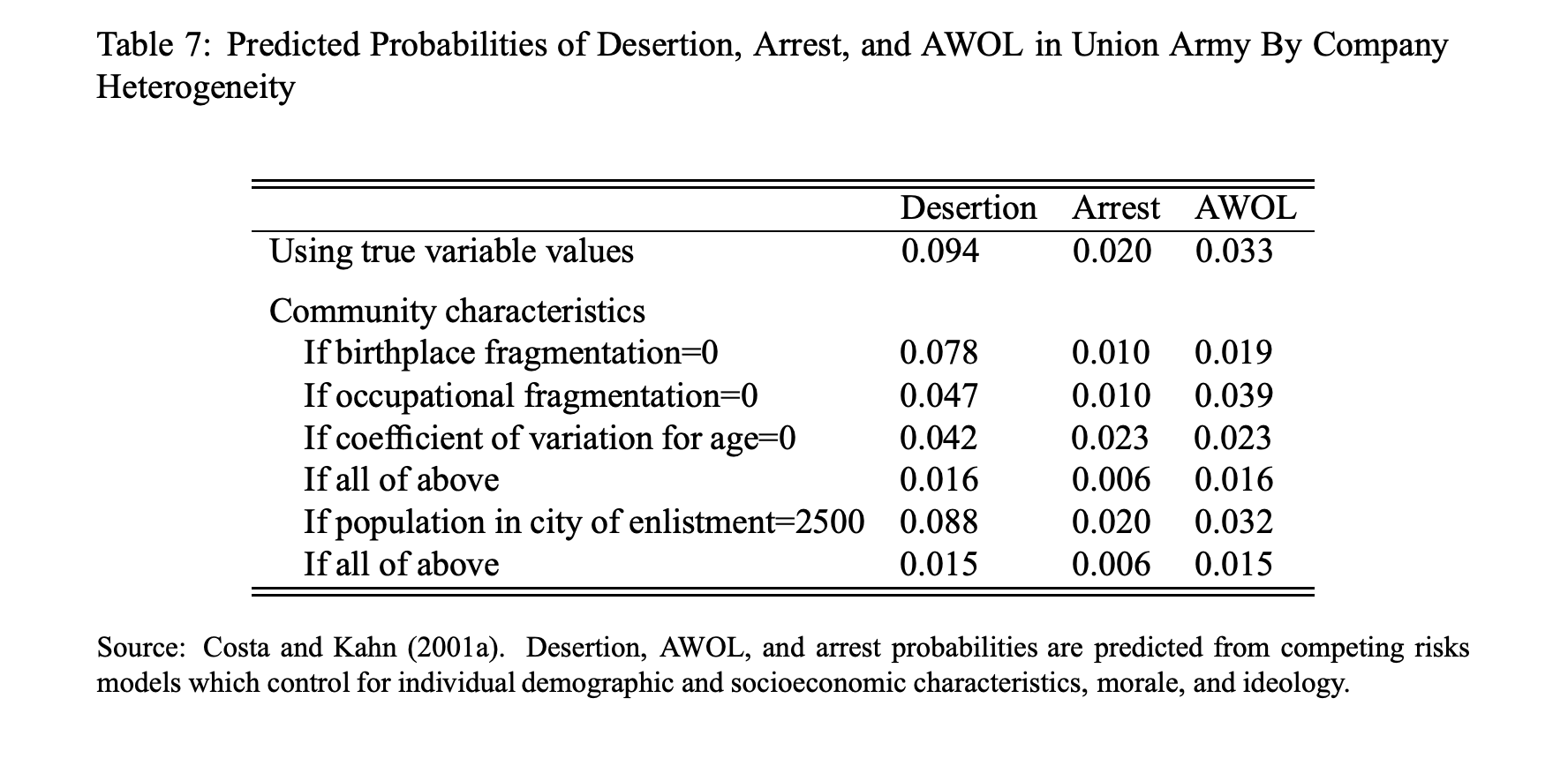
Costa and Kahn’s own most arresting evidence comes from the nineteenth century. Using records of Union Army companies in the American Civil War, they examined what predicted whether soldiers deserted.5 Companies whose men were more alike, in birthplace, occupation and age, held together; more diverse companies bled deserters. Men facing identical dangers, under identical discipline, for an identical cause, were measurably more willing to risk death alongside men who resembled them. It seems as if the raw material of solidarity is similarity, and asking human beings to sacrifice for a group is easier when they recognise themselves in it.
Putnam’s discovery
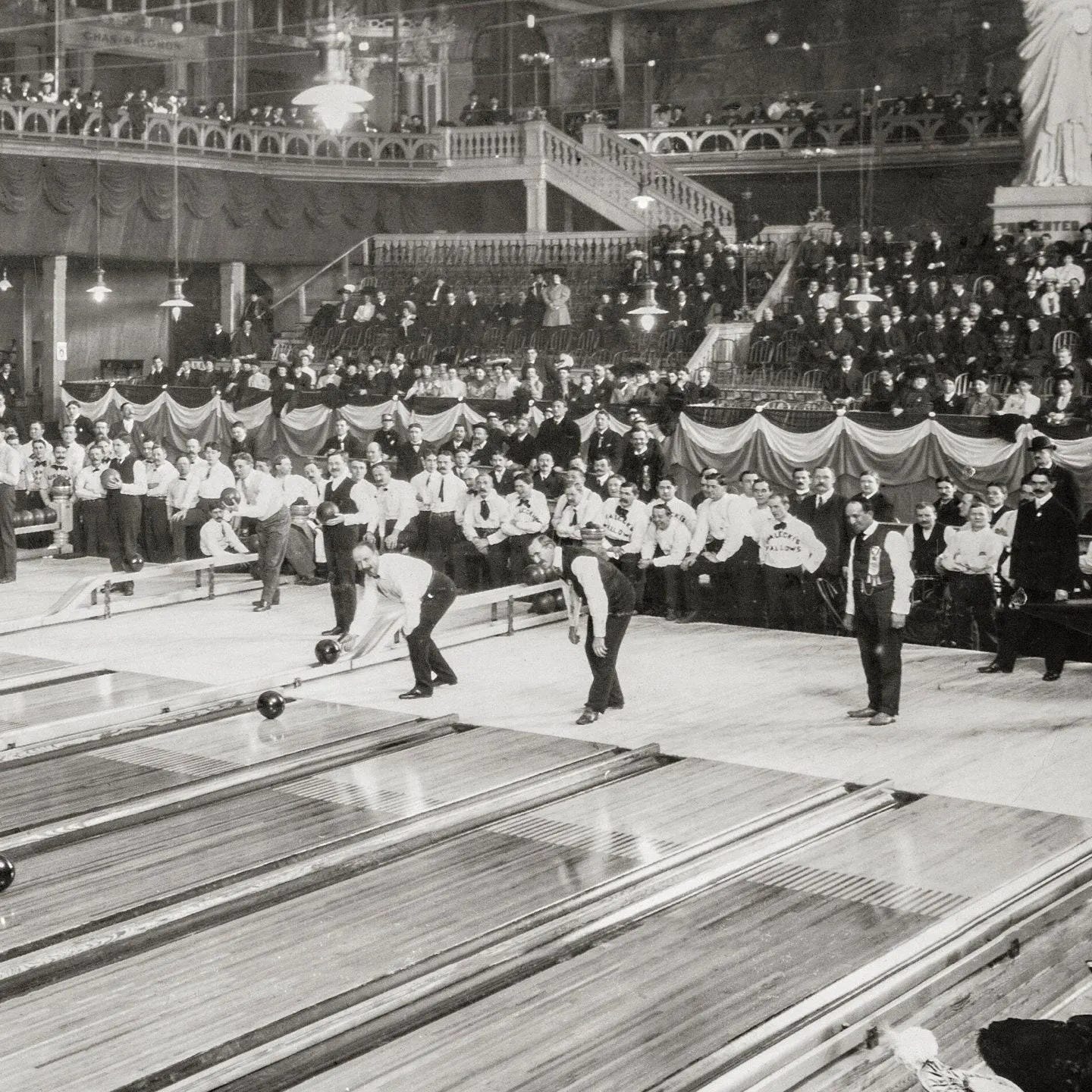
The intellectual centrepiece of this literature remains Robert Putnam’s 2007 paper “E Pluribus Unum: Diversity and Community in the Twenty-first Century,” delivered as the Johan Skytte Prize lecture and published in Scandinavian Political Studies.6 Putnam is the scholar who diagnosed America’s civic decline in Bowling Alone, the 2007 study extended that project with the Social Capital Community Benchmark Survey, covering roughly 30,000 Americans across 41 communities, one of the largest investigations of social capital ever conducted.

Putnam expected, and by his own account hoped, to vindicate one of two established theories. Contact theory predicts that diversity breeds familiarity and tolerance, conflict theory predicts that diversity sharpens in-group loyalty and out-group suspicion, trust within your group rises as trust across groups falls. Yet, he found neither. He found something, as a self-described liberal that he feared, in more diverse communities, trust fell across the board, in neighbours of other races and in one’s own. Diversity did not turn people against each other so much as away from everyone. Residents of high-diversity areas reported less confidence in local government and leaders, lower rates of voter registration, less volunteering and charitable giving, less participation in community projects, fewer close friends and confidants, lower expectations that others would cooperate, lower reported happiness and quality of life, and more time in front of the television. His summary was that people in diverse areas “hunker down,” pulling in, as he put it, like a turtle.
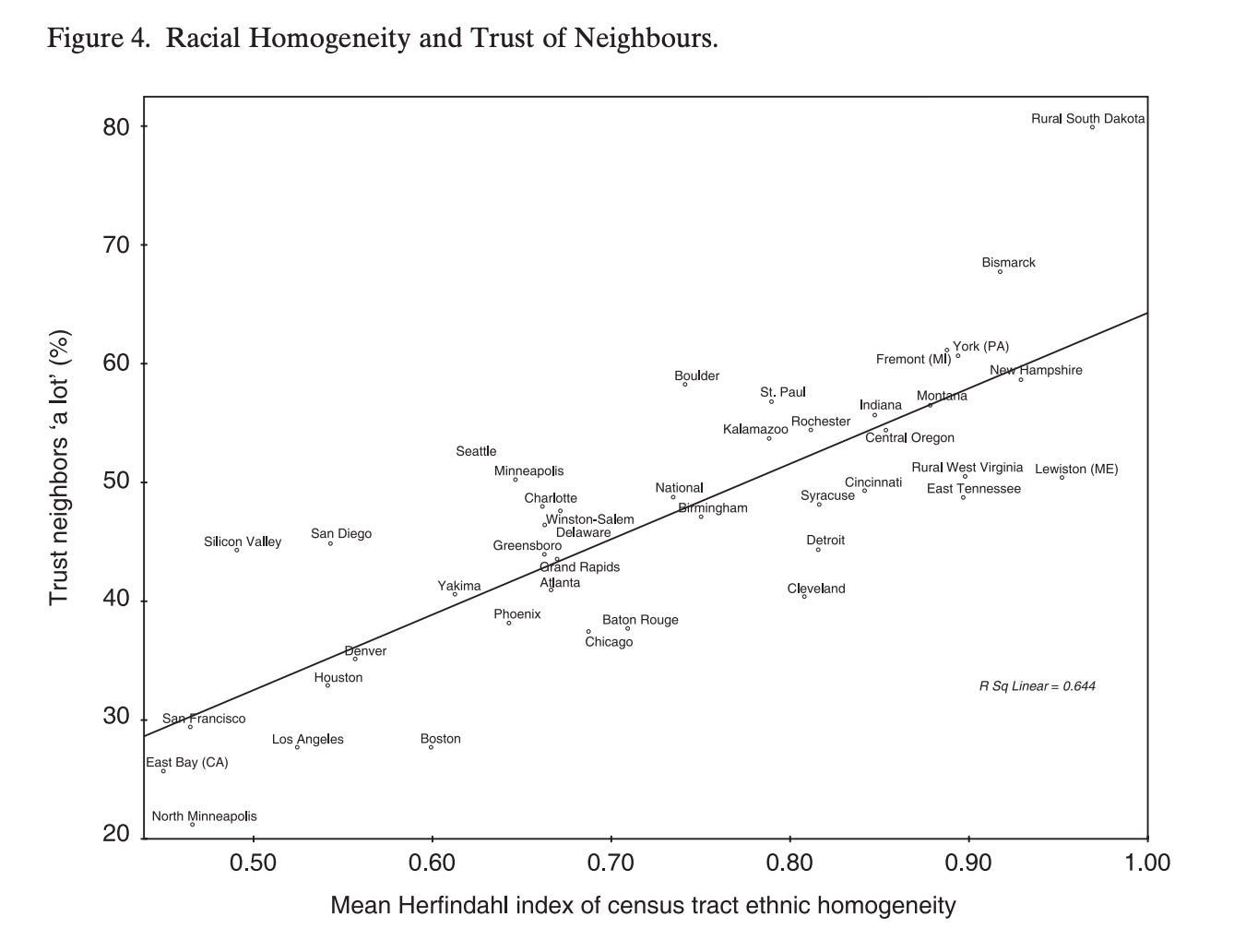
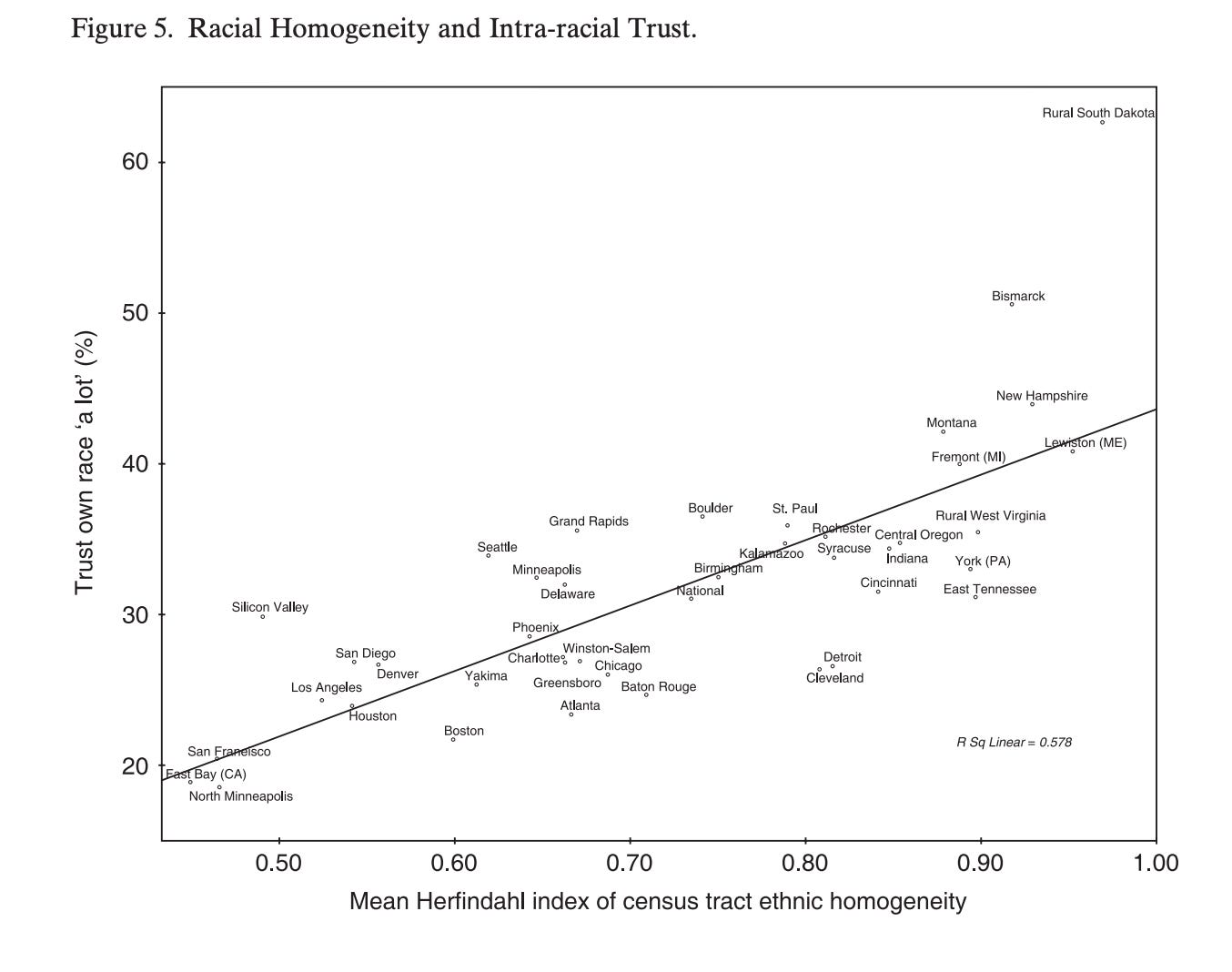
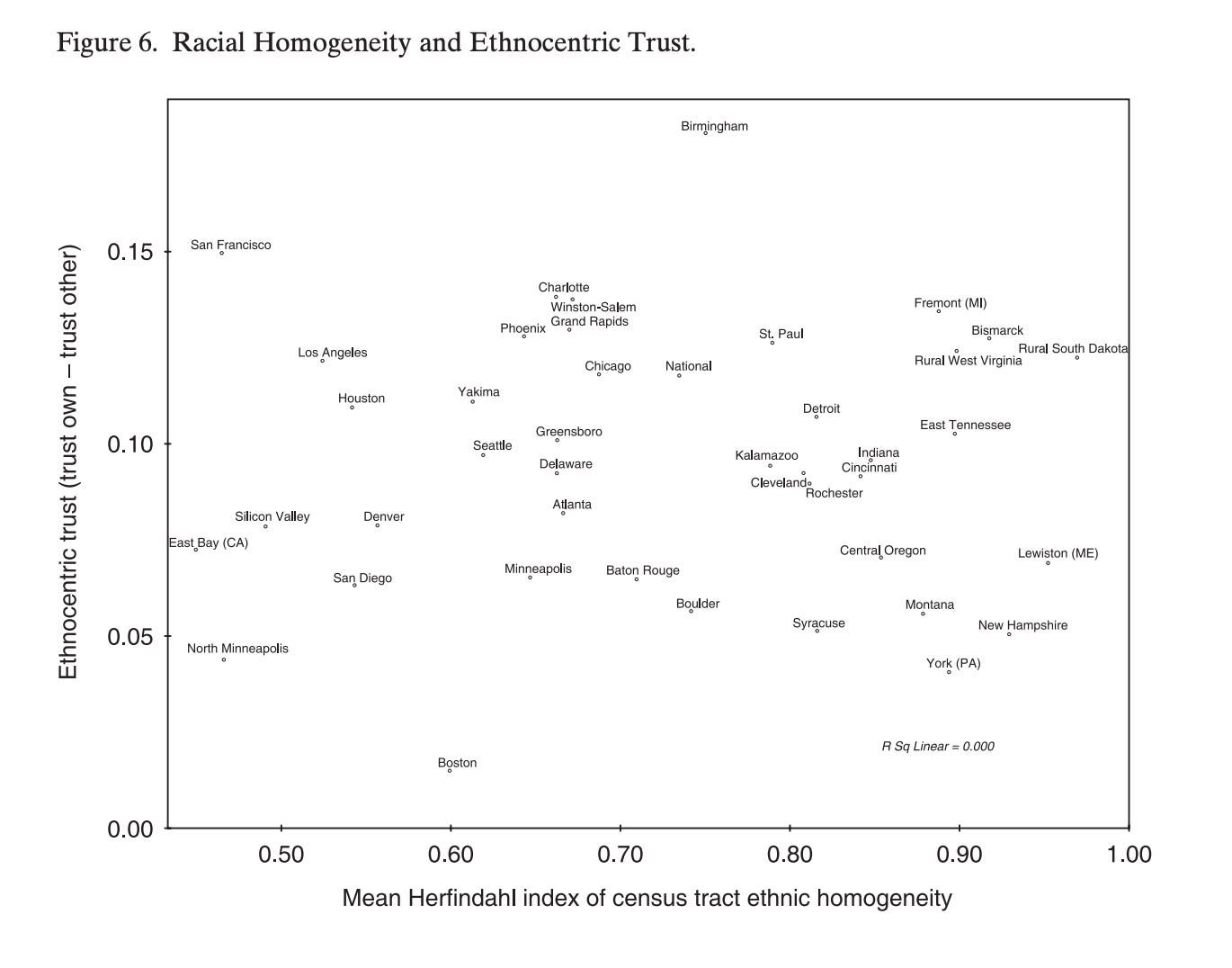
In Putmans’ own words:
Diversity does not produce ‘bad race relations’ or ethnically-defined group hostility, our findings suggest. Rather, inhabitants of diverse communities tend to withdraw from collective life, to distrust their neighbours, regardless of the colour of their skin, to withdraw even from close friends, to expect the worst from their community and its leaders, to volunteer less, give less to charity and work on community projects less often, to register to vote less, to agitate for social reform more, but have less faith that they can actually make a difference, and to huddle unhappily in front of the television. Note that this pattern encompasses attitudes and behavior, bridging and bonding social capital, public and private connections. Diversity, at least in the short run, seems to bring out the turtle in all of us
Two main points make this finding really hard even for a leftist to dismiss. The first is its scale and robustness within the dataset: the associations survived controls for poverty, crime, age, mobility and much else. The second is the author. Putnam is no immigration restrictionist, in the exact same paper, he argues that immigration carries long-run cultural, economic and fiscal benefits, and that successful immigrant societies eventually dissolve the problem by constructing broader identities (his examples include the US military and American religious congregations). Putman published these results even though they cut against his own left-wing sympathies.
Nevertheless, a finding of this magnitude, from the most celebrated social scientist of his generation, produced no detectable adjustment in how any major Western party talks about diversity. The slogan sailed on untouched by reality.
The apartment block as a natural experiment
One of the greatest objection to all of the above is selection. People choose where they live, of course. If distrustful or transient people accumulate in diverse neighbourhoods, correlation tells you about sorting, not causation. What you want, and can almost never get, is people assigned to their neighbours by something other than their own choices.
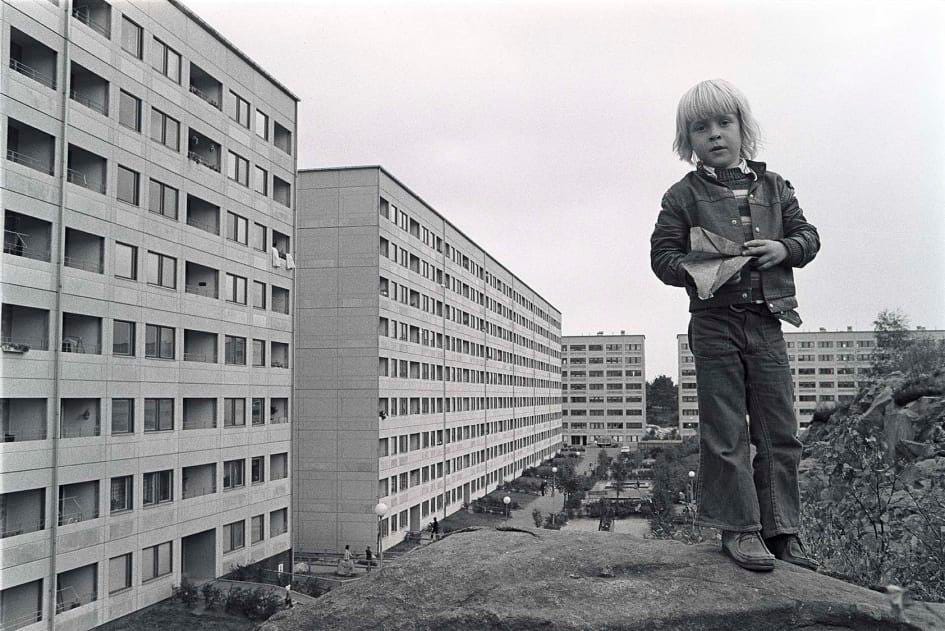
France, provides this for for us, as roughly a sixth of French households live in public housing, and allocation to a particular block is made by administrative bodies under legal criteria that do not include ethnicity and leave applicants little choice over their precise building. Within this system, the ethnic mix of your block is, to a useful approximation, handed to you. Yann Algan, Camille Hémet and David Laitin exploited this in “The Social Effects of Ethnic Diversity at the Local Level: A Natural Experiment with Exogenous Residential Allocation,” published in the Journal of Political Economy in 2016.7 Using the French Housing Survey, they measured diversity at the level of the individual apartment block with an index of ethnic fractionalisation. In plain terms, the probability that two residents drawn at random belong to different origin groups.
The results showed that more fractionalised blocks had more vandalism and degraded common areas, broken letterboxes, damaged doors, graffiti in the stairwell. Residents were less able to informally sanction antisocial behaviour: nobody tells off the kid breaking the lift, because the social ties that make such correction possible are absent. And collective action failed. Diverse blocks were worse at organising to demand repairs and proper maintenance from landlords, so buildings decayed. Strangely, the authors found no effect of diversity on public safety. Their interpretive label for the mechanism was social anomie, about withdrawal. The apartment block is the welfare state in miniature, shared spaces, shared costs, and cooperation that either happens or doesn’t.
Can diversity sustain the welfare state?
Why does the United States, richer than Europe for a century, have so much stingier a welfare state? Alberto Alesina and Edward Glaeser put the question at the centre of Fighting Poverty in the US and Europe: A World of Difference (2004), building on earlier work with Bruce Sacerdote.8 Their answer is plural. American political institutions matter enormously: majoritarian elections, a Senate and Supreme Court built to frustrate redistribution, federalism, the absence of the proportional-representation systems that let European socialist parties translate votes into power. So does ideology, the American conviction that poverty reflects effort rather than luck.
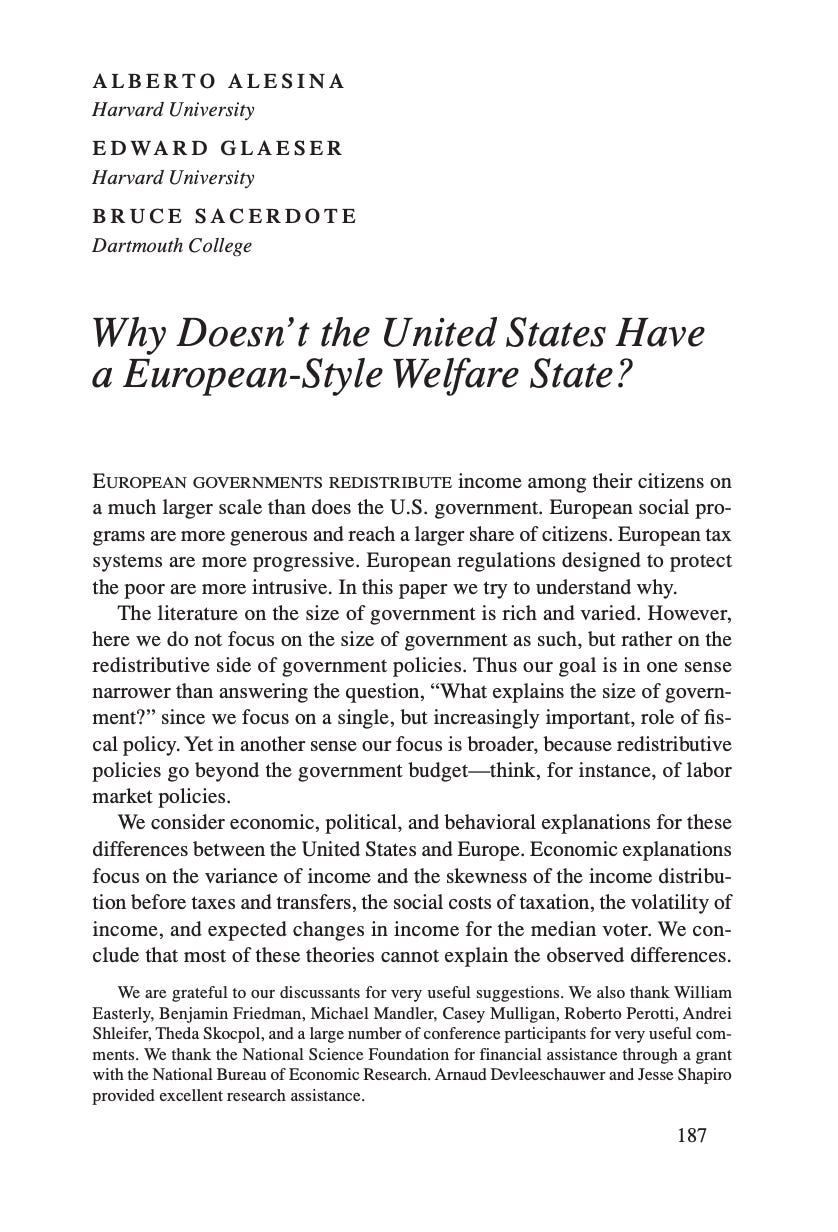
But a substantial part of their answer, supported by evidence across US states and across countries, is racial and ethnic heterogeneity. Support for redistribution is consistently lower where the poor are perceived as belonging to a different group from the median taxpayer. In their accounting, America’s racial divisions explain a large share, their estimates suggest roughly half, of the transatlantic gap in social spending, with institutions carrying most of the rest. Solidarity, has always been easiest to sell as solidarity with people like us. European welfare states were built by ethnically compact nations in the mid-twentieth century, so the uncomfortable question now is what happens to their political foundations as those nations diversify (Refer back to the studies on Denmark and Sweden).
Another Swedish study by Matz Dahlberg, Karin Edmark and Heléne Lundqvist used the country’s refugee placement program, which assigned refugees to municipalities showed that increased immigration caused a measurable drop in local support for redistribution.9 A political project that wants simultaneously high immigration, a generous welfare state and a high-trust society is betting that it can keep three balls in the air that the research strongly suggests interfere with one another.
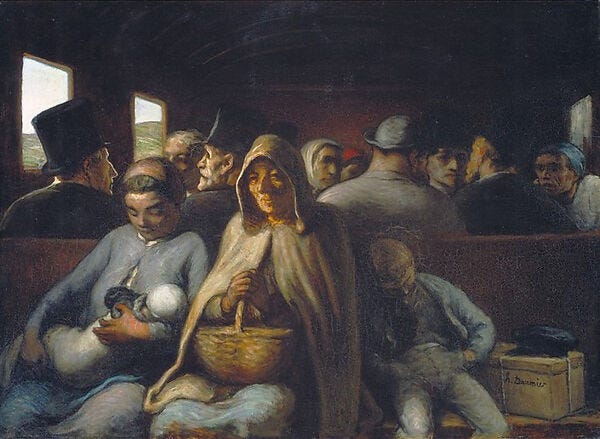
Diversity is a horrible destiny
Return, finally, to the mantra at the beginning. “Diversity is our strength” which functions in the same way as “the science is settled”: it is a device for ending the conversation before it can begin. Yet the research examined here, much of it conducted by left-wing academics across the United States, Australia, Denmark, France, Sweden and Britain, thoroughly demolishes the slogan.
Even when academics and politicians insist on emphasising the supposed benefits of diversity, we should remember the extreme trade-off they are imposing on us: measurable declines in local trust, civic participation and social solidarity, alongside rising crime and disorder. These costs fall most heavily where demographic change is fastest and common identity is weakest. They are borne by the diverse neighbourhoods themselves, not by the affluent, mostly homogeneous suburbs in which the slogan is most confidently said.
The research all points towards something that should be obvious to anyone with open eyes and a functioning brain: trust does not arise from difference. It grows from what people hold in common, race, ethnicity, language, culture, habits, mutual obligations and, above all, a shared understanding of who “we” are.

Stephen Knack and Philip Keefer, "Does Social Capital Have an Economic Payoff? A Cross-Country Investigation," Quarterly Journal of Economics 112, no. 4 (1997): 1251-1288.
Andrew Leigh, "Trust, Inequality and Ethnic Heterogeneity," Economic Record 82, no. 258 (2006): 268-280. Australian social survey linked to neighbourhood-level census characteristics; measures localised and generalised trust; diversity measured as ethnic and linguistic fractionalisation. https://doi.org/10.1111/j.1475-4932.2006.00339.x
Peter Thisted Dinesen and Kim Mannemar Sønderskov, "Ethnic Diversity and Social Trust: Evidence from the Micro-Context," American Sociological Review 80, no. 3 (2015): 550–573. Danish survey data linked to national residential registers; diversity measured within radii from 80 metres upward; outcome is generalised social trust. https://doi.org/10.1177/0003122415577989
Dora L. Costa and Matthew E. Kahn, "Civic Engagement and Community Heterogeneity: An Economist's Perspective," Perspectives on Politics 1, no. 1 (2003): 103–111. Review of approximately fifteen empirical studies of heterogeneity (ethnic and income) and civic outcomes, mostly US-based.
Dora L. Costa and Matthew E. Kahn, “Cowards and Heroes: Group Loyalty in the American Civil War,” Quarterly Journal of Economics 118, no. 2 (2003): 519–548; developed at book length in Heroes and Cowards: The Social Face of War (Princeton University Press, 2008). Union Army company records; heterogeneity in birthplace, occupation and age; outcome is desertion.
Robert D. Putnam, “E Pluribus Unum: Diversity and Community in the Twenty-first Century. The 2006 Johan Skytte Prize Lecture,” Scandinavian Political Studies 30, no. 2 (2007): 137–174. Social Capital Community Benchmark Survey 2000, roughly 30,000 respondents in 41 US communities; diversity measured as census-tract ethnic fractionalisation; outcomes include trust, volunteering, giving, registration, friendship networks and media use. https://doi.org/10.1111/j.1467-9477.2007.00176.x
Yann Algan, Camille Hémet and David D. Laitin, “The Social Effects of Ethnic Diversity at the Local Level: A Natural Experiment with Exogenous Residential Allocation,” Journal of Political Economy 124, no. 3 (2016): 696–733. French Housing Survey; diversity measured as fractionalisation by origin group at the apartment-block level within public housing; outcomes include vandalism, quality of common areas, collective action and safety https://doi.org/10.1086/686010
Alberto Alesina and Edward L. Glaeser, Fighting Poverty in the US and Europe: A World of Difference (Oxford University Press, 2004); Alberto Alesina, Edward Glaeser and Bruce Sacerdote, “Why Doesn’t the United States Have a European-Style Welfare State?” Brookings Papers on Economic Activity 2001, no. 2: 187–254.
Matz Dahlberg, Karin Edmark and Heléne Lundqvist, “Ethnic Diversity and Preferences for Redistribution,” Journal of Political Economy 120, no. 1 (2012): 41–76. Swedish refugee placement program as an exogenous immigration shock to municipalities.
The shared understanding of who "we" are has eroded significantly in the UK as the pace and volume of immigration from incompatible cultures increased from 2000 onwards and after Brexit in particular. We ordinary folk may not use the academic terms in this article and we may struggle to articulate exactly why immigration is the defining problem it now is in politics, referencing second order problems like pressure on housing, but the disaffection with our institutions is real. An increasing number of us just feel it, sense it, and view the growing balkanisation of society with foreboding.
The problem is not just about numbers of people from (and often still loyal to) overseas lands, but also about the establishment actively undermining the family and nation state through law and education indoctrinating each new generation to despise British history and achievements.
A particularly sinister development is "two-tier" policing in which, as the recent Henry Novak case is a tragic example, ethnic minorities are privileged over white people. Novak's murderer played the race card when the police arrived and the significant point is that the race buttons were there in the police to be pressed causing Novak to bleed out while the police pandered to the murderer.
Once a society loses equality before the law for all its citizens, the historic achievement of English common law, then we enter very dark days indeed.
Look around. No. You don’t need to be a scientist for that. Nor do you need expensive researches or statistics. It just takes common sense. We are all human, but we are not equal. Not equal in capability, things we value and so on.